Buy an RV: The Complete Guide to Choosing the Right RV Without Regret
Buying an RV is exciting.
There is something about the idea of having your own home on wheels that makes travel feel completely different.
You can wake up somewhere new, make breakfast in your own kitchen, keep your favorite things close, and decide where the road takes you next.
But deciding to buy an RV is not a decision you should make based only on excitement.
An RV is a major purchase.
The right one can become a trusted travel companion for years. The wrong one can become an expensive machine sitting in the driveway while you wonder why you bought it.
That is why smart RV shopping starts with understanding what you actually need.
You do not necessarily need the largest RV.
You do not need every available upgrade.
And you certainly do not need to spend the most money at the dealership.
You need an RV that matches your lifestyle, budget, travel plans, and comfort expectations.
This guide takes a practical approach to helping you buy an RV with confidence.
Why Do People Want to Buy an RV?
The biggest attraction is freedom.
Hotels have check-in times.
Air travel has baggage restrictions.
Rental cars have their own limitations.
With an RV, many of those routines become less restrictive.
Your bedroom comes with you.
Your kitchen comes with you.
Your bathroom comes with you.
You can travel at your own pace.
For families, RVs can make road trips more comfortable.
For couples, they can create an easy way to explore new destinations.
For retirees, an RV can provide the freedom to travel for weeks or months at a time.
And for weekend travelers, it can turn an ordinary weekend into a quick escape.
But before you purchase an RV, think about how often you will realistically use it.
A vehicle that travels twice a year needs a different financial justification than one that will be used every month.
Start With Your Travel Style
Before you start comparing RV listings, stop and think about your travel habits.
This is one of the most important steps before you buy an RV.
Ask yourself a few simple questions.
Will you travel alone?
Will you travel as a couple?
Will children come along?
Will you bring pets?
Do you prefer luxury campgrounds?
Do you want to explore remote locations?
Will you take weekend trips?
Are you planning extended journeys?
Will you work remotely?
Your answers will help narrow down the enormous number of RV choices available.
The right RV for a retired couple may be completely wrong for a family of six.
The perfect RV for weekend camping may not be suitable for someone living on the road.
Decide Which Type of RV You Need
There are several major RV categories.
Understanding them makes it much easier to get an RV that fits your needs.
Class A Motorhomes
Class A motorhomes are large, bus-style recreational vehicles.
They often offer generous living space and can include full kitchens, bathrooms, bedrooms, entertainment areas, and multiple slide-outs.
They can be excellent for long-distance travel and extended stays.
However, their size can make them more difficult to drive and park.
Class B Motorhomes
Class B motorhomes are generally built around van platforms.
They are compact and easier to maneuver than large motorhomes.
They can be a great option for solo travelers or couples who prioritize mobility.
Class C Motorhomes
Class C motorhomes are recognizable by their cab-over sleeping area.
They offer a useful middle ground between larger Class A models and compact Class B vehicles.
They can work well for families and travelers who want a balance of living space and maneuverability.
Travel Trailers
Travel trailers are towed behind a suitable vehicle.
One advantage is that you can disconnect the trailer at your campsite and use the tow vehicle separately.
They come in a wide range of sizes and layouts.
Fifth Wheels
Fifth wheels connect to a compatible pickup truck using a fifth-wheel hitch.
They often provide spacious interiors and residential-style floor plans.
They are popular among travelers who want substantial living space.
Pop-Up Campers
Pop-up campers are compact and often lighter than conventional travel trailers.
They can be attractive to beginners who want a simple introduction to camping.
Set a Realistic Budget
The purchase price is only part of the cost.
Before you buy an RV, create a complete ownership budget.
Include:
- Purchase price
- Down payment
- Financing
- Insurance
- Registration
- Fuel
- Maintenance
- Repairs
- Storage
- Campground fees
- Tires
- Accessories
This is where many first-time buyers make mistakes.
They find an RV they can technically afford.
Then they discover that ownership costs more than expected.
A better approach is to leave room in your budget for the unexpected.
Don’t Let the Monthly Payment Decide Everything
Monthly payments can make expensive RVs appear affordable.
That can be misleading.
If you plan to purchase an RV with financing, look at the complete loan.
Consider the interest rate.
Consider the loan term.
Consider the total amount you will repay.
A longer loan may produce a smaller monthly payment but can increase the total cost considerably.
Make sure the payment fits comfortably within your finances.
New or Used: Which Is Better?
There is no universal answer.
New RVs offer modern designs, updated technology, and the appeal of being the first owner.
Used RVs can provide excellent value.
A previous owner may have already absorbed part of the depreciation.
You might find a used RV with upgrades that would cost considerably more if purchased separately.
If you plan to buy an RV, compare new and used options instead of automatically choosing one.
A carefully maintained used RV can sometimes be a smarter purchase than a new model with an inconvenient floor plan.
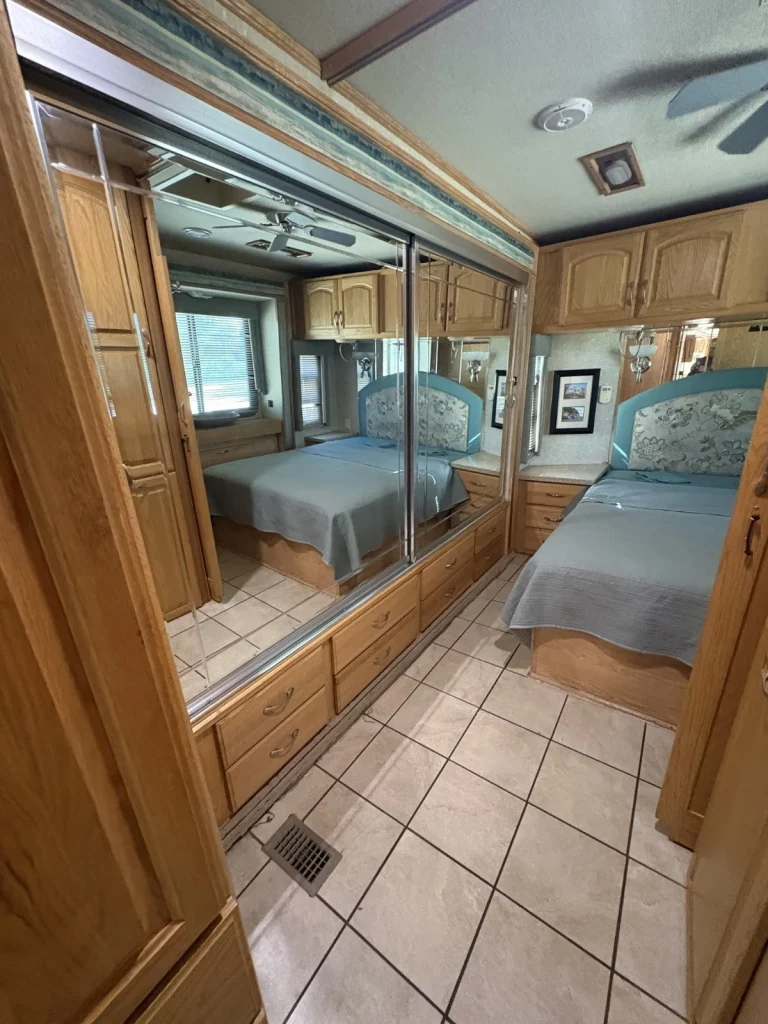
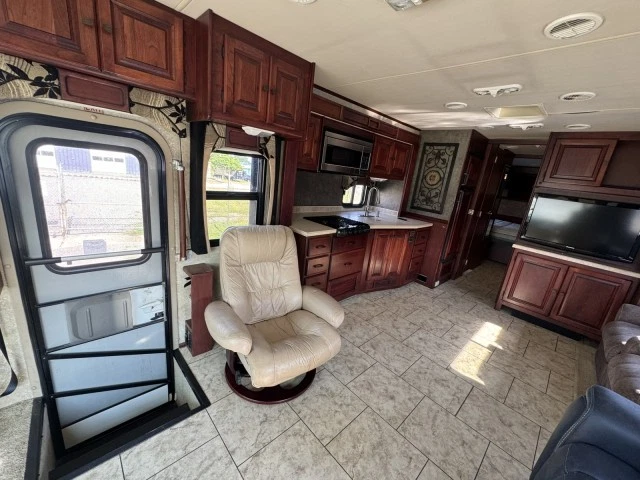
Focus on the Floor Plan
One of the biggest mistakes buyers make is choosing an RV because it looks beautiful.
The interior may photograph perfectly.
But you are not going to live inside a photograph.
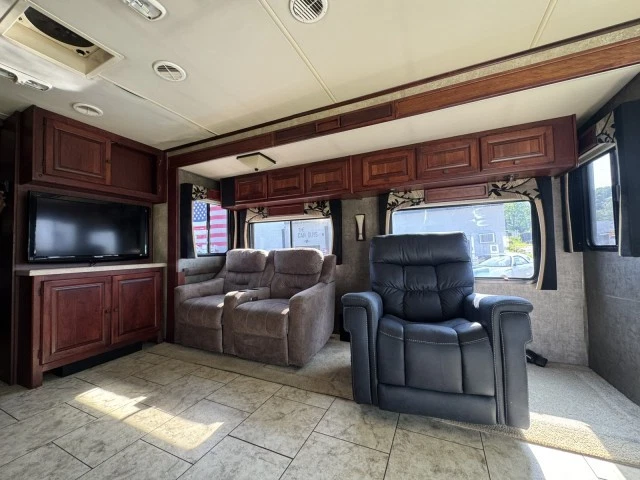
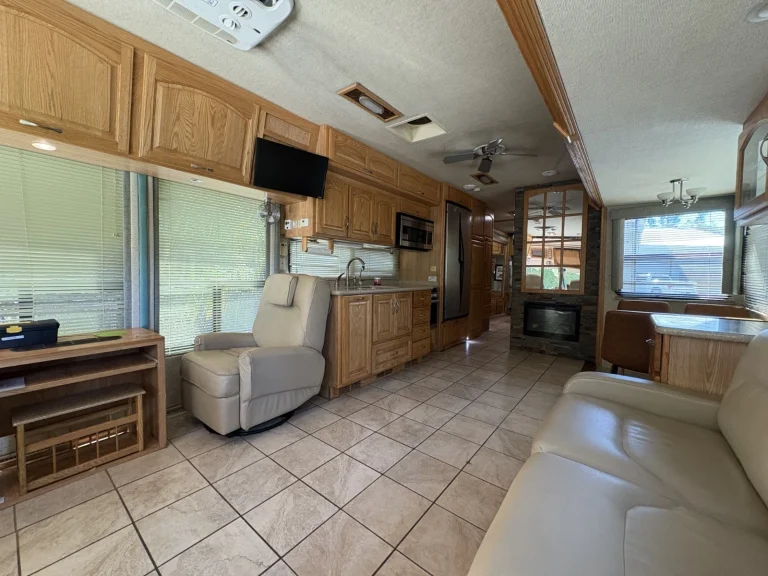
You are going to live inside the floor plan.
When you get an RV, walk through it slowly.
Sit on the sofa.
Lie on the bed.
Stand in the kitchen.
Open the refrigerator.
Step into the bathroom.
Open the cabinets.
Imagine getting ready for the day.
Imagine cooking dinner.
Imagine two people moving around at the same time.
A good floor plan should feel natural.
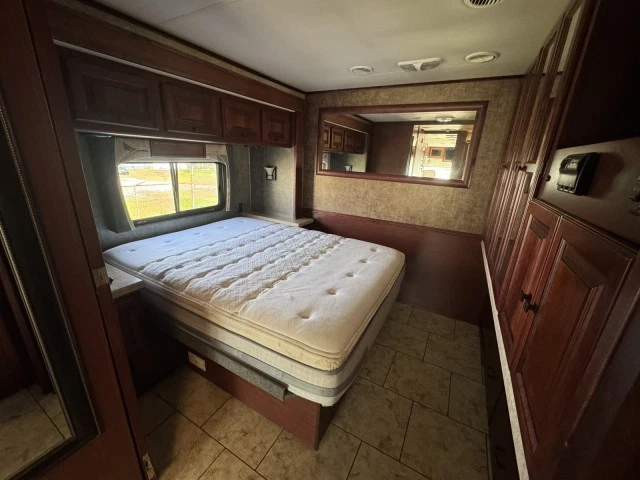
How Many People Will Sleep in the RV?
Advertised sleeping capacity can be misleading.
An RV may technically sleep eight people.
That does not necessarily mean eight adults will be comfortable.
Before you buy an RV, think about who will actually use the sleeping areas.
Families may want bunk beds.
Couples may prioritize a comfortable permanent bedroom.
Friends traveling together may want separate sleeping spaces.
Choose comfort over an impressive capacity number.
Check the Kitchen
The kitchen can become one of the most-used areas of your RV.
When you buy an RV, think about what you normally eat while traveling.
Do you prepare full meals?
Or do you mostly make coffee and simple breakfasts?
Do you need a large refrigerator?
Would you prefer more countertop space?
Is there enough storage?
Open the drawers.
Open the cabinets.
Check the sink.
Look at the cooking equipment.
The best kitchen is not necessarily the biggest one.
It is the one that matches your habits.
Don’t Underestimate Storage
Storage is something many new RV buyers overlook.
That changes quickly after the first trip.
When you purchase an RV, imagine packing everything you normally take on vacation.
Clothes.
Shoes.
Food.
Toiletries.
Cooking equipment.
Tools.
Camping chairs.
Outdoor equipment.
Cleaning supplies.
Then look at the available storage.
Open every cabinet.
Check the exterior compartments.
Look under beds.
Think about where everything will actually go.
Consider Bathroom Space
Bathroom size matters more during long trips.
When you buy an RV, step inside the bathroom.
Can you comfortably use the shower?
Is there enough headroom?
Can you open the cabinets?
Is there sufficient ventilation?
Is the toilet positioned comfortably?
A small bathroom can work perfectly if the layout is intelligent.
A larger bathroom can be useful for travelers who spend significant time on the road.
Think About Driving Comfort
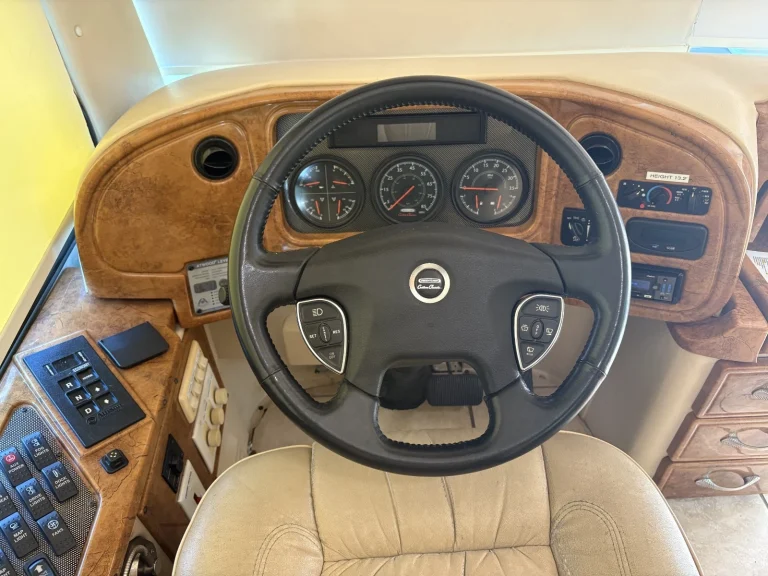
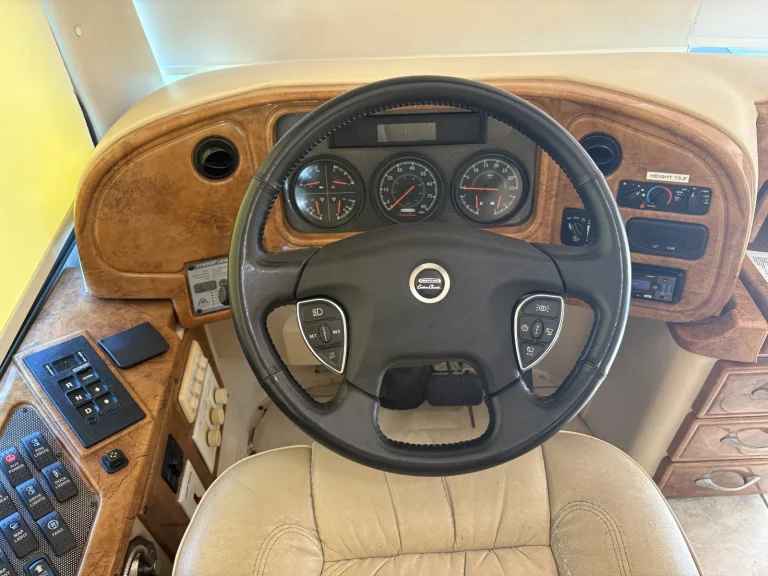
If you are buying a motorized RV, remember that it is both a home and a vehicle.
Before you get an RV, take a test drive.
Pay attention to:
- Visibility
- Steering
- Braking
- Seat comfort
- Mirror placement
- Dashboard controls
- Road noise
- Maneuverability
A beautiful interior does not matter much if you dread driving the RV.
Consider the RV’s Size
Larger RVs offer more living space.
They can also be more expensive to operate.
When deciding whether to buy an RV, think about where you plan to travel.
Will you stay at large campgrounds?
Will you visit smaller parks?
Will you drive through cities?
Will you explore mountain roads?
Will you need to park the RV at home?
A smaller RV may be easier to handle.
A larger RV may be better for extended stays.
There is no universally correct size.
If You’re Buying a Trailer, Check Your Tow Vehicle
This is critical.
Before you purchase an RV that you intend to tow, verify that your vehicle can safely handle it.
Do not rely on a salesperson’s general statement.
Check the manufacturer’s specifications.
Consider the trailer’s loaded weight, passengers, cargo, water, equipment, and other factors.
Your tow vehicle must be appropriate for the job.
Buying a trailer that exceeds your vehicle’s capabilities is not a bargain.
Inspect the Roof
If you plan to buy an RV, inspect the roof carefully, particularly when considering a used unit.
Water intrusion can cause serious damage.
Check around:
- Vents
- Skylights
- Air conditioners
- Antennas
- Roof seams
- Other openings
Look for cracks, damaged sealant, discoloration, or signs of previous repairs.
If you are unsure, hire a qualified RV inspector.
Look for Water Damage
Water damage deserves serious attention.
When you get an RV, inspect the interior carefully.
Check ceilings.
Check walls.
Check floors.
Look inside cabinets.
Inspect around windows.
Look underneath sinks.
Pay attention to unusual smells.
Soft flooring or discoloration can be warning signs.
Do not ignore something simply because the RV looks attractive.
Test the Plumbing
Before you buy an RV, test the plumbing system.
Run the faucets.
Turn on the shower.
Flush the toilet.
Test the water heater.
Check for leaks beneath sinks.
Look at visible plumbing connections.
Ask about the fresh-water system and waste tanks.
If something does not work, find out why before completing the purchase.
Test the Electrical System
Modern RVs depend on electrical systems for many important functions.
When you buy an RV, test the lights and electrical outlets.
Check the battery system.
Test shore power.
Ask about the inverter and converter if equipped.
If the RV has solar equipment, understand what it can actually power.
Do not assume that every electrical feature is working simply because it is installed.
Test the Appliances
If you want to purchase an RV, test as many appliances as possible.
Check:
- Refrigerator
- Freezer
- Stove
- Oven
- Microwave
- Air conditioner
- Furnace
- Television
- Washer and dryer if equipped
Appliances can be expensive to replace.
Knowing their condition before buying gives you more negotiating power and helps you budget for future repairs.
Check the Tires
Tires deserve careful attention.
Before you buy an RV, inspect tread, sidewalls, and tire age.
Old tires may require replacement even if they appear to have plenty of tread.
Ask when the tires were installed.
Also inspect the spare tire if one is included.
Inspect Brakes and Suspension
For towable RVs, braking and suspension systems are essential.
Before you get an RV, inspect the hitch, brakes, suspension, and related components.
Ask whether maintenance has been completed.
If you are unfamiliar with these systems, have a professional inspect them.
Check Exterior Storage
Exterior storage can make camping much easier.
When you buy an RV, open every exterior compartment.
Imagine storing:
- Chairs
- Grills
- Tools
- Hoses
- Outdoor equipment
- Cleaning supplies
- Spare parts
Easy access can make campsite setup much less frustrating.
Consider Solar Power
Solar power can be useful for travelers who enjoy camping without electrical hookups.
If you plan to purchase an RV, ask about the complete solar setup.
Do not focus only on the number of panels.
Ask about:
- Battery capacity
- Inverter
- Solar controller
- Monitoring
- Overall system capacity
The entire system determines how useful solar power will be.
Think About Generator Capacity
A generator can provide valuable backup power.
When you buy an RV, find out what the generator can operate.
Can it power air conditioning?
Can it handle kitchen appliances?
How much fuel does it consume?
How often does it need servicing?
Understanding these details helps you determine whether the system fits your camping style.
Consider Internet Connectivity
For remote workers, internet access can be extremely important.
If you plan to get an RV for extended travel, think about how you will stay connected.
You may need cellular connectivity, campground Wi-Fi, satellite-based solutions, or a combination of options.
The best solution depends heavily on where you intend to travel.
Think About Full-Time RV Living
Some people buy an RV for weekend adventures.
Others intend to live in one.
Those are very different situations.
Full-time RV living requires careful attention to:
- Storage
- Kitchen space
- Bathroom comfort
- Workspace
- Bed quality
- Power
- Water
- Internet
- Climate control
A layout that feels great for a weekend may feel cramped after several months.
Traveling With Children
Families need to think differently before they buy an RV.
Consider sleeping arrangements.
Look at storage.
Think about bathroom access.
Consider seating during travel.
Ask whether there is enough space for everyone to move around comfortably.
Bunk layouts can be particularly useful for families.
Traveling With Pets
Pets can influence the right RV choice.
Before you purchase an RV, consider flooring, ventilation, open space, storage, and cleaning.
Think about where your pet will sleep.
Consider where food and supplies will be stored.
An RV that is easy to clean can be a major advantage.
Think About Maintenance
Every RV requires maintenance.
When you buy an RV, understand that ownership includes more than travel.
You may need to maintain:
- Engine
- Generator
- Tires
- Batteries
- Roof
- Seals
- Plumbing
- HVAC
- Appliances
- Brakes
Preventive maintenance can help reduce the chance of larger problems.
Calculate Storage Costs
Where will your RV stay when you are not traveling?
Before you get an RV, measure your driveway if you intend to store it at home.
Consider height, length, width, and access.
If home storage is not practical, research RV storage options and include that expense in your budget.
Review Insurance Costs
Insurance is another ownership expense.
Before you buy an RV, get an idea of the insurance cost for the type and value of RV you are considering.
Coverage can vary depending on the vehicle, usage, location, and other factors.
Do not assume every RV has the same insurance cost.
Review the Warranty
If you purchase an RV, understand exactly what the warranty covers.
Ask about:
- Warranty duration
- Covered components
- Exclusions
- Service locations
- Claim procedures
- Maintenance requirements
Do not assume that every component has identical coverage.
Ask for Maintenance Records
Maintenance records are valuable.
If you buy an RV used, ask for documentation whenever possible.
Look for records relating to:
- Engine service
- Generator maintenance
- Tires
- Brakes
- Roof care
- Appliance repairs
- Battery replacement
- Plumbing work
A well-documented RV gives you a clearer picture of its history.
Why a Professional Inspection Can Be Worth It
An RV contains many systems that the average buyer may not understand.
If you plan to get an RV, especially a used one, consider hiring an independent RV inspector.
A professional can identify issues that may not be obvious during a quick walk-through.
The inspection fee may seem inconvenient.
But it can be a small price compared with discovering major structural or mechanical problems later.
Don’t Buy Based Only on Appearance
A polished interior can be tempting.
But when you buy an RV, condition and functionality should come first.
A beautiful RV with serious water damage is not a good deal.
A modest RV with excellent maintenance records may be a much better purchase.
Look beyond the furniture.
Look behind the cabinets.
Check the systems.
Inspect the exterior.
Test everything.
Don’t Pay for Features You Won’t Use
RV manufacturers offer many upgrades.
Some are genuinely useful.
Others may not matter to you.
When you buy an RV, ask yourself whether each feature will improve your actual trips.
If you rarely cook, an enormous kitchen may not matter.
If you never watch television, multiple screens may be unnecessary.
If you work remotely, however, a good workspace could be extremely valuable.
Spend money on features that match your lifestyle.
New RVs Versus Used RVs
Here is a simple comparison:
| Factor | New RV | Used RV |
|---|---|---|
| Purchase price | Usually higher | Usually lower |
| Depreciation | Often greater initially | May be lower |
| Latest features | Usually available | Depends on age |
| Previous history | Limited | Important to investigate |
| Warranty | Often available | May be limited |
| Value | Depends on model | Can be excellent |
Neither option is automatically better.
Your budget and priorities should decide.
How to Negotiate the Purchase
Negotiation becomes easier when you know the RV’s condition.
If you want to purchase an RV, research comparable models and identify any issues.
You can negotiate based on:
- Tire age
- Needed repairs
- Cosmetic damage
- Missing equipment
- Appliance problems
- Maintenance requirements
Be reasonable.
A fair negotiation is better than trying to force an unrealistic price.
Take a Complete Walkthrough
Before you buy an RV, ask the seller or dealer to demonstrate every major system.
Learn how to operate:
- Slide-outs
- Awning
- Leveling system
- Generator
- Water system
- Waste system
- Heating
- Air conditioning
- Appliances
- Electrical controls
Take notes.
Ask questions.
Do not leave with unanswered questions about basic operation.
Create an RV Comparison Sheet
If you are comparing several RVs, write everything down.
| Feature | RV A | RV B | RV C |
|---|---|---|---|
| Price | |||
| Floor plan | |||
| Sleeping capacity | |||
| Storage | |||
| Kitchen | |||
| Bathroom | |||
| Mileage/usage | |||
| Maintenance history | |||
| Warranty | |||
| Overall condition |
A simple comparison makes emotional buying decisions less likely.
Common Mistakes to Avoid
Buying Too Quickly
Do not let excitement replace inspection.
Choosing the Biggest RV
More space also means more responsibility.
Ignoring the Tow Vehicle
Make sure your vehicle can safely handle the RV.
Forgetting Ownership Costs
Fuel, maintenance, insurance, and storage add up.
Skipping the Inspection
Especially when buying used.
Focusing Only on Monthly Payments
Look at the total financing cost.
Buying Too Many Upgrades
Prioritize what you will actually use.
Ignoring Resale Value
Choose practical layouts and maintain the RV properly.
A Practical RV Buying Checklist
Before you get an RV, work through this checklist.
1. Define Your Travel Style
Know where and how you expect to travel.
2. Set Your Budget
Include ownership costs.
3. Choose the RV Type
Class A, B, C, trailer, fifth wheel, or another option.
4. Check Your Tow Vehicle
If buying a towable RV, confirm compatibility.
5. Compare Floor Plans
Choose comfort and functionality.
6. Inspect Storage
Make sure you have enough room for your belongings.
7. Test the Kitchen
Check appliances and storage.
8. Test the Bathroom
Check plumbing and comfort.
9. Inspect the Roof
Look for damage and water intrusion.
10. Check Tires
Look at age and condition.
11. Test Electrical Systems
Check batteries, outlets, lights, and major equipment.
12. Test Appliances
Make sure everything works.
13. Review Records
Ask for maintenance documentation.
14. Test Drive
Make sure you are comfortable operating it.
15. Get an Inspection
Consider professional inspection before finalizing the purchase.
Frequently Asked Questions
What is the best RV to buy?
There is no single best RV for everyone. The right choice depends on your budget, travel style, number of passengers, preferred destinations, and desired features.
How much should I spend when I buy an RV?
Your budget should include more than the purchase price. Consider financing, insurance, fuel, maintenance, storage, campground fees, registration, and repairs.
Is it better to buy a new or used RV?
Both can be good choices. New RVs provide modern features and potentially warranty coverage, while used RVs can provide excellent value when properly maintained.
What should I inspect before buying an RV?
Inspect the roof, exterior, walls, floors, plumbing, electrical system, appliances, tires, brakes, storage compartments, windows, doors, and other major components.
Should I get an RV inspection?
Yes, particularly when purchasing a used RV or when you are unfamiliar with RV systems. An independent inspection can identify expensive problems before purchase.
Can I live in an RV full-time?
Some RVs are designed better for extended or full-time living than others. If you plan to live in one, prioritize storage, kitchen space, bathroom comfort, power, workspace, and climate control.
How important is the floor plan?
Extremely important. A good floor plan can make a relatively small RV feel comfortable, while a poor layout can make a large RV feel cramped.
What is the biggest mistake first-time RV buyers make?
One common mistake is buying based on appearance or price without considering towing requirements, maintenance, storage, operating costs, and actual lifestyle needs.
Should I finance an RV?
Financing can be useful if the payment fits comfortably within your budget. Compare interest rates, loan terms, and total repayment rather than focusing only on the monthly payment.
Final Thoughts
If you want to buy an RV, take your time.
The excitement is understandable.
You start imagining road trips, campfires, new destinations, weekends away, and mornings spent somewhere beautiful.
But the best RV purchase happens when excitement is combined with careful planning.
Start with your lifestyle.
Think about where you travel.
Think about who travels with you.
Think about how much space you really need.
Then build your budget around reality rather than emotion.
When you purchase an RV, remember that the purchase price is only the beginning.
Fuel costs money.
Insurance costs money.
Maintenance costs money.
Tires wear out.
Batteries need replacement.
Campgrounds cost money.
Storage can cost money.
Unexpected repairs happen.
Leave room for those expenses.
Next, choose the right type of RV.
A compact Class B may be ideal for a couple who wants flexibility.
A Class C could make sense for a family.
A Class A might be appropriate for travelers who want substantial living space.
A travel trailer could be a practical choice for someone who already owns a capable tow vehicle.
A fifth wheel might suit someone looking for a spacious towable RV.
There is no prize for buying the biggest RV.
The goal is to buy the right one.
Once you find an RV you like, inspect it carefully.
Open the cabinets.
Test the appliances.
Run the water.
Check the electrical system.
Inspect the roof.
Look for water damage.
Check the tires.
Test the air conditioning.
Operate the slide-outs.
Take a test drive.
Ask questions.
Review the paperwork.
If you are buying used, consider a professional inspection.
These steps may take extra time, but they can save you from major headaches later.
Most importantly, don’t let a salesperson or a limited-time offer push you into a decision you are not ready to make.
There will always be other RVs.
A good purchase should still look good after you have had time to think about it.
When you finally buy an RV, the best feeling should not simply be excitement about the purchase.
It should be confidence that you chose something that genuinely fits your life.
That is what turns an RV from an expensive vehicle into something you actually enjoy owning.
The right RV gives you flexibility.
It gives you your own space.
It gives you a comfortable base while exploring new places.
It can turn a simple road trip into an experience you remember for years.
So take your time.
Compare your options.
Understand the costs.
Inspect carefully.
Choose practical features.
And buy according to the way you really travel.
When you buy an RV with that mindset, you are not simply purchasing a recreational vehicle.
You are investing in the freedom to decide where the next road leads.
Related guides
- Best RVs For Sale in 2026 for Every Budget
- RVs for Sale With Financing: 25 Practical Ways to Get the Right RV on the Right Budget
- Campers With Kitchens: 35 Smart Ways to Find the Perfect RV Kitchen for Comfortable Travel
- Best RV for Camping: 21 Real-World Lessons Every Buyer Should Know
Browse more in RVs for Sale or see all buying guides.