Cheap Used Campers: How to Find a Great Camper Without Blowing Your Budget
Buying a camper should be about freedom.
It should be about getting away for a few days, finding a quiet campsite, taking the kids somewhere new, or simply having a comfortable place to stay when the road starts calling.
But there is one problem.
Campers can be expensive.
That is why more buyers are looking at cheap used campers instead of automatically shopping for something brand new.
The used market can be surprisingly interesting.
You can find older campers that have plenty of life left in them. You can find lightly used travel trailers that were only taken out a handful of times. You can also find campers that look rough around the edges but are mechanically sound underneath.
The key is knowing what makes a cheap camper a smart purchase rather than an expensive project.
Not every low-priced camper is a bargain.
Some are cheap because the owner wants a quick sale.
Others are cheap because they have been sitting unused.
And some are cheap because they need serious repairs.
That is why shopping for cheap used campers requires more than searching by price.
You need to look at condition, history, maintenance, storage, tires, appliances, water damage, paperwork, and the overall cost of getting the camper ready for the road.
This guide will help you do exactly that.
Why Buyers Are Looking at cheap used campers
There is a simple reason used campers are attractive.
They can make camping more affordable.
A new camper may come with modern features, fresh interiors, and the latest technology. But if you are mainly interested in weekend trips, family vacations, fishing trips, festivals, or occasional road travel, you may not need everything that comes with a brand-new model.
That is where budget-priced used campers can make sense.
A used camper can give you the basic comforts you want without requiring the same upfront investment.
You might get sleeping space, a kitchen, storage, and even a bathroom for considerably less than you expected.
The important word here is value.
The cheapest camper is not automatically the best camper.
A better question is:
What am I getting for the money I am spending?
Cheap Does Not Have to Mean Bad
One of the biggest misconceptions about cheap used campers is that an affordable camper must be unreliable.
That simply is not true.
A camper can be inexpensive for perfectly reasonable reasons.
Perhaps the owner upgraded.
Perhaps the family no longer travels.
Perhaps the camper has been sitting in storage.
Perhaps the seller wants to simplify their life.
Perhaps the camper is older but has been maintained carefully.
These situations can create opportunities.
Of course, there are also campers that have been neglected.
Your job is to figure out which situation you are dealing with.
Start With Your Camping Plans
Before searching for inexpensive used campers, think about how you actually plan to use one.
This sounds obvious.
It is not.
People often buy campers based on what looks impressive instead of what fits their lifestyle.
A huge camper may look amazing in an advertisement.
But if you normally travel with one other person, it may be more space than you need.
Likewise, a tiny camper may look affordable until you realize that your family cannot comfortably sleep inside.
Think about your typical trip.
Will you travel every weekend?
Will you take one long vacation each year?
Will you camp with children?
Will you bring pets?
Will you cook inside?
Do you need a shower?
Do you need a toilet?
Will you spend most of your time outdoors?
When comparing cheap used campers, these questions can help you avoid buying something that does not actually suit you.
Choose the Right Camper Type
There are several types of campers worth considering.
Travel Trailers
Travel trailers are popular because they come in many sizes.
They can be compact enough for couples or large enough for families.
The major consideration is your tow vehicle.
Pop-Up Campers
Pop-up campers can be a practical entry point for people who want something lightweight and simple.
They are generally easier to store than larger campers.
Fifth Wheels
Fifth wheels provide a spacious layout and often include residential-style features.
However, they require a suitable truck and hitch arrangement.
Camper Vans
Camper vans combine transportation and sleeping space in one vehicle.
They can be particularly appealing for travelers who value mobility.
When shopping for budget-priced used campers, do not decide based only on price.
Think about how each type fits your actual plans.
Set a Realistic Budget
Your budget should include more than the purchase price.
This is one of the most important lessons when shopping for cheap used campers.
Suppose you have $15,000 available.
You find a camper for $14,500.
It looks like it fits your budget perfectly.
Then you discover it needs tires, a battery, roof maintenance, registration, insurance, and an appliance repair.
Suddenly, your $15,000 budget is gone.
That is why it is smart to keep some money available after the purchase.
Possible expenses include:
- Tires
- Batteries
- Registration
- Insurance
- Maintenance
- Roof sealing
- Appliance repairs
- Cleaning
- Storage
- Hitch equipment
- Camping accessories
A little financial breathing room can make ownership much less stressful.
Research Prices Before You Buy
Do not judge the price of inexpensive used campers based on one listing.
Look at several.
Compare campers with similar:
- Age
- Size
- Brand
- Floor plan
- Condition
- Features
- Mileage, where applicable
Online asking prices are not always the final selling prices.
Still, they give you useful information.
If almost every similar camper is listed around $20,000 and one is listed for $8,000, ask yourself why.
Maybe it is an incredible opportunity.
Maybe it needs major repairs.
Maybe the listing is suspicious.
Research helps you find out.
Inspect the Roof Carefully
If you are going to inspect cheap used campers, start with the roof.
Water is one of the biggest concerns when buying a used camper.
A roof may look fine from the ground while having damaged seals or areas where water has entered.
Look around:
- Vents
- Skylights
- Air-conditioning units
- Seams
- Roof edges
- Antennas
- Trim
Look for cracked sealant.
Look for bubbling.
Look for soft spots.
Look for obvious patching.
If something looks questionable, ask the seller about it.
If you are not comfortable climbing onto a camper roof, have a qualified professional inspect it.
Search for Water Damage
Water damage can turn a bargain into a financial headache.
Once inside, inspect the ceiling.
Look at the walls.
Check corners.
Open cabinets.
Look around windows.
Inspect underneath sinks.
Walk over the entire floor.
When examining budget-priced used campers, pay attention to stains, discoloration, swelling, soft materials, and unusual smells.
A musty odor deserves investigation.
It does not automatically mean the camper is ruined.
There may be a simple explanation.
But you should know what caused it before buying.
Walk Across the Floor
This is one of the easiest checks you can perform.
Walk slowly.
Feel how the floor responds.
A solid floor should feel firm.
Soft or spongy areas deserve attention.
Pay special attention around bathrooms, kitchens, doors, and windows.
When evaluating cheap used campers, do not allow attractive furniture or a freshly cleaned interior to distract you from structural clues underneath.
A camper can be redecorated.
Structural damage is another matter.
Inspect the Walls and Ceiling
Look carefully at interior surfaces.
Check corners.
Look around windows.
Inspect cabinet edges.
Look behind furniture where possible.
Look for discoloration or swelling.
When looking at inexpensive used campers, remember that water does not always announce itself with a giant puddle.
Sometimes the evidence is subtle.
A small stain.
A slightly soft wall.
A warped cabinet.
A strange smell.
These clues are worth investigating.
Examine the Exterior
Walk around the entire camper.
Do not just stand at the front and look at it.
Check the sides.
Inspect corners.
Open storage compartments.
Look at doors.
Examine windows.
Look at the underside where accessible.
Some scratches are normal.
A used camper is expected to have some signs of travel.
But major dents, warped panels, damaged trim, and evidence of previous accidents should be investigated.
When comparing cheap used campers, focus on whether the exterior damage is cosmetic or potentially structural.
Check the Tires
Tires deserve serious attention.
Many buyers see good tread and assume everything is fine.
That is not enough.
Ask how old the tires are.
Look for cracking.
Look for uneven wear.
Check for obvious damage.
A camper can have low mileage and still have old tires.
When inspecting budget-priced used campers, factor tire replacement into your budget if the tires are aging.
A complete tire replacement can change the economics of a deal very quickly.
Test the Electrical System
Turn on the lights.
Test outlets.
Try switches.
Check the battery.
Ask the owner to explain the electrical system.
If the camper uses multiple power sources, ask how they operate.
When examining cheap used campers, do not assume electrical systems work simply because the interior looks clean.
Test them.
A faulty outlet may be easy to repair.
A complicated electrical problem may require professional attention.
Test the Plumbing
Turn on the faucets.
Run the shower.
Flush the toilet.
Check underneath sinks.
Look for leaks.
Inspect visible plumbing connections.
Ask about the water heater.
When checking inexpensive used campers, plumbing deserves careful attention because an ignored leak can eventually cause much larger problems.
Test the Refrigerator
The refrigerator is an important part of many campers.
Ask the seller to demonstrate it.
Make sure it operates as expected.
Ask whether it has required repairs.
A refrigerator replacement can be expensive, so it is worth knowing its condition before agreeing on a price.
When comparing cheap used campers, functioning appliances can add real value.
Test the Air Conditioner
Turn the air conditioner on.
Let it operate for a while.
Listen for unusual sounds.
Check whether the interior temperature changes.
A quick five-second test does not tell you much.
When inspecting budget-priced used campers, allow important systems enough time to demonstrate that they are working properly.
Test the Heating System
If the camper has a furnace or other heating system, test it appropriately.
Ask about previous maintenance.
Find out whether the owner has experienced problems.
You may not need heating during every trip, but when you need it, you really need it.
This is another reason to test everything when shopping for cheap used campers.
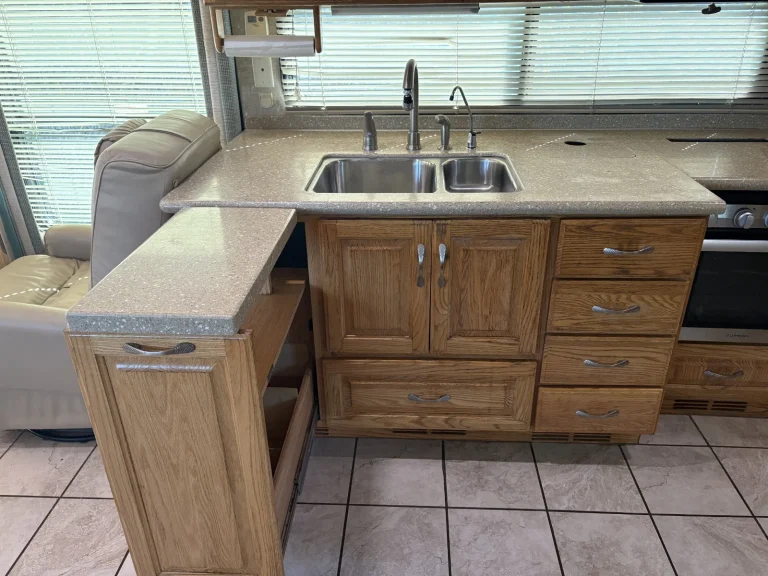
Inspect the Kitchen
Open the cabinets.
Open the drawers.
Test the sink.
Check the stove.
Test the oven if available.
Look around the refrigerator.
Check for signs of leaks.
A few scratches are not necessarily important.
Water damage underneath the sink is much more important.
When viewing inexpensive used campers, prioritize functionality and structural condition over cosmetic perfection.
Inspect the Bathroom
Bathrooms can reveal problems quickly.
Check the shower.
Look around the toilet.
Inspect the floor.
Check under the sink.
Look at walls and corners.
If you see swollen materials or unexplained stains, ask questions.
When considering cheap used campers, a clean-looking bathroom should still receive a thorough inspection.
Check the Awning
If the camper has an awning, test it.
Look at the fabric.
Check for tears.
Inspect the arms.
Make sure it extends and retracts properly.
An awning may seem like a small feature, but replacement costs can add up.
When comparing budget-priced used campers, include accessories in your evaluation.
Ask About the Battery
Find out how old the battery is.
Ask whether it holds a charge.
Ask how the camper has been stored.
A battery that has been sitting unused for years may need replacement.
When inspecting cheap used campers, batteries are relatively easy to overlook because they are not always visible in photographs.
Ask About the Roof Maintenance
Do not just ask whether the roof leaks.
Ask when it was last inspected.
Ask whether the seals have been maintained.
Ask whether any repairs have been performed.
Ask whether the owner has documentation.
When looking at inexpensive used campers, maintenance history can tell you much more than a seller’s statement that everything is “fine.”
Ask Why the Camper Is Being Sold
This question is simple.
It is also useful.
Why are you selling it?
The answer could be completely ordinary.
Maybe the owner is upgrading.
Maybe they do not travel anymore.
Maybe their family has changed.
Maybe they bought another camper.
When talking about cheap used campers, listen to the answer and see whether it matches the rest of the camper’s story.
You are not trying to interrogate the seller.
You are trying to understand the history.
Ask How the Camper Was Stored
Storage can affect condition.
Ask whether the camper was:
- Stored outdoors
- Kept under cover
- Stored indoors
- Used seasonally
- Left unused for long periods
When evaluating cheap used campers, storage history can help you understand how much exposure the camper had to weather and moisture.
Ask About Previous Repairs
Do not be afraid of repaired components.
Repairs are part of owning a used camper.
What matters is knowing what was repaired and why.
Ask about:
- Roof work
- Plumbing repairs
- Appliance replacements
- Electrical repairs
- Brake work
- Tire replacements
- Structural repairs
When searching for budget-priced used campers, a camper with documented repairs may actually be easier to evaluate than one with no history at all.
Look at Maintenance Records
Receipts are useful.
Service records are useful.
Written documentation gives you evidence of how the camper was cared for.
When evaluating cheap used campers, ask whether the owner kept records.
You may discover that the seller replaced several expensive components recently.
That could add value.
Consider Cosmetic Problems
Not every ugly camper is a bad camper.
Maybe the carpet is dated.
Maybe the curtains are unattractive.
Maybe the cushions have seen better days.
Maybe the cabinets look old.
Those things can often be changed.
When searching for inexpensive used campers, cosmetic imperfections can sometimes create opportunities.
The important thing is separating cosmetic issues from structural problems.
Check the Towing Requirements
If you are buying a towable camper, make sure your vehicle can handle it.
Do not guess.
Check the relevant weight ratings.
Consider passengers.
Consider cargo.
Consider water, food, camping equipment, and everything else you plan to carry.
When buying cheap used campers, towing compatibility is one of the first things you should confirm.
A camper is not a bargain if your vehicle cannot safely tow it.
Think About Storage Before Buying
Where will you park the camper?
This question is easy to forget.
Measure your driveway.
Check the height.
Check the length.
Think about access.
If you need storage elsewhere, calculate the cost.
When comparing budget-priced used campers, a smaller model may sometimes be more practical simply because it is easier and less expensive to store.
Consider Fuel and Travel Costs
If you are buying a motorized camper, fuel consumption matters.
If you are buying a towable camper, your towing vehicle’s fuel consumption matters.
Think about how often you plan to travel.
When shopping for cheap used campers, do not focus entirely on the purchase price.
The best camper is one you can actually afford to use.
Check Insurance and Registration Costs
Costs vary by location and vehicle.
Before buying, find out what you are likely to pay.
This is another reason to leave some room in your budget.
When comparing inexpensive used campers, the purchase price should be only one part of your financial calculation.
Be Careful With Extremely Low Prices
An unusually cheap listing can be exciting.
It can also be a warning.
If similar campers sell for $18,000 and one suddenly appears for $5,000, investigate.
Ask why.
Request details.
Inspect it.
Verify ownership.
Do not send money simply because someone says another buyer is ready to purchase.
When searching for cheap used campers, patience is one of your strongest tools.
Avoid Pressure Tactics
You may hear things like:
“Someone is coming in an hour.”
“I have three other buyers.”
“Send the deposit now.”
“You will lose the deal if you wait.”
Sometimes these statements are true.
Sometimes they are designed to make you act before thinking.
When buying budget-priced used campers, never let artificial urgency replace proper due diligence.
If the deal disappears because you wanted to inspect the camper first, that may be a deal worth losing.
Get a Professional Inspection
If you are serious about buying cheap used campers, consider paying for an inspection.
An experienced RV technician can identify issues you may never notice.
This can be especially useful with older campers.
A professional may inspect:
- Roof
- Frame
- Flooring
- Electrical system
- Plumbing
- Appliances
- Tires
- Brakes
- Mechanical components
Spending money on an inspection can save much more money later.
Take a Test Drive
If the camper is motorized, take a proper test drive.
Pay attention to:
- Steering
- Braking
- Acceleration
- Transmission
- Vibration
- Warning lights
- Unusual sounds
When evaluating inexpensive used campers, the driving experience can tell you things that a stationary inspection cannot.
If it is a towable camper, inspect the towing setup and make sure your vehicle and hitch arrangement are appropriate.
Check the Paperwork
Never forget the paperwork.
Before buying cheap used campers, verify the seller’s ownership documentation and identifying information.
Check applicable lien information.
Make sure the seller can legally transfer ownership.
Follow the registration and transfer process required where you live.
If the paperwork seems questionable, stop.
A cheap camper is not worth a complicated ownership problem.
Negotiate Based on Facts
Negotiation becomes easier when you have evidence.
Suppose the tires are old.
That gives you a legitimate reason to discuss price.
Maybe the refrigerator does not work.
That is another consideration.
Maybe the roof needs maintenance.
Again, calculate the likely expense.
When negotiating for budget-priced used campers, explain your offer instead of simply demanding a lower price.
A respectful conversation often gets better results.
Do Not Be Afraid to Walk Away
Sometimes the best deal is the one you do not make.
Walk away if the seller refuses a reasonable inspection.
Walk away if the paperwork is unclear.
Walk away from serious unexplained water damage.
Walk away if repairs are going to exceed your budget.
Walk away if the seller pressures you into an unsafe decision.
There will be other cheap used campers.
You do not need to buy the first one that looks promising.
What Makes a Great Used Camper?
A great used camper does not have to be perfect.
It needs to be suitable.
It should have a solid structure.
The major systems should work.
The tires should be serviceable.
The paperwork should be clear.
The price should make sense.
The camper should fit your vehicle and your lifestyle.
That combination is what creates value.
When searching for inexpensive used campers, keep those priorities in mind.
Older Campers Can Be Excellent Purchases
Do not automatically reject a camper because it is older.
Some older models were built with simple, practical layouts.
Some have been maintained extremely well.
Some owners have replaced major components over the years.
When evaluating cheap used campers, age should be considered alongside condition.
An older, well-maintained camper can be more appealing than a newer camper that has been neglected.
First-Time Buyers Can Benefit From Going Used
Buying your first camper is a learning experience.
You may think you need a huge kitchen.
Then you realize you cook outside.
You may think you need a large bathroom.
Then you realize you mostly use campground facilities.
You may think you need four beds.
Then you realize only two people usually travel.
When buying budget-priced used campers, you can potentially learn what works for you without committing to the most expensive option immediately.
A Simple Buying Checklist
Before you purchase, go through this list.
Exterior
- Inspect the roof.
- Check windows.
- Examine doors.
- Look at siding.
- Inspect storage compartments.
- Check the awning.
- Examine tires.
Interior
- Check the ceiling.
- Inspect walls.
- Walk the floors.
- Open cabinets.
- Check furniture.
- Test kitchen equipment.
- Inspect the bathroom.
Systems
- Test electricity.
- Test plumbing.
- Run the refrigerator.
- Test air conditioning.
- Test heating.
- Test the water heater.
- Test the generator if equipped.
Mechanical
- Inspect the engine if motorized.
- Test brakes.
- Check steering.
- Review service history.
- Inspect tires.
Documents
- Verify ownership.
- Check identification information.
- Review maintenance records.
- Check applicable lien information.
This checklist makes comparing cheap used campers much easier.
How to Compare Two Campers
Imagine you have two choices.
Camper A costs $10,000.
Camper B costs $13,000.
Camper A needs tires, a battery, roof maintenance, and appliance repairs.
Camper B has newer tires, recent maintenance, working appliances, and better documentation.
Which one is cheaper?
Possibly Camper B.
That is the mindset you need when comparing inexpensive used campers.
Look at the total picture.
Do You Need Every Modern Feature?
Probably not.
Modern RVs can have impressive technology.
But ask yourself what you will actually use.
Do you need a giant entertainment system?
Do you need every smart feature?
Do you need the newest appliances?
Or do you mainly need a comfortable bed, a working kitchen, storage, and a reliable place to sleep?
When searching for cheap used campers, prioritizing practical features can help you stay within budget.
Make Your First Trip Simple
After buying a camper, you do not have to immediately plan a 2,000-mile adventure.
Start nearby.
Spend a weekend close to home.
Test the systems.
Learn how everything works.
Find out what you forgot to pack.
Discover what needs adjustment.
This approach is particularly useful after purchasing budget-priced used campers because you can identify minor issues before traveling far from home.
Frequently Asked Questions
Are cheap used campers worth buying?
Yes, they can be. The important thing is to inspect the camper carefully and calculate the complete ownership cost rather than judging the deal only by its asking price.
Where can I find cheap used campers?
You can look at private listings, local advertisements, RV marketplaces, classified websites, dealerships, and community sales listings.
What should I inspect first?
Start with the roof and look for water intrusion. Then inspect the floor, walls, tires, exterior, appliances, plumbing, electrical systems, and mechanical components.
Are older campers reliable?
They can be. A well-maintained older camper can provide excellent value. Condition and maintenance history are often more useful than age alone.
What is the biggest problem to watch for?
Water damage deserves particular attention. Hidden moisture can lead to expensive structural repairs.
Should I hire an RV inspector?
For a significant purchase, hiring an experienced RV inspector or technician can be a smart investment.
Can I negotiate the price?
Yes, private sellers often negotiate. Base your offer on comparable prices and documented repairs rather than simply making an extremely low offer.
Are cosmetic problems a reason to walk away?
Not necessarily. Old flooring, upholstery, curtains, and cabinet finishes can often be updated. Structural damage is much more important.
How old is too old for a camper?
There is no single age that makes every camper a bad purchase. Maintenance, condition, construction, and previous use all matter.
Should I buy a camper that needs repairs?
It depends on the repairs. Minor maintenance can make sense if the purchase price leaves room in your budget. Major structural problems require much more caution.
How can I avoid scams?
Be careful with extremely low prices, pressure to send money quickly, unclear ownership, refusal to allow inspections, and sellers who cannot provide reasonable information about the camper.
Should I inspect the camper more than once?
If possible, yes. A second visit can help you look at the camper more objectively after the initial excitement has worn off.
Final Thoughts
Finding cheap used campers can be a smart way to enter the camping lifestyle without taking on the cost of a brand-new RV.
But the goal should never be to find the absolute lowest price.
The goal is to find the best value.
That means looking past shiny photographs and attractive descriptions.
Check the roof.
Look for water damage.
Walk the floor.
Inspect the walls.
Check the tires.
Test the electrical system.
Run the plumbing.
Test the refrigerator.
Check the air conditioner.
Inspect the heating system.
Look at the kitchen.
Check the bathroom.
Ask about repairs.
Review maintenance records.
Verify ownership documents.
Take a test drive when appropriate.
And calculate the real cost before you make your offer.
The best inexpensive used campers are the ones that give you affordable access to the lifestyle you want without immediately demanding a fortune in repairs.
Remember, a camper does not need to be perfect.
It needs to be sound.
It needs to be practical.
It needs to fit your vehicle, your travel plans, and your budget.
A few scratches are not the end of the world.
Old curtains can be replaced.
A dated interior can be refreshed.
A worn-looking cabinet can be repaired.
But serious water damage, major structural problems, unsafe mechanical components, or questionable paperwork should make you slow down.
When you find one of the cheap used campers that seems promising, take your time.
Ask questions.
Inspect everything.
Bring someone experienced if you can.
Get a professional opinion when necessary.
And do not allow a seller to pressure you into making a decision you are not comfortable with.
There will always be another camper.
The right deal should still look good after you have investigated it.
That is ultimately what makes cheap used campers so appealing.
You are not simply buying an old vehicle.
You are buying the opportunity to travel, explore, spend time outdoors, take spontaneous weekends away, and create memories without necessarily spending a huge amount of money.
So shop carefully.
Compare honestly.
Negotiate respectfully.
And when you finally find the right camper, stop worrying about the listing and start thinking about where the road is going to take you.
Related guides
- Quality Campers for Sale: 27 Smart Ways to Find a Camper Worth Your Money
- Best Campers for Families: 23 Real-Life Things Parents Should Know Before Buying
- Family Campers for Sale: 27 Things to Know Before Choosing the Right One
- New Campers for Sale: A Practical Guide to Choosing the Right Camper for Your Next Adventure
Browse more in Campers for Sale or see all buying guides.