Used Class A Motorhomes: 31 Smart Ways to Find a Spacious RV Without Overpaying
Buying an RV can feel exciting right up until you realize how many choices are sitting in front of you. Floor plans, mileage, engine types, maintenance records, sleeping capacity, storage, appliances, tires, generators—the list gets long very quickly.
That is especially true when you’re shopping for used Class A motorhomes.
A Class A can feel more like a small apartment than a traditional camper. There is usually plenty of living space, a comfortable driving position, generous storage, and enough room to make long trips genuinely enjoyable.
But buying one requires more than finding a beautiful interior and deciding you like the price.
The smartest buyers slow down.
They look beyond shiny cabinets and attractive upholstery. They ask questions, inspect important systems, check maintenance records, and think carefully about how the RV will actually be used.
This guide takes a practical approach to used Class A motorhomes, focusing on what matters before money changes hands.
Why Buyers Keep Looking at Used Class A Motorhomes
There is a simple reason pre-owned Class A motorhomes remain attractive: they can offer a tremendous amount of space for the money.
A previously owned motorhome may give you access to features that would be expensive on a new RV.
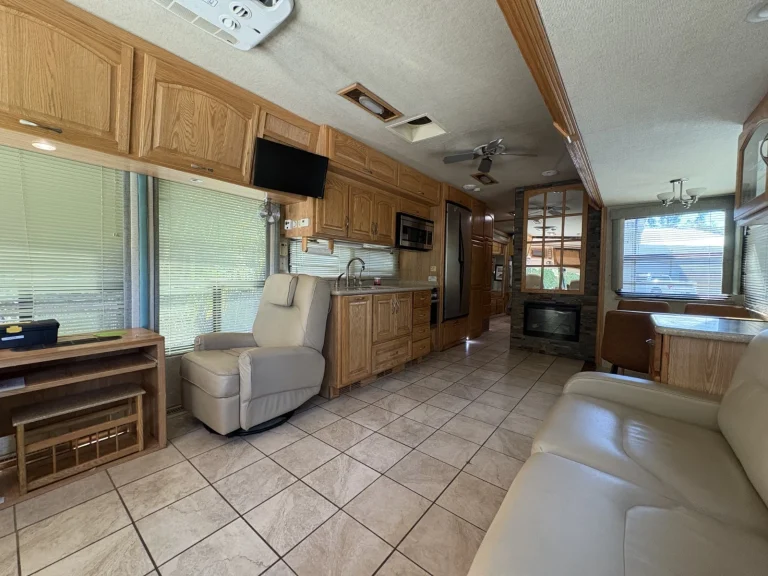
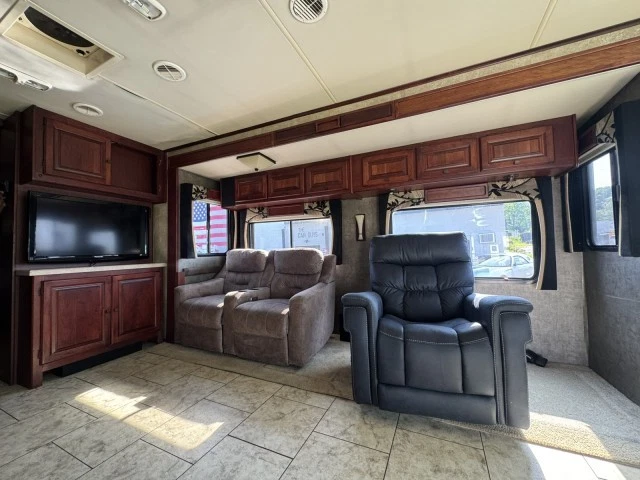
You might find residential-style kitchens, large refrigerators, spacious bathrooms, multiple sleeping areas, entertainment systems, exterior storage compartments, and comfortable living rooms.
The depreciation that happens during the first years of ownership can also make second-hand Class A motorhomes interesting to budget-conscious buyers.
You’re not necessarily paying for that brand-new feeling.
Instead, you’re looking at what the RV can actually do for you today.
That distinction matters.
A buyer searching for pre-owned Class A motorhomes should think about value rather than simply looking for the lowest advertised price.
A cheap RV with major repairs waiting around the corner isn’t necessarily cheap.
A slightly more expensive motorhome with strong maintenance records, good tires, clean systems, and a healthy engine could ultimately be the better deal.
Start With Your Real Travel Plans
Before comparing used Class A motorhomes, think about how you expect to use the RV.
Are you planning weekend trips?
Long summer vacations?
Cross-country travel?
Extended stays at campgrounds?
Perhaps you want a comfortable vehicle for visiting family while keeping hotel expenses under control.
Your answer changes what you should prioritize when evaluating second-hand Class A motorhomes.
A couple traveling occasionally may not need the same layout as a family spending several months on the road.
Likewise, someone who plans to stay mostly at full-service campgrounds may have different requirements from a traveler who prefers remote camping.
Think About How Many People Will Sleep Inside
Sleeping capacity is one of the easiest details to overlook when browsing pre-owned Class A motorhomes.
A listing might say the RV sleeps six, but that doesn’t automatically mean six adults will be comfortable.
Look at the actual beds.
Check their dimensions.
Consider whether converting a dining area or sofa into a bed every night would become annoying.
For families, the practical sleeping arrangement may matter more than the maximum number printed in the brochure.
Consider How Long You Will Stay
A motorhome that works beautifully for two-night trips might feel cramped during a two-week vacation.
When evaluating used Class A motorhomes, imagine spending an entire rainy afternoon inside.
Where will everyone sit?
Where will coats and shoes go?
Is there enough pantry storage?
Can two people move around the kitchen without constantly bumping into each other?
Those small questions become surprisingly important over time.
Don’t Let a Beautiful Interior Distract You
A polished interior can make second-hand Class A motorhomes look irresistible.
Fresh upholstery, modern flooring, new curtains, upgraded televisions, and clean countertops can create a strong first impression.
But cosmetics are not mechanical condition.
An older RV can receive thousands of dollars in cosmetic upgrades while still having serious problems underneath.
That is why experienced buyers look at both sides of the equation.
A clean interior is certainly a positive sign.
It simply shouldn’t be the only sign you’re looking for.
Look Above You
When inspecting pre-owned Class A motorhomes, pay special attention to the roof and ceiling.
Water intrusion is one of the problems buyers should take seriously.
Look for stains, soft areas, bubbling materials, unusual odors, or signs that ceiling panels have been repaired.
Check around roof vents, air-conditioning units, skylights, and other openings.
A professional inspection is particularly worthwhile if anything looks questionable.
Open Every Cabinet
Storage areas can tell you things that a showroom-style walkthrough won’t.
Open cabinets.
Look underneath sinks.
Inspect corners.
Check storage compartments.
When viewing second-hand Class A motorhomes, don’t be afraid to spend time looking in places that aren’t designed to impress you.
You may discover signs of leaks, corrosion, repairs, pests, or neglected maintenance.
Pay Attention to the Chassis
The living area gets most of the attention, but used Class A motorhomes are also heavy vehicles built on substantial chassis.
The chassis condition deserves serious consideration.
Look underneath when possible.
Check for obvious fluid leaks, corrosion, damaged components, worn suspension parts, and other signs of neglect.
The exact mechanical systems vary depending on the motorhome’s make, model, age, engine, and chassis.
That is another reason a qualified RV or automotive technician can be worth the money.
Engine Condition Matters
If you’re comparing pre-owned Class A motorhomes, don’t judge engine condition by appearance alone.
Ask about service history.
Find out whether routine maintenance was performed.
Ask whether major repairs have been completed.
If the seller has documentation, review it.
An engine that has been maintained consistently can tell a much better story than an engine with an uncertain past.
Don’t Forget the Transmission
The transmission is another expensive system hiding beneath the floor.
A test drive can reveal clues.
Pay attention to shifting behavior, unusual noises, hesitation, warning lights, or anything that feels abnormal.
A smooth test drive doesn’t guarantee perfect mechanical health, but it can help identify obvious concerns.
For buyers considering second-hand Class A motorhomes, a pre-purchase inspection remains one of the strongest ways to reduce risk.
Mileage Is Only One Part of the Story
Many people begin searching used Class A motorhomes by sorting listings from lowest mileage to highest.
That makes sense at first.
But mileage doesn’t tell the whole story.
An RV that has been driven very little can still suffer from age-related deterioration.
Tires, seals, batteries, hoses, appliances, roof materials, and other components can age even when the odometer barely moves.
On the other hand, a motorhome with more miles may have been maintained consistently and used regularly.
The better question isn’t simply, “How many miles?”
It’s, “How has this RV been cared for?”
Ask for Maintenance Records
Documentation can separate promising pre-owned Class A motorhomes from questionable ones.
Look for oil changes, generator maintenance, tire replacements, brake work, cooling-system service, appliance repairs, roof maintenance, and other relevant records.
You don’t need a perfect paper trail.
However, a seller who can explain what has been done and provide supporting documentation gives you more information to work with.
Tires Deserve More Attention Than They Get
Tires are easy to ignore when you’re excited about the interior.
That can be a costly mistake.
When examining second-hand Class A motorhomes, inspect tire condition and age carefully.
Tires can deteriorate with time even when tread depth appears acceptable.
Look for cracking, uneven wear, bulges, damage, and other warning signs.
If replacement is approaching, include that expense in your negotiating position and overall budget.
A low purchase price can quickly look different after a large set of tires needs replacing.
Check the Generator
For many owners, the generator is an important part of the RV experience.
It can provide electricity when campground hookups aren’t available.
When evaluating pre-owned Class A motorhomes, ask when the generator was last serviced.
If possible, run it under load.
Listen for unusual sounds.
Watch for excessive smoke.
Check whether it starts easily and continues operating properly.
A generator that has been neglected may require attention sooner than expected.
Test the Electrical System
Turn things on.
Seriously.
When viewing used Class A motorhomes, test as many electrical features as practical.
Check interior lights, outlets, televisions, appliances, air conditioning, heating controls, and other equipment.
If the RV has multiple electrical systems, understand which features work on shore power, batteries, or the generator.
Small electrical problems can sometimes become frustrating troubleshooting projects.
Test the Plumbing
The same principle applies to plumbing.
Turn on faucets.
Run water.
Flush the toilet.
Check the shower.
Look under sinks.
Inspect visible plumbing connections.
A careful inspection of second-hand Class A motorhomes should include the water system because leaks can create problems far beyond the original plumbing issue.
Ask whether the tanks have been maintained and whether any plumbing repairs have been performed.
Examine the Appliances
Large RV appliances aren’t cheap.
That makes appliance testing particularly important when considering pre-owned Class A motorhomes.
Check the refrigerator.
Test the microwave.
Run the stove.
Test heating and cooling systems.
If the RV includes an oven, make sure it operates correctly.
Don’t assume that everything works simply because the seller says it does.
Air Conditioning Is Especially Important
Imagine buying an RV in summer and discovering that one of the air-conditioning units isn’t working properly.
Not ideal.
When comparing used Class A motorhomes, run the air-conditioning system long enough to determine whether it is actually cooling.
Listen for strange noises.
Check airflow.
Look for signs of water leakage.
Floor Plans Can Make or Break the Experience
Two second-hand Class A motorhomes can have nearly identical exterior dimensions and feel completely different inside.
That’s because floor plans matter.
One might have a large kitchen.
Another may prioritize bedroom space.
A third could provide more lounge seating.
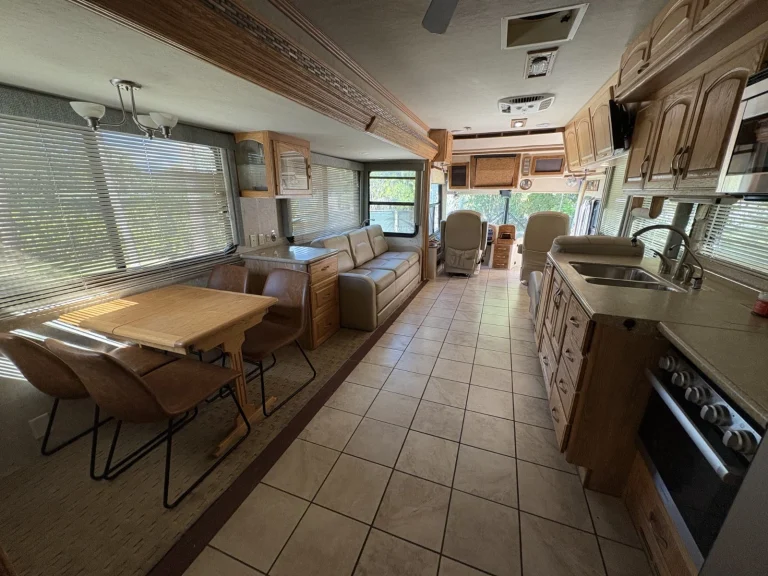
Some layouts offer opposing sofas or slide-outs that create a much larger living area.
Think about movement rather than photographs.
Where do people walk?
Can the refrigerator open without blocking a passage?
Can someone use the bathroom while another person is preparing food?
Does the bedroom provide enough privacy?
These details become obvious once you’re physically inside.
Slide-Outs Are Wonderful—When They Work
Slide-outs can transform pre-owned Class A motorhomes by dramatically increasing usable interior space.
But slide-outs also introduce additional mechanical components.
Operate every slide-out.
Listen carefully.
Watch the movement.
Check seals.
Look for uneven operation.
Inspect the surrounding wall and flooring for signs of moisture or previous repairs.
A slide-out that hesitates or moves unevenly deserves further investigation.
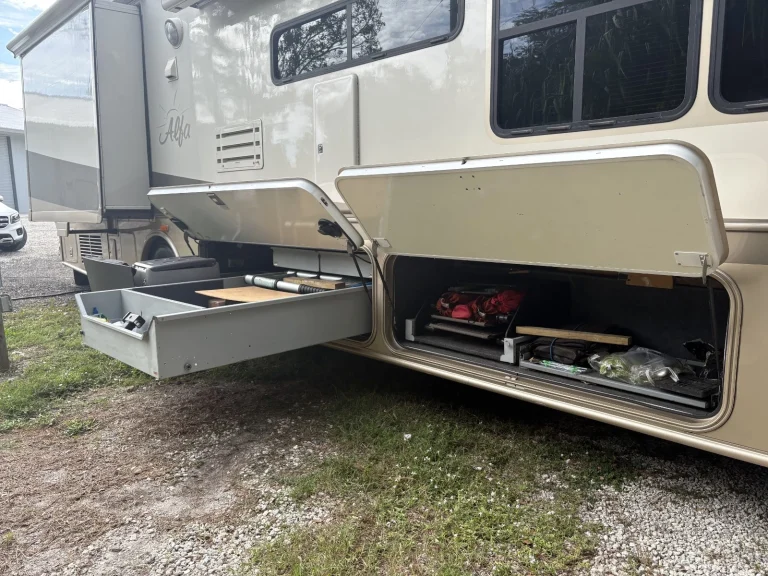
Storage Is More Important Than It Looks
One of the biggest advantages of second-hand Class A motorhomes can be their storage capacity.
But don’t judge storage from a photograph.
Open the compartments.
Imagine your actual belongings inside.
Where will camping chairs go?
What about tools?
Clothing?
Food?
Outdoor equipment?
Hoses and electrical cables?
A beautiful RV becomes much less enjoyable if you’re constantly trying to find somewhere to put basic necessities.
Think About Driving Before Buying
Driving a large motorhome isn’t exactly the same as driving a family car.
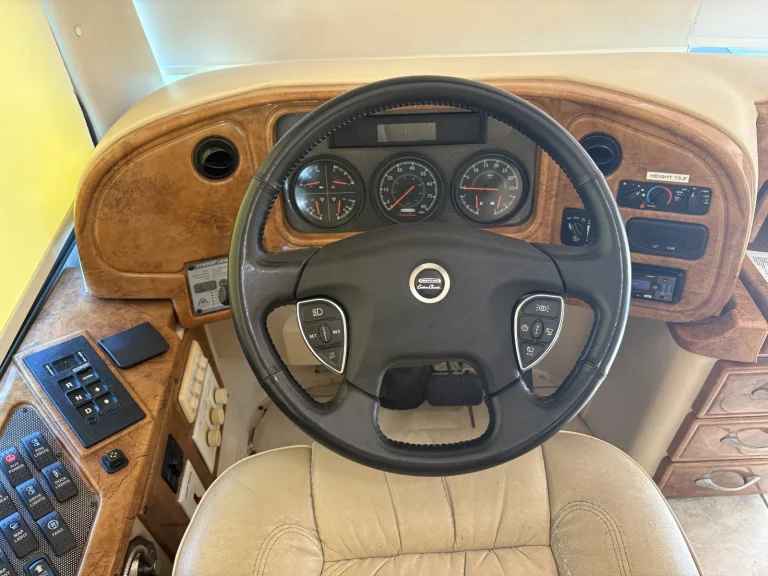
If you’re new to Class A RVs, spend time considering visibility, turning radius, braking, mirrors, height, and overall confidence.
When test-driving used Class A motorhomes, choose a route that includes different road conditions if possible.
Pay attention to how the vehicle feels.
Don’t rush.
A motorhome should feel manageable rather than intimidating.
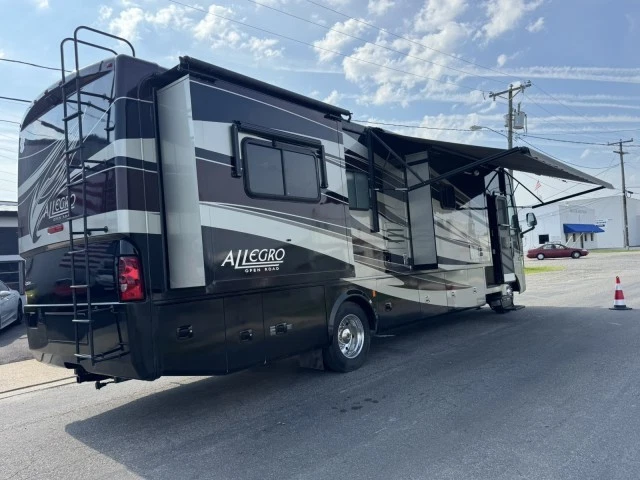
Know the Dimensions
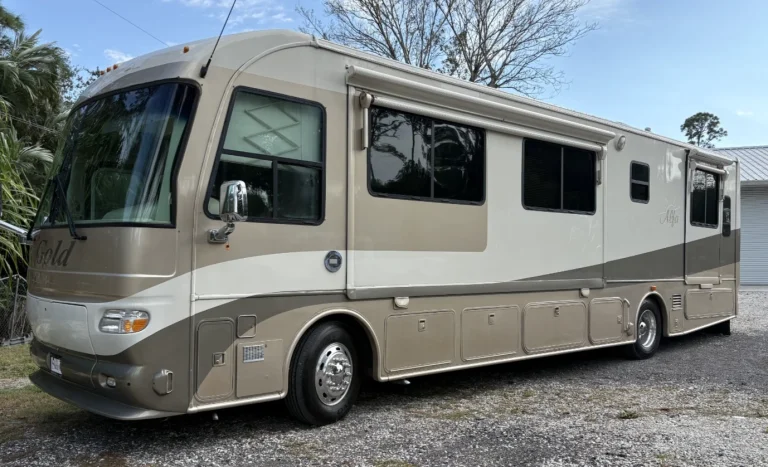
Before purchasing pre-owned Class A motorhomes, write down the vehicle’s overall length, height, and width.
Then think about where you plan to travel.
Will it fit your driveway?
Will it fit your preferred campground?
Are there bridges, tunnels, roads, or parking areas you regularly use where vehicle dimensions could become an issue?
These questions are easy to answer before purchase and annoying to discover afterward.
Set a Complete Budget
The purchase price is only the beginning.
When comparing second-hand Class A motorhomes, create a realistic ownership budget.
Include insurance.
Registration.
Fuel.
Storage.
Maintenance.
Tires.
Generator service.
Campground fees.
Unexpected repairs.
If you finance the motorhome, include interest and financing costs too.
A comfortable purchase price is one that leaves room in your budget for ownership.
Don’t Automatically Choose the Cheapest Listing
Cheap used Class A motorhomes can attract attention quickly.
There’s nothing wrong with finding a bargain.
The problem begins when price becomes the only deciding factor.
A bargain that needs major engine work, roof repairs, tires, appliances, and suspension components may become more expensive than a better-maintained RV.
Look at total value.
A slightly higher purchase price can sometimes make more sense if the RV has been maintained properly.
Learn to Negotiate Without Being Aggressive
Negotiating the price of pre-owned Class A motorhomes doesn’t need to feel like a confrontation.
Come prepared.
Know the RV’s condition.
Understand comparable listings.
Document repairs that may be required.
Then make a reasonable offer based on facts.
For example, worn tires, malfunctioning appliances, deferred maintenance, or visible water damage can provide legitimate reasons to discuss price.
The strongest negotiations are usually calm and informed.
Private Seller or Dealer?
There are advantages to both.
Private sellers may offer competitive pricing.
Dealers may provide additional services, financing options, inspections, warranties, or other purchasing conveniences depending on the business.
When comparing second-hand Class A motorhomes, focus less on the label and more on the actual transaction.
Ask what is included.
Ask what isn’t.
Read every document before signing.
Never assume that verbal promises automatically appear in the final agreement.
Ask Why the RV Is Being Sold
This is one of the simplest questions you can ask.
“Why are you selling it?”
The answer won’t automatically tell you whether the RV is good or bad.
But it gives you context.
Maybe the owner is downsizing.
Maybe they no longer travel.
Maybe they bought a different RV.
Those are very different situations from someone selling because of a recurring problem.
When shopping for pre-owned Class A motorhomes, listen carefully to the answer and ask follow-up questions.
Check the RV’s History
A vehicle history check can provide useful information depending on the motorhome and jurisdiction.
Look for signs of accidents, title problems, major damage, or other reported events.
Also verify that the identification information on the paperwork matches the vehicle.
With used Class A motorhomes, documentation is just as important as the physical inspection.
Don’t Ignore the Roof
If there is one inspection area worth repeating, it is the roof.
Roof problems can become expensive.
Water has a way of traveling.
A small opening can eventually affect ceilings, walls, insulation, flooring, cabinetry, and other areas.
That is why anyone shopping for second-hand Class A motorhomes should take roof condition seriously.
If you’re uncomfortable inspecting it yourself, hire someone who knows RV construction.
Look for Signs of Previous Repairs
Repairs aren’t automatically bad.
In fact, a well-repaired RV can be perfectly worthwhile.
The question is what happened and how it was fixed.
When inspecting pre-owned Class A motorhomes, look for mismatched materials, fresh sealant, unusual paint, patched flooring, replacement panels, and other evidence of previous work.
Then ask questions.
A documented repair can be much less concerning than unexplained damage.
Don’t Rush Because Someone Says “Someone Else Is Interested”
Pressure can make otherwise careful buyers behave differently.
If you’re shopping for used Class A motorhomes, don’t let artificial urgency push you into skipping an inspection.
A good RV is worth evaluating carefully.
If the seller refuses reasonable inspection requests, consider that a warning sign.
You want the opportunity to make an informed decision.
Consider Age, But Don’t Fear It Automatically
Older second-hand Class A motorhomes can offer excellent value.
They may have spacious layouts and features that would cost considerably more on a newer model.
Age alone doesn’t determine quality.
Condition does.
A carefully maintained older motorhome may be a better purchase than a newer example that has been neglected.
Think in terms of maintenance history, current condition, design, usability, and expected repair needs.
Compare Several Motorhomes
The first RV you love isn’t necessarily the best deal.
Try to see several pre-owned Class A motorhomes before making your final decision.
Every additional inspection teaches you something.
You start noticing differences in construction.
You become more aware of floor plans.
You recognize common wear areas.
You get better at identifying what matters and what doesn’t.
Comparison is one of the best tools available to a buyer.
Make a Simple Inspection Checklist
Don’t rely entirely on memory.
Bring a checklist when looking at second-hand Class A motorhomes.
Include:
- Roof and ceiling
- Walls and flooring
- Engine
- Transmission
- Tires
- Brakes
- Generator
- Batteries
- Electrical outlets
- Plumbing
- Water tanks
- Air conditioning
- Heating
- Refrigerator
- Stove
- Microwave
- Slide-outs
- Awning
- Windows
- Doors
- Storage compartments
- Documentation
A checklist makes it easier to compare different RVs objectively.
Know What “Good Value” Really Means
The best used Class A motorhomes aren’t necessarily the newest or cheapest.
Good value comes from the relationship between price, condition, features, maintenance, usability, and future costs.
An RV that fits your lifestyle is worth more to you than one packed with features you’ll never use.
That’s an important mindset shift.
You’re not buying someone else’s dream RV.
You’re buying the RV that makes sense for your own travel plans.
Think About Resale Value
You may not plan to sell your motorhome anytime soon.
Still, resale value deserves some attention.
Popular layouts, desirable features, good maintenance records, and strong overall condition can help make pre-owned Class A motorhomes easier to sell later.
Keep your service documents.
Maintain the vehicle.
Address small problems before they become major ones.
Good ownership habits can help protect your investment.
Where Should You Search?
Online marketplaces, RV dealerships, private sellers, classified listings, local RV communities, and specialty websites can all provide opportunities.
When searching for second-hand Class A motorhomes, don’t limit yourself to a single source.
Prices and inventory can vary widely.
Search multiple listings.
Compare similar models.
Save interesting examples.
Then look for patterns.
If one RV is dramatically cheaper than comparable examples, find out why.
When Should You Walk Away?
Sometimes the smartest purchase decision is deciding not to buy.
If you discover major structural damage, unexplained water intrusion, severe mechanical problems, questionable paperwork, or a seller who refuses basic due diligence, walking away can protect you from a very expensive mistake.
There will always be more used Class A motorhomes.
You don’t need to force the deal.
A good buying experience should leave you excited about the road ahead—not worried about what might break next.
How to Make Your Final Decision
After inspecting pre-owned Class A motorhomes, step back for a moment.
Forget the excitement.
Forget the salesperson.
Forget the beautiful photos.
Ask yourself five questions.
Does the RV fit my lifestyle?
Can I comfortably afford ownership?
Is the condition acceptable?
Do the records support the seller’s claims?
Would I still want this RV if I had to keep it for several years?
If you can answer those questions confidently, you’re in a much stronger position.
Final Thoughts
Finding the right second-hand Class A motorhomes doesn’t have to be complicated.
It does require patience.
The best buyers don’t simply search for the biggest RV or the lowest price. They look for a motorhome that makes sense mechanically, financially, and practically.
Take your time.
Inspect carefully.
Ask uncomfortable questions.
Check the paperwork.
Test the systems.
And whenever possible, get an independent professional inspection before committing to the purchase.
The right motorhome should give you something valuable beyond square footage and features.
It should give you confidence when you turn the key and start planning the next trip.
For anyone considering pre-owned Class A motorhomes, that confidence is ultimately what makes a purchase feel worthwhile.
Frequently Asked Questions About Used Class A Motorhomes
Are used Class A motorhomes worth buying?
Yes, used Class A motorhomes can provide excellent value when they have been properly maintained and thoroughly inspected. The key is buying based on condition rather than age or appearance.
What should I inspect first?
Start with the roof, ceiling, walls, floors, tires, engine, generator, and evidence of water intrusion. Then move through the electrical, plumbing, appliances, and slide-outs.
Is low mileage important?
Low mileage can be beneficial, but it isn’t everything. Maintenance history, age, storage conditions, and overall care can be equally important when evaluating second-hand Class A motorhomes.
Should I get a professional inspection?
Absolutely. A qualified inspection can identify problems that aren’t obvious during a casual walkthrough. The cost of an inspection can be small compared with the cost of a major repair.
Are older Class A motorhomes a bad investment?
Not necessarily. Well-maintained older pre-owned Class A motorhomes can offer impressive space and features at attractive prices. Condition and maintenance are more important than age alone.
What makes a good Class A floor plan?
The best floor plan depends on your lifestyle. Look for comfortable sleeping arrangements, practical kitchen space, usable storage, bathroom accessibility, and enough room for everyone traveling with you.
Should I negotiate on a used motorhome?
Yes. Negotiation is common, particularly when an RV has documented maintenance needs or repairs that should be addressed. Base your offer on evidence rather than simply asking for a discount.
What hidden costs should buyers expect?
Budget for insurance, registration, fuel, campground fees, storage, maintenance, tires, repairs, generator service, and other ownership expenses.
How can I avoid buying a problem RV?
Don’t rush. Inspect the motorhome carefully, review documentation, test major systems, verify paperwork, research comparable prices, and consider an independent inspection before purchasing used Class A motorhomes.
What is the biggest mistake buyers make?
One of the biggest mistakes is becoming emotionally attached to an RV before completing the inspection. Fall in love with the travel possibilities, but make the purchase decision based on facts.
Related guides
- Motorhome Sales: 37 Smart Ways to Find the Right RV at the Right Price
- Family motorhomes for sale: A Parent’s Guide to Choosing an RV That Works in Real Life
- Motorhome for Sale: A Real-World Guide to Finding the Right One
- Used Motorhomes for Sale by Owner: A Smart Buyer’s Guide to Finding the Right RV
Browse more in Motorhomes for Sale or see all buying guides.