Family RVs for Sale: 15 Things Families Should Know Before Buying
Buying an RV for a family is a little different from buying one for a solo traveler or a couple.
You are not just looking for four wheels, a bed, and somewhere to park for the night.
You are thinking about where everyone will sleep.
You are thinking about the bathroom.
You are thinking about food, clothes, muddy shoes, entertainment, luggage, safety, and those moments when everybody has been in the same small space for six hours.
That is why choosing among family RVs for sale deserves some real thought before you hand over your money.
The good news is that the right RV can completely change the way a family travels.
Instead of rushing through airports, booking expensive hotel rooms, or trying to squeeze everyone into one car, an RV gives you another option.
You can bring your own bed.
You can prepare your own meals.
You can stop when the children need a break.
You can wake up somewhere beautiful and have breakfast without leaving your own little home on wheels.
For many families, that freedom is the entire point.
But not every RV is designed with family travel in mind.
Some look enormous from the outside but have surprisingly limited sleeping space. Others have excellent beds but almost no storage. Some have beautiful kitchens but are difficult to drive.
When comparing family RVs for sale, you need to look beyond photographs.
You need to imagine your family actually living inside the vehicle.
That is where this guide begins.
1. Start With Your Family, Not the RV
The easiest mistake is falling in love with an RV before deciding what your family actually needs.
A beautiful interior can be tempting.
So can a large television, fancy cabinets, or a huge exterior.
But those things should come later.
Before browsing family RVs, write down who will regularly travel in the RV.
Is it two parents and two children?
Three children?
A larger family?
Will grandparents sometimes join?
Will friends travel with you?
The answers can change the type and size of RV you should consider.
A family that travels with two children every summer may have completely different needs from a family of six taking monthly trips.
Think About Real Trips
Do not plan around the perfect vacation.
Think about the trips you are actually likely to take.
If most journeys will be two or three nights, you may not need an enormous RV.
If your family plans to spend weeks traveling, additional living space becomes much more important.
When looking through family RVs on the market, ask yourself where you will spend most of your time.
Will you eat inside?
Will you cook?
Will the children play indoors when it rains?
Will you need separate sleeping areas?
Those questions are more useful than simply asking how many feet long the RV is.
2. Sleeping Space Is a Big Deal
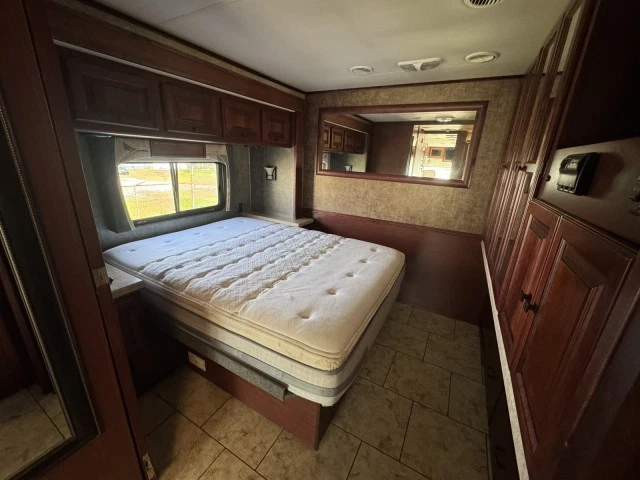
Parents sometimes focus heavily on the kitchen or bathroom and forget one of the most important features: sleeping arrangements.
Everyone needs somewhere comfortable to sleep.
That sounds obvious.
Yet sleeping layouts vary dramatically among family RVs for sale.
You might find bunk beds, convertible dinettes, sofa beds, rear bedrooms, overhead sleeping areas, or combinations of several designs.
Each arrangement has advantages.
Bunk beds can be particularly useful for families with children because they create dedicated sleeping areas without requiring the entire living room to be converted every evening.
A convertible dining area can save space during the day.
A private bedroom can give parents somewhere to retreat after the children are asleep.
Count the Beds Carefully
Do not simply trust a listing that says an RV “sleeps six.”
Find out how.
If six people technically fit but two have to sleep on a tiny converted seat, that may not be the experience your family wants.
When comparing family RVs, look at the actual sleeping dimensions.
Think about children’s ages, too.
A layout that works perfectly for toddlers may not work when those children become teenagers.
Buying with the future in mind can save you from replacing the RV too quickly.
3. Storage Becomes More Important With Every Child
One person can travel with remarkably little.
Families are different.
There are shoes.
Jackets.
Towels.
Food.
Toys.
Games.
School items.
Sports equipment.
Camping equipment.
And somehow, there always seems to be one more bag.
That is why storage deserves serious attention when examining family RVs for sale.
Open every cabinet you can.
Look underneath beds.
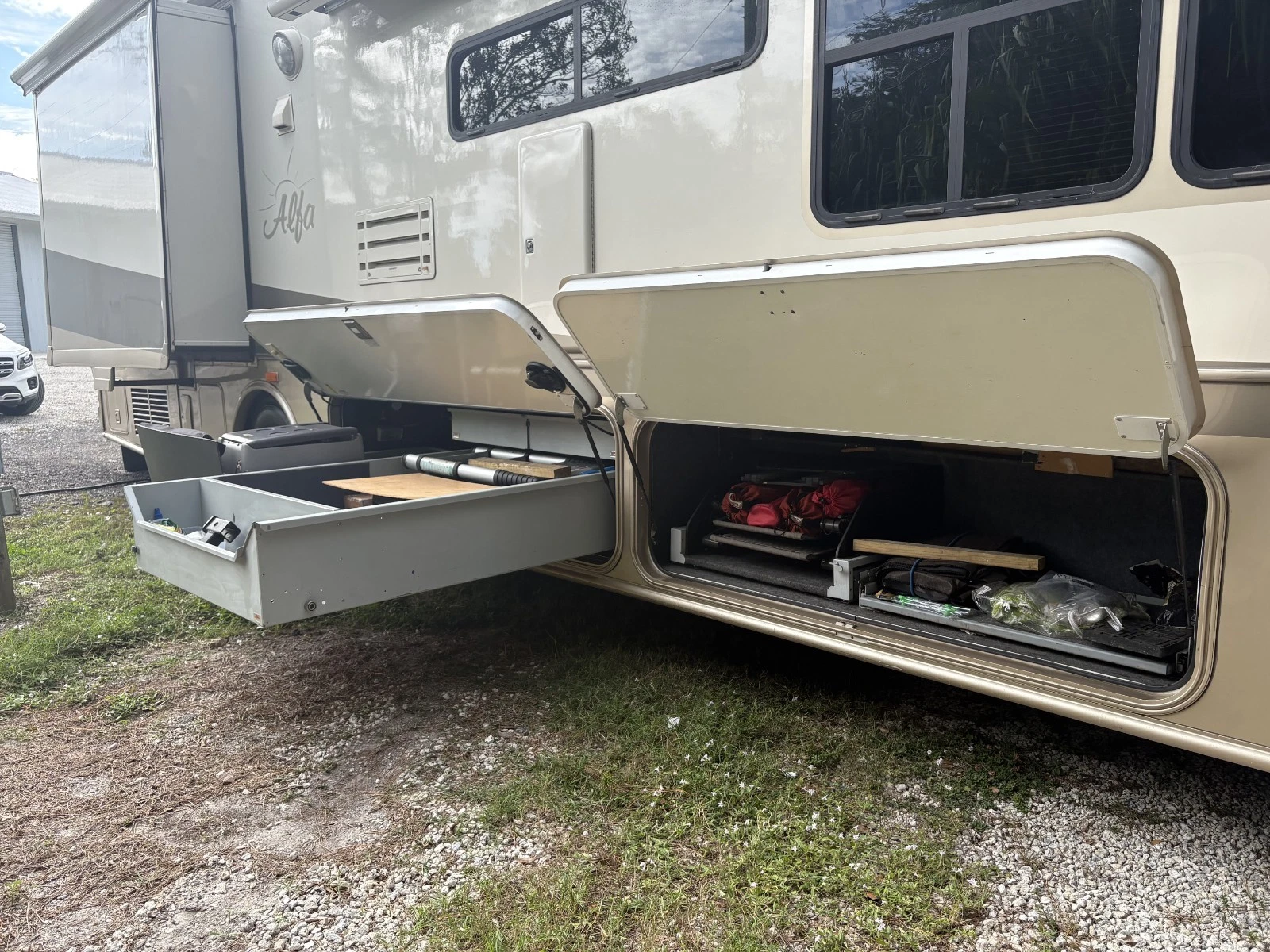
Check exterior storage compartments.
Look at pantry space.
Think about where dirty shoes will go.
Think about where wet towels will dry.
A large storage compartment is useful, but interior organization matters just as much.
Test the Storage Yourself
If you are viewing an RV in person, bring a mental checklist.
Where would the children’s clothes go?
Where would you store cereal?
Where would you put camping chairs?
Where would bicycles or outdoor equipment go?
Where would you keep cleaning supplies?
The best family RVs on the market are not necessarily the ones with the biggest storage numbers.
They are the ones where the storage is practical and easy to access.
4. The Kitchen Can Make Family Travel Easier
Eating out every day gets expensive.
It can also become exhausting when you have hungry children asking when dinner is coming.
An RV kitchen gives you another option.
You can prepare breakfast before leaving.
You can make sandwiches for a hiking trip.
You can keep drinks cold.
You can make dinner after arriving at camp.
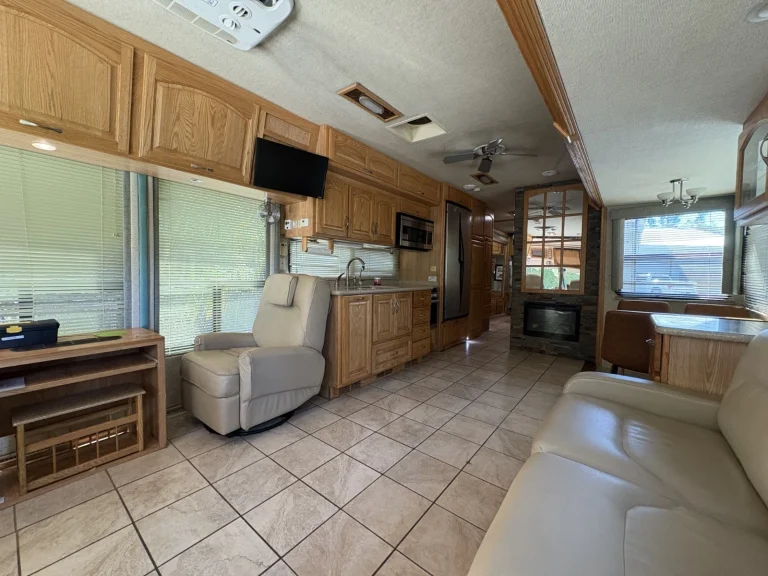
When reviewing family RVs for sale, look at the kitchen from a practical perspective.
Is there enough counter space?
Is the refrigerator large enough?
Can more than one person move around the kitchen?
Are cabinets easy to reach?
Is there somewhere to store plates and cooking equipment?
Think About Your Normal Meals
You do not need a restaurant kitchen.
You need a kitchen that matches the way your family actually eats.
If you mostly make simple meals, a compact kitchen may be perfect.
If you enjoy cooking while traveling, additional counter space and storage may be worth prioritizing.
The right family RVs should make daily life easier, not create another chore.
5. Bathroom Space Matters More Than You Think
There is a moment on almost every family road trip when someone says, “I need the bathroom.”
It rarely happens when you are conveniently parked.
That is one reason families appreciate having a bathroom inside the RV.
Depending on the model, you may find a compact wet bath, separate shower and toilet areas, or a larger bathroom toward the rear.
While comparing family RVs on the market, open the bathroom door.
Actually stand inside.
Can you move comfortably?
Can the children use it?
Is there enough storage for toiletries?
Can the shower be used without turning the entire bathroom into a wet room?
Do Not Judge by Photos
Bathrooms often look larger in photographs than they feel in person.
A family should consider the people who will actually use the space.
If you have young children, bathroom convenience can become especially important during long travel days.
A practical bathroom may be worth more to your family than an expensive entertainment system.
6. Consider How Easy the RV Is to Drive
A huge RV may look impressive.
But bigger is not automatically better.
If the driver feels uncomfortable behind the wheel, the family may avoid using the RV.
That defeats the purpose.
When browsing family RVs for sale, consider who will drive.
Will one parent do most of the driving?
Will both parents share?
Are you comfortable with the vehicle’s height and width?
Have you driven something similar before?
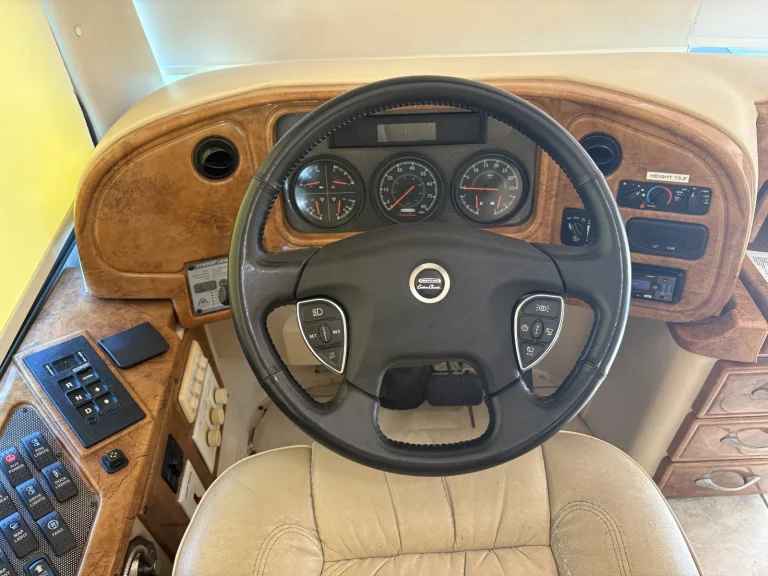
Comfort Behind the Wheel
Visibility matters.
So does turning radius.
So does braking.
Mirrors matter.
Driving position matters.
The more confident the driver feels, the more enjoyable family travel becomes.
If you are buying a motorhome, arrange a proper test drive when possible.
If you are considering a towable RV, remember that the towing vehicle is part of the equation.
7. If You Are Buying a Travel Trailer, Check the Tow Vehicle
A travel trailer does not travel alone.
Your truck or SUV needs to be capable of towing it safely and comfortably.
This is one area where buyers should never guess.
Before purchasing family RVs in trailer form, check the manufacturer’s towing specifications and your vehicle’s rated capacity.
Consider the loaded weight, not just an empty trailer.
Your family will bring clothes, food, water, camping equipment, bicycles, toys, and other belongings.
Those things add weight.
A trailer that looks manageable when empty can feel very different when loaded for a real trip.
Do Not Buy the Trailer First
If you already own a tow vehicle, start there.
Find out what it can safely handle.
Then shop for a trailer that fits within those limits.
That simple approach can eliminate many headaches.
8. Think About the Floor Plan
Two RVs can have almost identical exterior dimensions and feel completely different inside.
That is because floor plans matter.
One might have bunk beds.
Another might have a larger living room.
Another might prioritize a private bedroom.
When looking through family RVs for sale, study the floor plan carefully.
Imagine everyone moving around inside.
Picture breakfast.
Picture rainy weather.
Picture bedtime.
Picture six people getting ready in the morning.
That mental test tells you a lot.
Try the “Sunday Morning” Test
Imagine nobody has anywhere to be.
Everyone is awake.
Someone is making coffee.
Someone is eating breakfast.
The children are getting dressed.
Another person needs the bathroom.
Would everybody constantly be in each other’s way?
If yes, the layout may become frustrating during longer trips.
If everyone has enough room to move, you may have found a much better match.
9. Weather Changes the Family RV Experience
Sunny weather makes almost any campsite look perfect.
Real travel includes rain.
It includes cold mornings.
It includes hot afternoons.
Sometimes everyone has to stay inside.
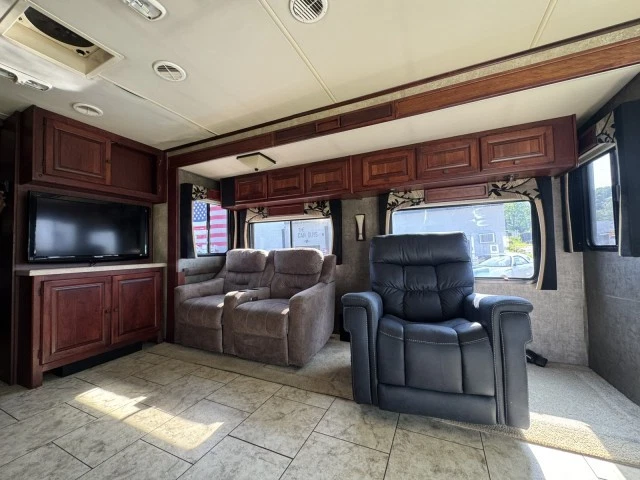
That is why indoor living space deserves attention when comparing family RVs on the market.
Ask yourself whether the RV would still be comfortable if the family could not sit outside.
Is there enough seating?
Can children entertain themselves?
Is there adequate ventilation?
Does the heating or cooling system suit your planned destinations?
An RV that works beautifully in perfect weather may be less practical during a week of storms.
10. Entertainment Is Useful, But Do Not Overdo It
Children eventually get bored.
That is simply part of traveling.
An RV can make long journeys easier with movies, games, books, music, and other activities.
But entertainment should support the trip rather than become the entire trip.
When considering family RVs for sale, look for a sensible balance.
A comfortable seating area can be more valuable than an enormous screen.
Storage for board games may matter more than a complicated entertainment system.
USB charging points can be surprisingly useful.
And having a table where children can draw, read, or play games is a feature many parents appreciate.
11. Safety Should Be Part of the Buying Decision
Family travel means taking safety seriously.
Look at seat belts.
Check sleeping arrangements.
Understand how passengers are supposed to travel while the RV is moving.
Inspect tires.
Look at brakes.
Check lights.
Review maintenance records on used vehicles.
When examining family RVs, do not allow excitement to push safety questions into the background.
A professional inspection can be worthwhile, particularly when buying a used RV.
Look Beyond the Interior
A clean interior does not tell you everything about a vehicle.
Inspect the exterior.
Look for signs of water intrusion.
Check seals.
Look at the roof.
Inspect tires for age and condition.
Examine storage compartments.
Ask about previous repairs.
For used family RVs for sale, maintenance history can be just as important as appearance.
12. New or Used? Both Can Make Sense
There is no universal answer.
A new RV may offer the latest features, fresh interiors, and fewer concerns about previous ownership.
A used RV can offer something equally attractive: value.
Families often have a lot of expenses already.
School costs.
Food.
Activities.
Travel.
Clothing.
A used RV may leave more money available for actually enjoying the trips.
That is why used family RVs on the market deserve serious consideration.
Inspect Before Buying Used
Never assume that a low price automatically means a good deal.
Look at the age.
Check the mileage where applicable.
Review service records.
Inspect the appliances.
Test the water system.
Check electrical components.
Look for leaks.
Make sure doors and windows work properly.
A professional inspection can help identify problems that are easy to miss during a quick viewing.
13. Calculate the Real Cost
The purchase price is only the beginning.
You may also have insurance.
Fuel.
Maintenance.
Storage.
Registration.
Camping fees.
Repairs.
Accessories.
When comparing family RVs, leave room in the budget for these costs.
An affordable RV can become expensive if you buy at the absolute top of your budget and have nothing left for maintenance.
It is usually better to purchase a vehicle you can comfortably afford to operate.
Leave Money for the First Trip
This is a simple rule that many buyers forget.
Do not spend every available dollar on the RV.
You will probably want bedding.
Kitchen supplies.
Outdoor chairs.
Cleaning products.
Storage containers.
Basic tools.
Camping equipment.
And, of course, fuel.
The best family RVs for sale are the ones that fit comfortably into your entire travel budget.
14. Think About the Type of RV
There is no single RV type that wins for every family.
Different layouts solve different problems.
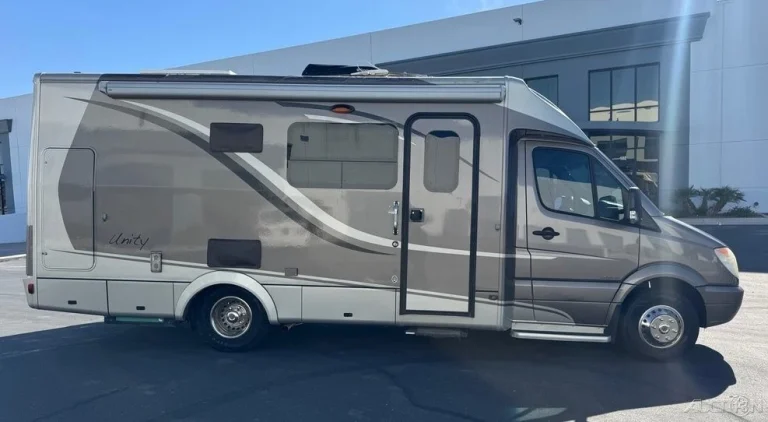
Class C Motorhomes
Class C models can offer a useful balance between living space and drivability.
Many families like the familiar cab layout and additional sleeping area.
When browsing family RVs on the market, Class C models are worth considering if you want a motorhome that is practical without going to the largest possible size.
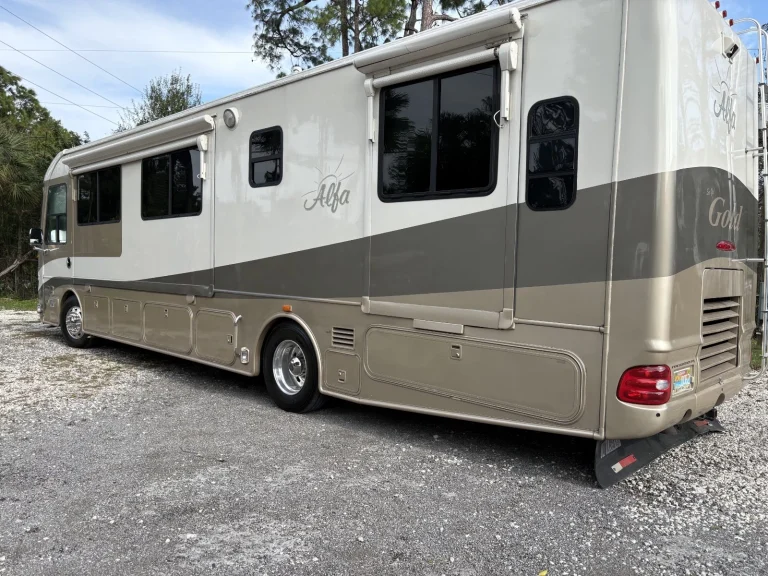
Class A Motorhomes
Class A RVs can provide substantial interior living space.
They can be excellent for families planning longer journeys.
But their size can require more confidence from the driver and potentially higher operating costs.
Travel Trailers
Travel trailers offer another interesting approach.
You can leave the trailer at the campsite and use the tow vehicle separately.
For some families, that flexibility is a major advantage.
There are many family RVs for sale in trailer configurations, ranging from compact layouts to large family-oriented models.
Fifth Wheels
Fifth wheels can provide impressive living space.
They often feature residential-style floor plans and substantial storage.
However, they require an appropriate tow vehicle and a driver comfortable with the setup.
Camper Vans
Camper vans are compact and maneuverable.
They can be appealing for smaller families or families who value mobility over interior space.
They are also useful when parking and driving convenience are high priorities.
15. Buy for the Family You Have—and the Family You Are Becoming
Children grow.
That changes everything.
A sleeping arrangement that works today might feel cramped three years from now.
A small bathroom might become less practical.
Storage requirements can increase.
Teenagers may want more privacy.
When looking through family RVs, think beyond this summer.
Think about how your family travels.
Think about how your children are likely to grow.
Think about whether you expect to take longer trips in the future.
Buying slightly ahead of your current needs can sometimes be smarter than buying exactly for today.
What Should You Bring to an RV Inspection?
If you are serious about an RV, do not arrive unprepared.
Bring a flashlight.
Bring a notebook.
Bring a phone charger.
Take photos.
Write down questions.
Open cabinets.
Test doors.
Sit in every seat.
Lie down on the beds.
Check the shower.
Look underneath sinks.
Inspect exterior compartments.
If possible, bring another adult who can look at the RV with fresh eyes.
When comparing family RVs for sale, two people will often notice things that one person misses.
Questions to Ask the Seller
A good conversation with the seller can reveal useful information.
Ask how the RV was used.
Ask how often it was maintained.
Ask whether it has experienced leaks.
Ask about major repairs.
Ask why it is being sold.
Ask how long it has been owned.
Ask whether the appliances work.
Ask whether service records are available.
For used family RVs on the market, these questions can help you understand the vehicle’s history.
Do not be afraid to ask detailed questions.
You are making a significant purchase.
How to Compare Two RVs
Suppose you find two family RVs that appear equally attractive.
Do not immediately choose the cheaper one.
Create a simple comparison.
Give each RV a score for:
- Sleeping space
- Storage
- Kitchen
- Bathroom
- Driving comfort
- Interior space
- Maintenance history
- Fuel efficiency
- Towing requirements
- Overall condition
- Price
- Family practicality
You may discover that the slightly more expensive RV is actually the better value.
Or you may discover that the cheaper one gives your family everything you need.
The numbers make the decision less emotional.
Why Families Choose RV Travel
There is something special about having your own space while traveling.
The children know where their things are.
Parents do not have to repack an entire hotel room every morning.
You can make breakfast without searching for a restaurant.
You can stop somewhere beautiful simply because you want to.
You can take a different route.
You can stay longer.
That freedom is one reason demand for family RVs for sale remains interesting among people who want a different kind of vacation.
An RV is not just transportation.
For many families, it becomes part of the experience.
The First Trip Should Be Easy
Do not make your first RV trip a complicated cross-country expedition.
Take a short trip.
Choose a campground that is not too far away.
Learn how everything works.
Practice setting up.
Test the water system.
Try the kitchen.
Figure out where everyone stores their belongings.
Learn what you actually use.
After that first trip, you will know much more about what your family likes.
That experience can also help you evaluate future family RVs on the market with much greater confidence.
How to Make Family RV Travel More Comfortable
A few simple habits can make a huge difference.
Give every family member a small storage area.
Keep frequently used items accessible.
Create a simple meal plan.
Carry snacks.
Keep towels organized.
Have a basic cleaning routine.
Do not pack the entire house.
The goal is to make the RV feel comfortable without filling every available space.
Good organization makes even smaller family RVs for sale feel more usable.
Common Buying Mistakes Families Make
One common mistake is buying too much RV.
Another is buying too little.
Some families focus entirely on price.
Others focus entirely on appearance.
Some never test the RV properly.
Others ignore maintenance.
And some buyers forget to check whether their tow vehicle can safely handle the trailer.
When comparing family RVs, slow down.
The best purchase is rarely the one made in a hurry.
Where Should You Start Looking?
Start with your family’s priorities.
Make a list.
Then determine your realistic budget.
Then decide whether you want a motorhome, travel trailer, fifth wheel, or camper van.
After that, begin comparing available family RVs for sale.
Look at several layouts.
Do not stop at the first RV that looks attractive.
Visit different models if possible.
Sit inside them.
Walk through them.
Imagine a rainy evening.
Imagine a long drive.
Imagine breakfast.
Imagine bedtime.
The right RV will begin to make sense when you picture your real life inside it.
Frequently Asked Questions About Family RVs for Sale
What size RV is best for a family?
There is no universal size.
The right choice depends on the number of travelers, sleeping requirements, storage needs, travel length, and driving comfort.
Among family RVs on the market, focus on usable floor space rather than exterior size alone.
Are used RVs good for families?
They can be.
A well-maintained used RV may provide excellent value.
However, buyers should inspect the vehicle carefully and review maintenance records before purchasing used family RVs for sale.
Are bunk beds useful in a family RV?
Yes.
Bunk beds can provide dedicated sleeping areas for children while leaving other parts of the RV available for daytime use.
For many families, bunk layouts are an important feature when comparing family RVs.
Should I choose a motorhome or travel trailer?
That depends on how you plan to travel.
Motorhomes combine the living space and driving vehicle.
Travel trailers require a suitable tow vehicle but allow you to separate the trailer from the vehicle at camp.
Compare both types of family RVs on the market based on your actual travel habits.
How much storage does a family RV need?
More than you initially expect.
Families generally carry more clothing, food, equipment, and personal items than couples or solo travelers.
Look carefully at both interior and exterior storage when viewing family RVs for sale.
What should I inspect on a used RV?
Check the roof, seals, tires, appliances, plumbing, electrical systems, storage compartments, interior walls, flooring, and maintenance records.
Water damage deserves particular attention when inspecting used family RVs.
Are larger RVs better for families?
Not necessarily.
A larger RV can provide more living space, but it can also be harder to drive, park, maintain, and fuel.
The best family RVs for sale are those that provide the space your family needs without creating unnecessary difficulties.
Should children have separate beds?
Separate beds can make family travel easier, particularly as children grow.
However, the best arrangement depends on your family.
Look at the sleeping layout carefully when comparing family RVs on the market.
What is the most important RV feature for families?
There is not one answer.
Sleeping space, storage, bathroom facilities, kitchen design, safety, and overall floor plan can all matter.
The most important feature is the one that solves your family’s biggest travel problem.
Should I inspect an RV before buying?
Yes.
A detailed inspection is especially important when purchasing a used RV.
A professional inspection can identify problems that are difficult to notice during a casual walk-through of family RVs for sale.
Final Thoughts
Buying an RV for your family should feel exciting, not overwhelming.
There are plenty of choices.
There are different sizes.
There are different floor plans.
There are motorhomes, trailers, fifth wheels, and camper vans.
The key is understanding what your family actually needs before getting distracted by shiny features.
The best family RVs are not necessarily the largest, newest, or most expensive.
They are the ones that fit the way your family travels.
They give everyone somewhere comfortable to sleep.
They provide enough storage.
They make meals manageable.
They offer useful bathroom facilities.
They feel comfortable enough for a rainy afternoon.
And, most importantly, they make your family want to get back on the road.
Take your time.
Compare layouts.
Check the condition.
Think about future trips.
Calculate the full cost.
And when you find family RVs for sale that genuinely fit your family’s needs, take the next step by reviewing the specifications, inspecting the vehicle carefully, and contacting the seller with your questions.
Because at the end of the day, the goal is not simply to own an RV.
The goal is to have a place where your family can collect stories.
The breakfast beside the lake.
The unexpected roadside stop.
The rainy evening when everyone played cards.
The sunrise nobody planned to see.
The little campground you almost skipped.
Those are the moments that make RV travel memorable.
And choosing the right RV is where those moments begin.
Related guides
- Used RVs for Sale: The Smart Buyer’s Guide to Finding a Great RV Without Overspending
- Low Price RVs: How to Find a Great RV Deal Without Buying Someone Else’s Problems
- Pre Owned RVs for Sale: 21 Smart Ways to Find the Right RV at the Right Price
- Best Cheap RVs for Sale: 39 Smart Ways to Find a Great Camper on a Budget
Browse more in RVs for Sale or see all buying guides.