Truck Campers for Sale: The Experienced Traveler’s Guide to Choosing the Right One
There is a particular kind of freedom that comes with a truck camper.
You do not need to pull a trailer behind you.
You do not have another set of wheels following every turn.
You can drive into a campsite, park the truck, step inside, and have a surprisingly complete little home waiting in the bed.
That simplicity explains why many travelers keep looking through truck campers for sale.
But anyone who has spent enough time on the road eventually learns something important: a truck camper is not simply a camper that happens to sit on a pickup.
The truck and camper become one system.
If the combination is poorly matched, every mile can remind you of the mistake.
If the combination is right, the whole setup can feel remarkably natural.
This guide approaches truck campers for sale from that practical perspective. Forget the shiny brochure for a moment. Think about what happens when the highway gets rough, the campsite gets tight, the weather changes, or you realize you packed twice as much gear as planned.
Those are the moments that reveal whether you chose wisely.
The First Rule: Match the Camper to the Truck
The first thing an experienced buyer does when looking at truck campers is not open the refrigerator.
They look at the truck.
That might sound obvious, but it is surprisingly easy to become distracted by a beautiful interior.
A camper can have a fantastic kitchen, comfortable bed, spacious bathroom, and impressive entertainment system.
None of those features matter if the pickup is not appropriate for carrying it.
When comparing truck campers on the market, start with the manufacturer’s specifications for your exact truck.
Look at payload capacity.
Consider passengers.
Consider fuel.
Consider tools.
Consider water.
Consider camping equipment.
Consider everything else you will actually carry.
The camper’s advertised dry weight is only part of the picture.
Once you load clothing, food, propane, batteries, water, cookware, outdoor equipment, and personal belongings, the real weight can rise substantially.
That is why buyers should compare the expected loaded camper weight with the truck’s available payload rather than relying on a headline number.
A properly matched setup is more enjoyable.
It can also make the driving experience more predictable.
When you are looking through truck campers for sale, resist the temptation to say, “I will figure out the truck later.”
Figure out the truck first.
Payload Is More Important Than Appearance
Pickup trucks come in many configurations.
Different cabs, engines, wheelbases, axles, tires, and suspension packages can produce very different capabilities.
That means two trucks that look almost identical may not have the same ability to carry a camper.
When shopping for truck campers, identify your exact truck configuration.
Then check the relevant manufacturer information.
If you are uncertain about the numbers, ask a qualified truck or RV professional to help.
This is not the part of the purchase where guessing makes sense.
Experienced owners looking at truck campers on the market also think about how the camper will be loaded.
The goal is not merely to stay under a number on paper.
You want a sensible setup that remains manageable when loaded for an actual trip.
Water is especially easy to forget.
A full freshwater tank can add significant weight.
Then there are bikes, generators, tools, food, recovery equipment, clothes, and everything else that somehow finds its way into the truck before departure.
The camper you inspect empty is not the camper you will drive down the highway.
That difference matters.
When evaluating truck campers for sale, picture the camper exactly as it will look on departure morning.
If the numbers still make sense, you are moving in the right direction.
The Floor Plan Should Fit the Way You Travel
Walk into different truck campers and you will notice something quickly.
They can feel completely different despite being similar in size.
One may feel open.
Another may feel crowded.
One may have excellent storage.
Another may make you wonder where your jacket is supposed to go.
This is where floor-plan design becomes important.
Think about your daily routine.
Where do you sleep?
Where do you make coffee?
Where do you change clothes?
Where do you keep shoes?
Where do you store dirty equipment?
Where do you sit when it rains?
The right truck campers on the market should make those ordinary activities feel reasonably natural.
You do not need enormous rooms.
You need sensible arrangements.
A clever floor plan can turn limited space into something genuinely comfortable.
A poor floor plan can make every task feel like solving a puzzle.
The Bed Is Not a Minor Detail
It is easy to spend twenty minutes examining cabinets and appliances.
Then the buyer barely looks at the bed.
That is a mistake.
When comparing truck campers for sale, spend time evaluating the sleeping area.
Can you lie down comfortably?
Is there enough headroom?
Can you get in and out without disturbing another person?
Is there ventilation?
Are there reading lights?
Are there charging points?
Can bedding remain in place during the day?
These details matter more than many buyers expect.
After driving for six or eight hours, you want the sleeping area to feel inviting.
The appeal of truck campers is partly that your bed travels with you.
Take advantage of that.
A comfortable sleeping setup can turn an ordinary parking spot into a pleasant place to spend the night.
A poor one can make you regret your purchase before the first trip ends.
Storage Is Where Compact Campers Get Interesting
There is never as much storage as you think there will be.
That is one of the oldest lessons in camping.
When inspecting truck campers on the market, open every cabinet.
Pull every drawer.
Look under the bed.
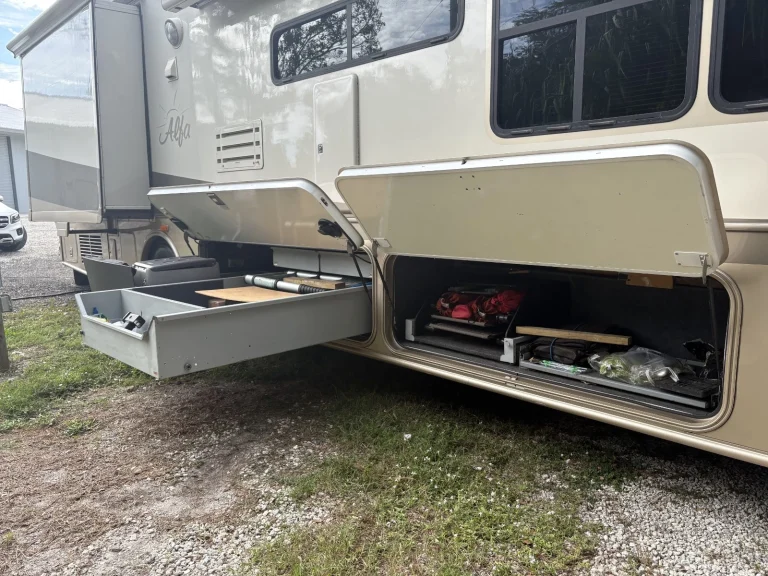
Check exterior compartments.
Look at the pantry.
Then start mentally filling those spaces.
Where will the food go?
Where will your shoes go?
Where will tools go?
Where will jackets go?
Where will the electrical equipment go?
The smartest truck campers for sale make use of awkward spaces without making the interior feel cluttered.
Vertical storage can be valuable.
Under-bed storage can be valuable.
Exterior compartments can be extremely useful for dirty or bulky equipment.
Think about separation too.
You probably do not want muddy boots sharing space with clean bedding.
A good camper gives different categories of equipment sensible homes.
That sounds like a tiny detail.
After a week of travel, it does not feel tiny.
A Small Kitchen Can Still Work
Not everybody needs a gourmet kitchen.
Many truck-camper owners are perfectly happy making coffee, breakfast, sandwiches, and simple dinners.
Others genuinely enjoy cooking.
Before choosing among truck campers, decide which type of traveler you are.
If you cook frequently, counter space matters.
Refrigerator access matters.
Sink placement matters.
Storage matters.
Ventilation matters.
If you cook mostly outdoors, you may prefer to dedicate more interior space to seating or storage.
When comparing truck campers for sale, open the refrigerator.
Stand at the counter.
Imagine preparing a meal while another person moves through the camper.
Can you reach what you need?
Can cabinet doors open without blocking movement?
Can you clean the workspace easily?
The kitchen does not need to be large.
It needs to make sense.
What Happens When the Weather Turns?
A beautiful sunny day can make almost any camper look fantastic.
Rain is a better test.
When considering truck campers on the market, imagine spending an entire afternoon inside.
The rain is heavy.
The ground is muddy.
The hiking trail is closed.
Nobody wants to sit outside.
Where does everyone sit?
Is there enough ventilation?
Can you cook?
Can you move around?
Does the interior feel comfortable?
These questions reveal the practical difference between merely owning shelter and owning a camper you genuinely enjoy.
Some truck campers are designed primarily as sleeping quarters.
Others are designed to function as compact living spaces.
Neither is automatically better.
It depends on how you travel.
If you spend almost all day outdoors, a simple interior may be perfect.
If you travel during uncertain weather, additional indoor comfort can be worth prioritizing.
Four-Season Travel Changes the Conversation
A camper used only during warm summer weekends has different requirements from one used throughout the year.
If you are comparing truck campers for sale for cold-weather travel, investigate insulation, heating, ventilation, plumbing protection, windows, and overall construction.
Cold-weather camping can expose weaknesses very quickly.
The same is true in extreme heat.
A compact interior can warm up quickly when the sun is beating down.
Climate control therefore deserves serious attention.
When looking at truck campers on the market, think about the places and seasons you realistically intend to visit.
You do not need equipment designed for an expedition to Antarctica if you only camp during mild weather.
But if winter travel is part of your plan, buy accordingly.
Off-Grid Capability Is About More Than Solar Panels
Many advertisements for truck campers emphasize off-grid equipment.
Solar panels are useful.
Batteries are useful.
Large freshwater tanks are useful.
But off-grid capability is really a complete system.
Think about how you use electricity.
Will you run a refrigerator?
Charge phones?
Use laptops?
Run heating equipment?
Operate lighting?
Cook electrically?
How long will you stay away from hookups?
When comparing truck campers for sale, consider the entire energy picture.
The same applies to water.
Freshwater capacity is only one part of the equation.
You also need to think about consumption, waste, and resupply.
Experienced travelers plan around their actual habits rather than buying equipment simply because it sounds impressive.
A camper with modest systems can work extremely well for someone who understands their limits.
The Exterior Deserves as Much Attention as the Interior
Buyers naturally walk inside first.
Experienced owners spend time outside too.
When inspecting truck campers on the market, walk around the entire unit.
Check exterior panels.
Look at seams.
Inspect windows.
Examine roof edges.
Open storage doors.
Look underneath.
Check tie-down areas.
Look for signs of previous repairs.
On used units, water intrusion deserves particular attention.
Staining, unusual odors, soft materials, bubbling surfaces, or questionable repairs should encourage a closer inspection.
When reviewing truck campers, remember that cosmetics can be changed.
Structural problems are a different matter.
A professional inspection may be worthwhile when buying a used camper.
Loading and Unloading Should Not Be Ignored
One major advantage of a truck camper is flexibility.
You can sometimes remove the camper when you want to use the pickup by itself.
That sounds excellent.
But ask yourself how often you will actually unload it.
When comparing truck campers for sale, learn how the loading and unloading process works.
How many supports are involved?
How much time does it take?
Can you do it safely?
Do you need a large, level area?
What equipment is required?
A system that looks simple in a sales demonstration may feel different in your driveway.
If you intend to leave the camper on the truck for most of the year, the question may matter less.
If you want to use the pickup independently every weekend, it becomes much more important.
Suspension and Handling Matter
A truck camper changes how a pickup behaves.
Weight is added high above the bed.
That can affect handling.
When researching truck campers on the market, pay attention to discussions around suspension, tires, load ratings, and overall vehicle setup.
Do not assume that every aftermarket modification automatically makes a truck safer or better.
Any changes should be appropriate for the specific vehicle and load.
A qualified professional can help determine what is suitable.
The goal is a balanced, predictable combination.
When you are driving through a mountain pass or dealing with strong crosswinds, you want to feel confident in the setup.
That confidence comes from correct matching and preparation, not simply from adding parts.
Used Truck Campers Can Be Excellent Buys
Some of the most interesting deals can appear among used truck campers.
A camper may have several years of useful life remaining.
It may already have accessories installed.
The previous owner may have solved many of the little problems that come with ownership.
But used buying requires patience.
Ask why the owner is selling.
Ask about leaks.
Ask about storage.
Ask about maintenance.
Ask about appliances.
Ask about modifications.
When inspecting truck campers for sale, request service records when they are available.
Check tires.
Check batteries.
Inspect seals.
Test plumbing.
Test electrical systems.
Look carefully at the roof.
A used camper does not have to be perfect.
It does need to be understood.
New Does Not Mean “Skip the Inspection”
New truck campers on the market can be appealing because everything feels fresh.
There is a warranty.
The interior has not been lived in.
The appliances are new.
The fabrics are clean.
But a new camper can still have manufacturing or delivery issues.
Before accepting a new unit, perform a thorough walk-through.
Open cabinets.
Check doors.
Run water.
Test lights.
Inspect appliances.
Look for damage.
Verify the equipment you were promised is actually present.
When purchasing truck campers for sale, document problems before leaving with the camper.
It is much easier to address an issue immediately than to discover it months later.
The Bathroom Question
Bathrooms are a surprisingly personal decision.
Some buyers absolutely want one.
Others would rather have more living space.
When examining truck campers, decide which camp you belong to.
A wet bath can save space.
A dedicated bathroom can provide greater comfort.
A portable toilet may be sufficient for certain travelers.
There is no universal answer.
If you frequently camp in remote areas, having your own bathroom can be extremely convenient.
If you primarily stay at established campgrounds, you may decide that the space could be used more effectively elsewhere.
Think about your habits rather than what sounds luxurious.
Seating Becomes Important on Long Trips
The dining area may look like a small feature.
On a long trip, it can become the heart of the camper.
When comparing truck campers on the market, sit down at the dinette.
Spend a few minutes there.
Is the seating comfortable?
Can you eat there?
Can you use a laptop?
Can two people sit without bumping elbows?
Can the table be removed or adjusted?
The best truck campers for sale make small spaces work multiple ways.
A dinette can be a dining table in the morning, workspace in the afternoon, and relaxing area at night.
Multi-purpose design is one of the great strengths of compact campers.
Think About Your Highway Routine
Some people love driving long distances.
Others prefer short hops between campsites.
Your travel rhythm should influence the camper you choose.
When browsing truck campers, consider how much time you spend on highways.
Think about fuel stops.
Parking.
Rest areas.
Mountain roads.
Urban streets.
Narrow campsites.
A compact truck-and-camper combination can be easier to manage than a larger trailer setup.
That can open up destinations that might otherwise feel inconvenient.
The best truck campers on the market are often the ones that make the journey itself easier, not merely the destination more comfortable.
Think About the Places You Want to Reach
Imagine the map.
Where do you want to go?
National parks?
Forest roads?
Beach campsites?
Mountain towns?
Remote fishing spots?
Desert landscapes?
Your destinations matter when evaluating truck campers for sale.
A setup designed for paved campground travel may not be ideal for rougher routes.
Likewise, a highly rugged setup may offer more capability than you need if you mostly stay at developed sites.
Choose equipment for the places you actually visit.
It is easy to buy for an imaginary adventure.
It is smarter to buy for the adventures you are genuinely likely to take.
Storage at Home Still Matters
The camper may spend most of its time traveling.
It will still spend plenty of time at home.
Before buying truck campers, think about where the unit will be stored.
If it stays on the truck, where will the truck go?
If you unload it, where will the camper sit?
Is the ground level?
Can you access it easily?
Will weather affect it?
A convenient storage arrangement makes ownership easier.
A difficult one can turn every departure into a project.
This is especially relevant if you expect to use the camper frequently.
The easier it is to prepare, the more likely you are to travel.
Calculate the Real Purchase Budget
The advertised price is not the entire cost.
When comparing truck campers on the market, remember that you may need tie-down equipment, turnbuckles, electrical accessories, leveling equipment, batteries, solar equipment, storage solutions, maintenance items, or other gear.
A used camper may also require immediate attention.
A new camper may need accessories before your first trip.
Do not spend every dollar on the camper itself.
Leave room for getting the entire setup ready.
That way, the first trip can be enjoyable rather than a race to purchase missing equipment.
What Makes a Truck Camper a Smart Purchase?
After looking through dozens of truck campers for sale, the differences can become surprisingly clear.
The smartest purchase is usually not the one with the longest feature list.
It is the one where everything fits together.
The truck can carry it.
The floor plan suits the traveler.
The storage works.
The sleeping area is comfortable.
The systems match the intended camping style.
The condition is understood.
The price makes sense.
That combination matters.
When evaluating truck campers, think about the entire ownership experience rather than one exciting feature.
A camper is a collection of compromises.
The goal is to make sure you are compromising on things that do not matter to you.
Questions to Ask Before Buying
When you find promising truck campers on the market, ask the seller direct questions.
Has it ever leaked?
Why are you selling it?
How was it stored?
How old are the tires?
Have the batteries been replaced?
Are all appliances operational?
Has the roof been resealed?
Have there been structural repairs?
Are there maintenance records?
If it is mounted on a truck, how has that combination performed?
The answers matter.
So does the seller’s willingness to provide them.
When considering truck campers for sale, never feel pressured to make a decision simply because someone says another buyer is interested.
A good camper is worth inspecting properly.
FAQs
Are Truck Campers Good for Long Trips?
Yes. Many travelers choose truck campers specifically because they want a compact setup for extended road trips.
The important factors are sleeping comfort, storage, climate control, water capacity, electrical systems, and the compatibility between the camper and truck.
A small camper can be perfectly comfortable for weeks if it is designed around your needs.
What Truck Is Best for a Truck Camper?
There is no single best truck for every camper.
When comparing truck campers for sale, the camper’s loaded weight must be matched to the specific truck’s payload and other relevant specifications.
Different truck configurations can have substantially different capacities.
Always verify the manufacturer’s specifications for the exact vehicle.
Are Used Truck Campers Worth Buying?
They can be.
Used truck campers on the market can provide excellent value when they have been properly maintained.
The key is inspection.
Pay close attention to water intrusion, roof condition, seals, flooring, appliances, electrical equipment, tires, and evidence of previous repairs.
Can You Leave a Truck Camper on the Truck?
Yes, depending on the camper and truck setup.
Some owners leave their campers mounted most of the year.
Others unload them when the truck is needed for regular driving.
Before purchasing truck campers, think about how you want to use your pickup when you are not traveling.
Are Truck Campers Good for Off-Grid Camping?
They can be excellent for off-grid travel.
Their compact size can make it easier to reach less developed camping areas.
When comparing truck campers for sale, look at freshwater capacity, batteries, solar compatibility, refrigeration, heating, cooking systems, and waste management.
Your equipment should match the length and remoteness of your trips.
What Should I Check on a Used Camper?
Start with water intrusion.
Then inspect the roof, seals, walls, floors, windows, doors, electrical systems, plumbing, appliances, batteries, and tires.
When inspecting truck campers on the market, do not allow a clean interior to distract you from structural condition.
A professional inspection can be worthwhile.
Are Truck Campers Easier to Drive Than Trailers?
They can be easier for some drivers because there is no separate trailer behind the vehicle.
However, the camper still adds considerable weight and height.
When evaluating truck campers, consider the complete loaded vehicle and become familiar with its handling before taking longer trips.
Do Truck Campers Have Bathrooms?
Some do and some do not.
Wet baths are common in certain compact designs, while other campers use different arrangements.
When comparing truck campers for sale, decide whether an onboard bathroom is essential to your camping style.
How Much Storage Do Truck Campers Have?
Storage varies considerably.
Some models use overhead cabinets, under-bed storage, exterior compartments, pantry areas, and other clever spaces.
When reviewing truck campers on the market, make a list of the equipment you normally carry and determine where each item will be stored.
Should I Buy a New or Used Truck Camper?
Both choices can make sense.
New truck campers can offer current designs, modern equipment, and warranty coverage.
Used campers can offer lower purchase prices and excellent value.
Condition, compatibility, layout, and maintenance history should guide the decision rather than age alone.
Final Thoughts
The best truck campers for sale do something very well.
They turn a pickup truck into a compact traveling home without taking away the freedom that made you choose a truck in the first place.
That is the magic of the setup.
You can leave the highway.
Find a quiet place.
Park.
Make coffee.
Open the door.
And suddenly the distance between “traveling” and “being home” becomes very small.
But getting there requires careful buying.
Start with the truck.
Check payload.
Understand loaded weight.
Study the floor plan.
Test the bed.
Open the storage compartments.
Inspect the exterior.
Look for water damage.
Think about weather.
Think about electricity.
Think about where you camp.
Think about where you will store the camper between trips.
When considering truck campers on the market, resist the pressure to buy based on appearance alone.
The most attractive camper on the lot may not be the one that works best for you.
The quiet, practical model with a sensible layout may ultimately become the favorite.
And that is something experienced travelers understand.
A camper does not need to impress everyone.
It needs to work for the person driving it.
It needs to make mornings easier.
It needs to give you a comfortable place to sleep.
It needs to keep your gear organized.
It needs to handle the roads you intend to travel.
It needs to fit your budget without becoming a financial burden.
When those pieces come together, truck campers for sale stop being just products you compare online.
They become possible starting points for real trips.
The mountain road.
The fishing weekend.
The national park.
The quiet forest.
The sunrise you would have missed if you had stayed home.
That is the real reason to take the buying process seriously.
You are not simply choosing a camper.
You are choosing how you want to travel.
And when the truck, camper, budget, and lifestyle all line up, the result can be one of the most practical and enjoyable ways to explore the road.
Related guides
- Buy Campers Online: A Smarter Way to Find the Right Camper at the Right Price
- Low Cost Campers: A Practical Guide to Finding a Great Camper Without Overspending
- Off Grid Campers for Sale: 11 Smart Things to Know Before You Buy
- Cheap Campers Under $10000: 23 Real-World Ways to Find a Great Deal
Browse more in Campers for Sale or see all buying guides.