RVs for Full Time Living: 19 Real-World Secrets to Choosing Your Ideal Home on Wheels
There is a big difference between owning an RV and actually living in one.
A recreational vehicle can be perfect for a two-week vacation and completely wrong for everyday life. When you’re looking at RVs for full time living, you’re making a much bigger decision than choosing something for occasional camping.
You’re choosing your bedroom.
Your kitchen.
Your bathroom.
Your living room.
Your storage space.
And, in many cases, your office too.
That is why shopping for RVs for full time living requires a different mindset.
You have to think beyond the shiny exterior, impressive television, attractive kitchen counters, or fancy furniture.
Ask yourself a much more important question.
Could I comfortably live here every day?
That question should guide your search for RVs for full-time life.
The good news is that today’s RV market offers plenty of choices. There are compact motorhomes, spacious Class C models, large Class A coaches, fifth wheels, travel trailers, and camper vans.
But having lots of choices can also make shopping confusing.
This guide is designed to make that decision easier.
Whether you’re planning to travel permanently, downsize your home, work remotely, retire on the road, or simply want a more flexible lifestyle, you’ll find useful ideas here for choosing RVs you can live in full time without getting distracted by features you don’t actually need.
Why Full-Time RV Living Feels Different
A weekend trip can hide a lot of problems.
If the mattress isn’t perfect, you can tolerate it for two nights.
If the kitchen is small, you can eat out.
If storage is limited, you can leave most of your belongings at home.
Full-time living changes everything.
With RVs for full-time life, small inconveniences become part of your routine.
A cramped bathroom can become frustrating.
A poor kitchen layout can make cooking difficult.
Limited storage can make the entire RV feel cluttered.
That is why RVs you can live in full time should be evaluated according to everyday comfort.
Imagine waking up in the same space for six months.
Imagine preparing dinner while someone else is working.
Imagine spending an entire rainy day inside.
Imagine having nowhere else to put your winter clothing.
Those situations reveal far more than a quick walk-through.
The best RVs for full time living don’t necessarily have the most expensive interiors.
They have layouts that make sense.
They give you enough room to move, enough storage to stay organized, and enough comfort to make the RV genuinely feel like home.
1. Start With Your Lifestyle, Not the RV
One of the biggest mistakes buyers make is choosing an RV first and trying to fit their lifestyle into it later.
Reverse that process.
Think about yourself first.
When comparing RVs for full-time life, ask how you expect to spend most of your days.
Will you travel every week?
Will you stay in one location for several months?
Will you work online?
Will you cook most meals?
Will you travel with children?
Will you bring pets?
Will you spend winters in warm weather?
Your answers will immediately narrow the field.
Someone who travels constantly may prefer a smaller, easier-to-drive RV.
Someone who stays in one location for long periods may prefer something much larger.
When researching RVs you can live in full time, don’t let another person’s preferences become your shopping list.
Your ideal RV should reflect your own habits.
That is what makes RVs for full-time life such an individual purchase.
There isn’t one model that is perfect for everyone.
2. Imagine a Normal Tuesday
Forget the vacation fantasy for a moment.
Forget the campfire.
Forget the beautiful mountain view.
Imagine Tuesday morning.
You wake up.
You make coffee.
You check your phone.
Maybe you work for several hours.
You make lunch.
You do laundry.
You cook dinner.
Then you relax.
When choosing RVs you can live in full time, this imaginary Tuesday is more useful than imagining a two-day holiday.
Ask whether the RV supports those routines.
Is the bed comfortable?
Is there somewhere to work?
Is the refrigerator large enough?
Can you move around the kitchen?
Is the bathroom convenient?
Do you have somewhere to put your shoes?
The best RVs for full time living make normal days feel easy.
That’s the goal.
Full-time RV living isn’t exciting every minute.
Sometimes it’s just making toast while watching the sunrise.
Sometimes it’s doing laundry.
Sometimes it’s sitting inside while rain hits the roof.
Choose RVs for full-time life that make those ordinary moments comfortable.
3. Space Is About Layout, Not Just Length
A longer RV isn’t automatically more comfortable.
A poorly designed large RV can feel surprisingly awkward.
Meanwhile, a smaller model with intelligent design can feel open and practical.
That’s why layout deserves serious attention when comparing RVs you can live in full time.
Walk through the RV slowly.
Don’t just stand near the entrance.
Move around.
Open cabinets.
Sit at the dining table.
Stand in the shower.
Lie on the bed.
Try using the kitchen.
When you’re evaluating RVs for full-time life, imagine another person moving through the same space.
Can two people pass each other?
Can someone cook while another person sits at the table?
Can the bathroom be accessed without disturbing someone sleeping?
These details matter.
The best RVs you can live in full time use every inch intelligently.
Look for practical floor plans rather than simply chasing the largest number of feet.
4. Storage Will Become Important Very Quickly
Storage is one of those things that looks sufficient until you actually move into an RV.
Then suddenly every cabinet matters.
When looking at RVs for full time living, don’t just count cabinets.
Open them.
Check their depth.
Look under the bed.
Inspect exterior compartments.
Look at pantry space.
Check closets.
Think about where you’ll put bulky items.
You may need clothing for different seasons.
You may have tools.
You may carry electronics.
You may need cleaning products, kitchen equipment, outdoor gear, and personal belongings.
Good RVs for full-time life give you ways to organize these things without turning the interior into a storage room.
At the same time, downsizing is part of the lifestyle.
You probably won’t bring everything you owned in a traditional house.
That’s not necessarily a bad thing.
For many people, RVs you can live in full time encourage a simpler way of thinking about possessions.
You learn to keep what you use.
You stop collecting things simply because there is room for them.
5. Don’t Underestimate the Bedroom
You can compromise on certain luxuries.
Sleep is harder to compromise on.
If you’re going to live in an RV, your bed deserves attention.
When comparing RVs for full-time life, check mattress dimensions carefully.
Look at bedroom access.
Consider headroom.
Check ventilation.
Look at windows.
Think about storage around the bed.
If two people are sharing the RV, consider whether one person can get out of bed without climbing over the other.
That might seem like a tiny detail.
After six months, it won’t feel tiny.
Good RVs you can live in full time should provide a sleeping area that feels genuinely comfortable.
If the mattress isn’t suitable, remember that some RVs allow owners to replace it with a better option.
But make sure the dimensions work before purchasing.
A bedroom should feel like a place where you can recharge.
That’s especially important when RVs for full time living become your primary residence.
6. The Kitchen Needs to Match Your Cooking Habits
If you love cooking, don’t choose an RV kitchen based on photographs.
Use your imagination.
Imagine making breakfast.
Imagine preparing a full dinner.
Where will you chop vegetables?
Where will you put dishes?
Where will you store ingredients?
Can two people comfortably use the kitchen?
When considering RVs for full-time life, counter space can be more valuable than decorative features.
A large television is nice.
A usable kitchen is something you’ll appreciate every day.
Different RVs you can live in full time offer different combinations of refrigerator size, stove burners, ovens, microwaves, pantries, and counter space.
Choose according to your habits.
If you eat mostly outside or order food regularly, you may not need a huge kitchen.
If you enjoy cooking every evening, you’ll probably want more room.
This is one reason shopping for RVs for full-time life should be personal.
There is no universal checklist.
7. Bathroom Comfort Matters More Than You Think
The bathroom is another area where photographs can be misleading.
A bathroom may look perfectly acceptable until you actually stand inside it.
When inspecting RVs you can live in full time, close the door.
Stand in the shower.
Check the sink.
Look at storage.
Consider ventilation.
Think about where towels will go.
A wet bath can save space.
A larger separate shower can improve comfort.
Neither is automatically better.
It depends on your priorities.
For people researching RVs for full time living, bathroom design should be evaluated according to how much you expect to use the facilities inside the RV.
If you plan to stay in remote locations, your onboard bathroom may become extremely important.
If you’ll spend most of your time in full-service RV parks, your requirements may be different.
The best RVs for full-time life are the ones whose bathroom setup fits your routine.
8. Climate Control Is a Serious Feature
Weather doesn’t care whether you’re on vacation.
Heat can make a small space uncomfortable very quickly.
Cold weather can create a completely different set of challenges.
When evaluating RVs you can live in full time, pay attention to heating and cooling.
Look at insulation.
Check windows.
Understand the heating system.
Check the air-conditioning setup.
Think about where you plan to travel.
If you’ll move between different climates, flexibility becomes even more important.
Some RVs for full-time life are better suited to particular weather conditions than others.
Don’t assume that every RV handles extreme temperatures equally well.
Ask questions.
Inspect construction.
Understand how the systems work.
Full-time RV life becomes much easier when your home can maintain a comfortable temperature.
That makes climate considerations a major part of choosing RVs for full time living.
9. Electricity Becomes Part of Your Daily Routine
At home, you rarely think about electricity until the bill arrives.
In an RV, you may think about it every day.
Your refrigerator needs power.
Your laptop needs power.
Your phones need charging.
Lights use electricity.
Air conditioning can use a lot.
When comparing RVs you can live in full time, understand the electrical system.
Consider battery capacity.
Look at shore-power capability.
Think about solar if you plan to spend time away from hookups.
Remote workers should pay particularly close attention.
If your income depends on a laptop and internet connection, power isn’t a luxury.
It’s part of your livelihood.
The best RVs for full-time life provide a power setup that matches the owner’s habits.
You don’t necessarily need the biggest electrical system available.
You need the right one.
Before purchasing RVs you can live in full time, list the devices you use every day and consider how much power they require.
10. Water Changes the Way You Think About Independence
Living in an RV means thinking about water differently.
You have a freshwater tank.
You have gray water.
You have black water.
Each system has a capacity.
When choosing RVs for full-time life, understand what those capacities mean for your lifestyle.
If you stay in established campgrounds, you may have frequent access to hookups.
If you enjoy remote camping, you’ll need to think more carefully about water use.
Longer stays away from facilities require more planning.
The best RVs for full time living aren’t necessarily the ones with the biggest tanks.
They’re the ones that fit the way you travel.
You should also understand basic maintenance.
Leaks should never be ignored.
Water systems should be inspected.
Small plumbing problems can become much more serious if left unattended.
Anyone considering RVs you can live in full time should learn the basics of water management before moving into their RV.
11. Think About Towing Before You Fall in Love
This section is especially important for travel trailers and fifth wheels.
The trailer may be your home.
But your tow vehicle is what gets your home down the road.
When shopping for RVs for full-time life, never guess about towing capacity.
Check the manufacturer’s specifications.
Consider loaded weight.
Remember that you’ll carry clothing, food, tools, water, batteries, and other belongings.
A trailer’s empty weight doesn’t represent what you’ll necessarily tow in real life.
The right combination of tow vehicle and trailer makes travel more comfortable and safer.
If you’re considering RVs you can live in full time in the form of a towable RV, understand weight ratings before making a purchase.
If you are unsure, ask a qualified professional.
It is much better to solve the towing question before buying than after.
12. New Isn’t the Only Smart Option
There is something attractive about a brand-new RV.
Everything is fresh.
The interior looks perfect.
You get modern features.
But don’t automatically dismiss used RVs.
Some excellent RVs for full-time life are available secondhand.
The key is condition.
A well-maintained used RV can provide considerable value.
A neglected one can create expensive headaches.
When evaluating used RVs for full time living, inspect the roof, seals, tires, appliances, plumbing, electrical systems, and interior carefully.
Ask for maintenance records.
Look for signs of water intrusion.
Check whether major systems operate correctly.
If possible, consider a professional inspection.
The age of an RV tells only part of the story.
Maintenance history tells another part.
For buyers searching for RVs you can live in full time, condition should always be a major consideration.
13. Don’t Spend Your Entire Budget on the RV
This is another common mistake.
A buyer sees an RV they love.
They spend nearly every available dollar on the purchase.
Then reality arrives.
Insurance costs money.
Fuel costs money.
Maintenance costs money.
Campgrounds cost money.
Unexpected repairs happen.
When budgeting for RVs for full-time life, leave room for ownership expenses.
Think about your expected monthly costs.
If you’re financing the RV, include the payment.
Then add insurance, fuel, campground expenses, food, maintenance, and an emergency fund.
The goal isn’t simply to afford the RV.
The goal is to afford the lifestyle.
Good RVs you can live in full time should support your financial freedom rather than destroy it.
Sometimes spending less on the initial purchase gives you more freedom afterward.
That can be a much better deal.
14. Remote Work Changes Everything
Working from an RV sounds romantic.
And sometimes it is.
But a laptop doesn’t automatically create an office.
If you’re working remotely, think carefully about workspace.
When viewing RVs for full-time life, test the desk or dining area.
Sit there.
Imagine working for several hours.
Is the chair comfortable?
Is there enough light?
Can you charge your equipment?
Is internet connectivity practical?
Can someone else move around without constantly interrupting you?
These questions matter.
The best RVs for full time living can accommodate both work and relaxation.
Try to create some separation between the two.
When the table becomes your office, dining room, and workspace all at once, routines can become messy.
A dedicated workspace can make a major difference.
For remote workers, RVs you can live in full time should be selected partly as mobile offices.
15. Couples Need to Think About Personal Space
Two people can love each other deeply and still need separate space.
That’s normal.
When choosing RVs for full-time life for two people, consider privacy.
Can one person sleep while the other reads?
Can one work while the other watches television?
Can someone take a phone call without disrupting the entire RV?
A smart layout makes these situations easier.
For couples comparing RVs you can live in full time, personal space doesn’t necessarily require separate rooms.
It can simply mean good positioning of furniture and thoughtful use of the floor plan.
This becomes particularly important during bad weather.
When you’re outside all day, a small RV can feel huge.
When you’re stuck inside for two days, the same RV can feel much smaller.
Good RVs for full-time life provide ways for both people to remain comfortable.
16. Families Need a Different Approach
Families have different challenges.
Children need sleeping space.
They need storage.
They create mess.
They need somewhere to spend time when the weather is bad.
When comparing RVs for full time living for a family, look carefully at sleeping arrangements.
Bunkhouse layouts can be useful.
Convertible beds can save space.
Separate sleeping areas can provide privacy.
Storage becomes even more important.
You should also consider durability.
The RV interior needs to survive everyday family life.
The most expensive finishes aren’t necessarily the best choice.
Practical materials and easy-to-clean surfaces can be more useful.
Families searching for RVs you can live in full time should focus on function before luxury.
A good family RV doesn’t need to feel enormous.
It needs to work.
17. Learn How Much RV You Actually Need
It is tempting to buy more.
More space.
More appliances.
More entertainment.
More luxury.
But more isn’t always better.
Every additional feature can bring additional weight, maintenance, cost, or complexity.
When shopping for RVs for full-time life, make two lists.
The first list is your essentials.
The second is your wish list.
Don’t confuse them.
Maybe you absolutely need a comfortable workspace.
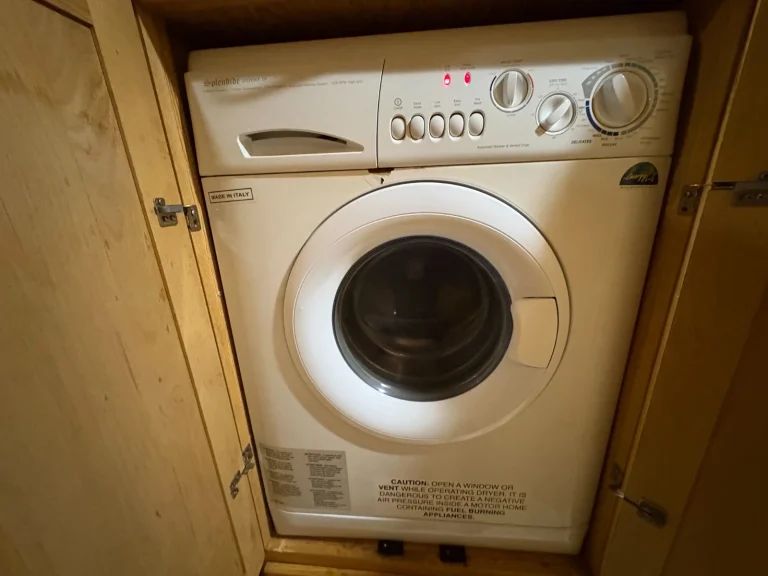
Maybe a washer and dryer would simply be nice.
Maybe you need a large refrigerator.
Maybe a fireplace is purely decorative.
Prioritize accordingly.
The smartest RVs you can live in full time provide the things you genuinely use.
You don’t need to pay for a feature simply because it looks impressive during an RV tour.
Your goal is to create a comfortable home.
Not a showroom.
18. Storage and Organization Can Transform the RV
A well-organized RV can feel surprisingly spacious.
A cluttered RV can feel tiny.
That’s why organization is essential with RVs for full-time life.
Give frequently used items easy-to-reach locations.
Keep cleaning supplies together.
Organize kitchen equipment.
Use storage containers where appropriate.
Avoid filling every available corner.
You need empty space too.
The best RVs for full time living become easier to enjoy when everything has a home.
Make organization part of your routine.
When something comes in, decide where it belongs.
When something is no longer useful, consider removing it.
Living in RVs you can live in full time often teaches people to become more intentional about possessions.
That’s one of the unexpected benefits of the lifestyle.
19. Think About Where You’ll Park Your Home
An RV doesn’t exist in isolation.
You need somewhere to put it.
Before buying RVs for full-time life, think about campground availability, storage, parking restrictions, and your preferred destinations.
If you plan to stay in RV parks, research the types of sites available.
If you want remote locations, think about access.
A huge RV may be wonderfully comfortable but difficult to maneuver into certain spaces.
A smaller RV may sacrifice some interior room but give you far more mobility.
The right RVs you can live in full time balance comfort with accessibility.
Think about the roads you’ll use.
Think about where you want to stay.
Think about how often you’ll move.
These factors can help narrow your choices considerably.
Class A RVs for Full-Time Living
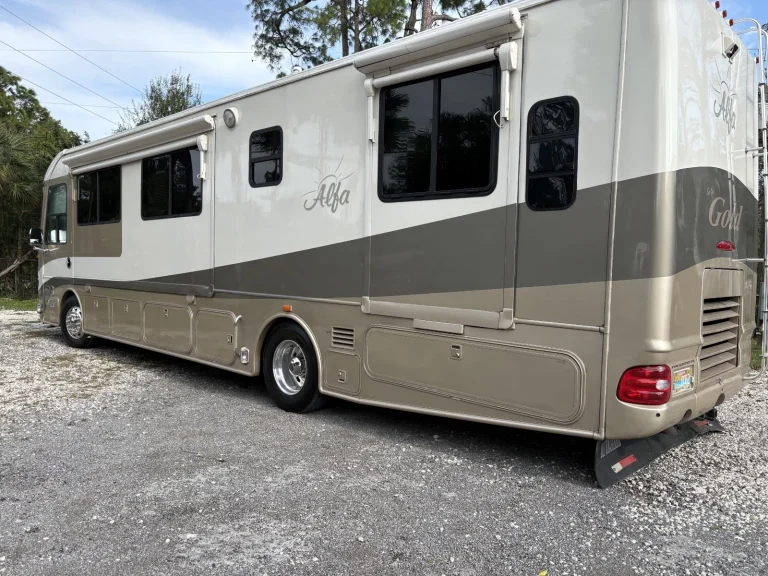
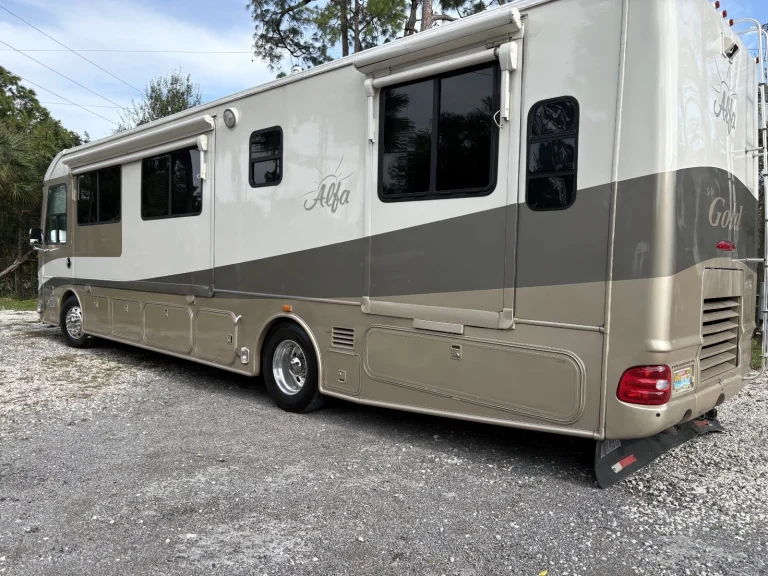
Class A motorhomes are popular among people who want substantial living space.
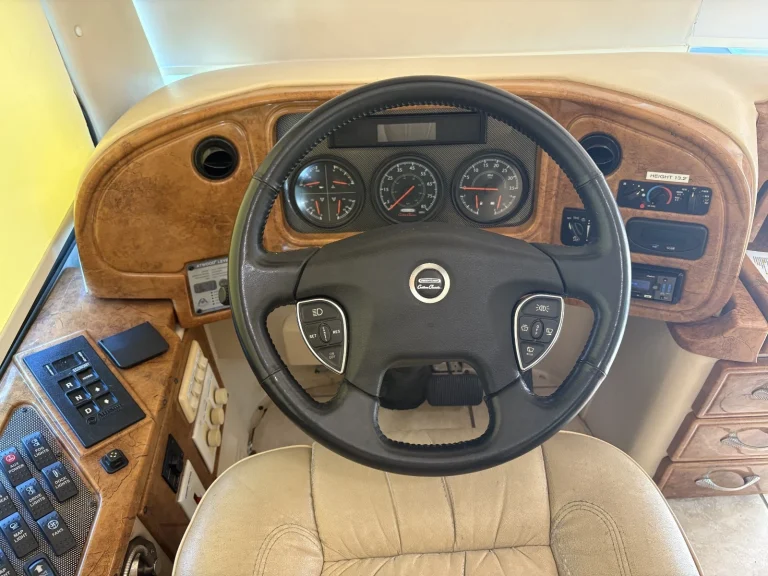
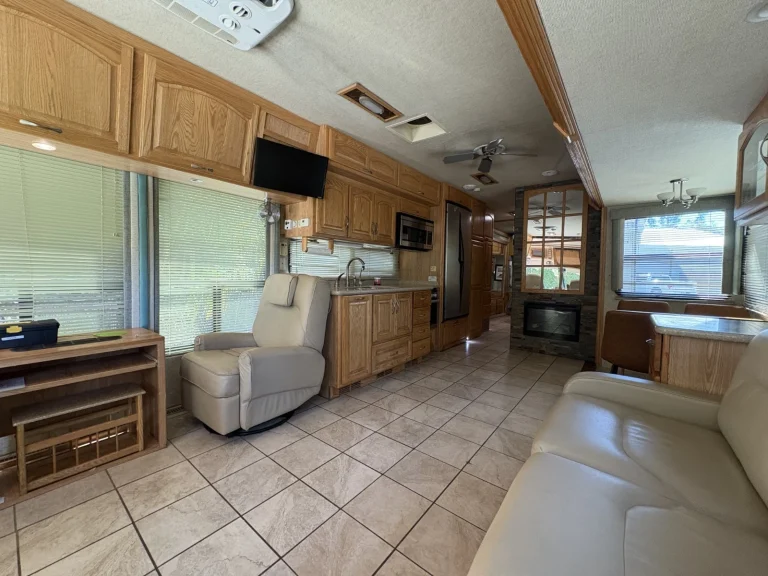
They can provide large kitchens, spacious bedrooms, generous storage, and comfortable living areas.
For buyers considering RVs for full time living, a Class A can feel remarkably similar to a small apartment.
The tradeoff is size.
Large motorhomes can be more demanding to drive and maintain.
They may also consume more fuel.
If you’re considering RVs for full-time life in this category, think carefully about where you’ll travel and how often you’ll move.
A Class A can be an excellent fit for someone who prioritizes interior comfort.
It may be less suitable for someone who wants to explore narrow roads and small campsites.
Class C RVs for Full-Time Living
Class C motorhomes offer a different balance.
They’re generally easier to maneuver than many large Class A coaches while still offering useful living space.
For some buyers, RVs you can live in full time in the Class C category offer an appealing middle ground.
They can work well for couples and smaller families.
The cab-over sleeping area can also provide additional sleeping or storage space.
When comparing RVs for full-time life, inspect the interior layout carefully.
Not every Class C has the same amount of usable space.
Focus on your lifestyle.
Fifth Wheels for Full-Time Living
Fifth wheels are another popular choice.
Their design can provide substantial living space.
Many offer residential-style kitchens, large bedrooms, generous storage, and separate living areas.
For buyers searching for RVs you can live in full time, fifth wheels can be especially appealing when the RV will remain parked for longer periods.
However, towing requirements must be considered.
You need an appropriate truck and a clear understanding of weight ratings.
When comparing RVs for full time living, don’t look at the fifth wheel separately from the tow vehicle.
They function as one system.
Travel Trailers for Full-Time Living
Travel trailers come in many sizes.
That variety makes them appealing to a wide range of buyers.
A compact trailer can provide a simple mobile home.
A larger trailer can provide multiple sleeping areas and substantial living space.
For people researching RVs for full-time life, travel trailers can offer flexibility.
You also have the option of unhitching the trailer and using your tow vehicle separately.
As always, towing capacity matters.
Make sure the combination is appropriate before purchasing.
The best RVs you can live in full time are not determined by one category.
They are determined by the person using them.
How Much Should You Spend?
There is no magic price for an RV that becomes a full-time home.
Budgets vary dramatically.
Instead of asking, “What is the most expensive RV I can afford?” ask, “What can I comfortably own?”
That distinction matters.
When budgeting for RVs for full-time life, consider the total cost of ownership.
Purchase price is only one number.
Fuel, insurance, maintenance, repairs, campsite fees, food, and other expenses all matter.
If you have money left over after buying the RV, you have more flexibility to travel.
That may be worth more than an upgraded interior.
For many buyers, the best RVs you can live in full time are the ones that leave enough financial room to enjoy the lifestyle.
What to Check Before You Buy
Before committing to any RV, slow down.
Inspect it carefully.
Check for moisture.
Look at seals.
Inspect the roof.
Test appliances.
Run water.
Check the electrical system.
Inspect tires.
Look underneath where practical.
If buying used RVs for full time living, ask about service history.
Ask whether the RV has had leaks.
Ask about major repairs.
Ask why the owner is selling.
You don’t have to interrogate anyone.
You simply need enough information to make a sensible decision.
A professional inspection can also be valuable.
When you’re spending a significant amount on RVs for full-time life, a small inspection cost may be worthwhile compared with the price of discovering a serious problem later.
The Most Important Feature Is Comfort
It sounds obvious.
But comfort can be difficult to measure on a dealership lot.
You might spend twenty minutes inside an RV and think everything is perfect.
Full-time life is different.
You’ll spend hours there.
Days.
Months.
Maybe years.
That is why RVs you can live in full time should be judged by long-term practicality.
Is the bed comfortable?
Is the seating comfortable?
Can you cook comfortably?
Can you work comfortably?
Can you shower comfortably?
Can you store your belongings?
Can you live with another person without feeling constantly crowded?
These questions are more important than decorative details.
The best RVs for full-time life make you forget you’re inside a vehicle.
They start to feel like home.
The Lifestyle Is About More Than the RV
It’s easy to become obsessed with the RV itself.
Floor plans.
Appliances.
Screens.
Cabinets.
Beds.
Tank sizes.
But the RV is only the tool.
The lifestyle is the real reason you’re doing this.
Maybe you want to see more of the country.
Maybe you want to simplify.
Maybe you’re retiring.
Maybe you want to work from different places.
Maybe you simply don’t want to stay in one house forever.
Whatever your reason, choose RVs you can live in full time that support that goal.
Don’t let the RV become the goal itself.
The road is the point.
The experiences are the point.
The freedom is the point.
Your RV simply gives you a place to sleep, cook, work, and relax while you pursue those things.
That’s what makes RVs for full time living so appealing to so many people.
FAQs About RVs for Full Time Living
What are the best RVs for full-time living?
The best option depends on your lifestyle, budget, number of occupants, travel frequency, and preferred destinations. Some people prefer Class A motorhomes, while others choose Class C RVs, fifth wheels, or travel trailers. The best RVs for full-time life are the ones that fit your actual daily needs.
Can you really live in an RV full time?
Yes, many people choose RVs as their primary homes. However, full-time RV living requires planning around maintenance, parking, utilities, storage, weather, and finances. Choosing suitable RVs you can live in full time can make the transition much easier.
Are Class A motorhomes good for full-time living?
Class A motorhomes can be excellent for people who prioritize interior space and residential-style amenities. They can also be larger and more expensive to operate. When considering RVs for full-time life, compare the advantages of a large motorhome with your travel plans.
Are travel trailers suitable for full-time living?
Yes. Many travel trailers offer kitchens, bathrooms, bedrooms, storage, and living areas suitable for extended occupancy. The tow vehicle must be appropriately matched to the trailer. For many buyers, RVs you can live in full time include travel trailers because of their flexibility.
Is it cheaper to live in an RV?
It can be, but it isn’t automatically cheaper. Costs depend on campground fees, fuel, insurance, maintenance, repairs, food, financing, and travel habits. Before purchasing RVs for full time living, create a realistic monthly budget rather than assuming RV living will always reduce expenses.
What size RV is best for full-time living?
The ideal size depends on the occupants and lifestyle. Couples may prefer a compact model, while families may need additional sleeping and storage space. The best RVs for full-time life provide enough usable space without creating unnecessary operating costs.
Should I buy a new or used RV?
Both can be good choices. A new RV offers modern features and a fresh interior, while a well-maintained used RV may offer excellent value. When comparing RVs you can live in full time, condition, maintenance history, layout, and total ownership cost are more important than age alone.
What features matter most in a full-time RV?
Prioritize a practical floor plan, comfortable sleeping area, adequate storage, functional kitchen, usable bathroom, climate control, electrical capacity, water systems, and reliable mechanical components. These features can make RVs for full-time life significantly more comfortable.
Can I work remotely while living in an RV?
Absolutely, but you’ll need to plan for workspace, internet access, electricity, and comfortable seating. Remote workers should evaluate RVs you can live in full time partly as mobile offices and make sure the layout supports productive work.
How do I know if an RV is right for me?
Spend time inside several models. Imagine your normal morning, workday, meals, evenings, and storage needs. The right RVs for full time living should feel practical rather than simply impressive during a quick tour.
Final Thoughts
Full-time RV living isn’t about finding the RV with the longest list of features.
It’s about finding a space where you can actually live.
That distinction changes everything.
When comparing RVs for full-time life, think about mornings.
Think about laundry.
Think about cooking.
Think about bad weather.
Think about work.
Think about storage.
Think about the people who will share the space with you.
Think about where you’ll travel.
Then think about your budget.
The perfect RV doesn’t have to be enormous.
It doesn’t have to be brand new.
It doesn’t need every luxury feature available.
It simply needs to work for you.
The right RVs you can live in full time should give you enough comfort to relax, enough storage to stay organized, enough functionality to handle daily life, and enough reliability to let you concentrate on the reason you chose this lifestyle in the first place.
Take your time while shopping.
Compare different floor plans.
Look at new and used options.
Inspect everything carefully.
Ask questions.
Calculate ownership costs.
And don’t let excitement push you into a decision before you’re ready.
There are plenty of RVs for full-time life available, and the goal isn’t to buy the first one that catches your attention.
The goal is to find the one that makes you say, “Yes, I could live here.”
That’s the moment you’re looking for.
Because once an RV stops feeling like a vehicle and starts feeling like home, you know you’ve found something special.
For anyone searching for RVs for full time living, the journey is ultimately about more than buying an RV.
It’s about choosing a different way to live.
And with the right preparation, the right budget, and the right RV, that lifestyle can be comfortable, practical, and incredibly rewarding.
Related guides
- Recreational Vehicles for Sale: How to Find the Right RV Without Regretting Your Purchase
- Cheap Used RVs: How to Find an Affordable RV Without Buying Someone Else’s Problems
- Top Features to Look for When Browsing RVs For Sale
- Quality Used RVs: 23 Smart Ways to Find a Great RV Without Overpaying
Browse more in RVs for Sale or see all buying guides.