Affordable Family Campers: 23 Smart Ways to Find the Right RV for Your Next Adventure
Family trips are supposed to be fun.
The reality, however, is that traveling with children can get expensive quickly. Hotels, restaurant meals, transportation, entertainment, and last-minute costs can turn a simple weekend away into a surprisingly large bill.
That is one reason more families are looking at affordable family campers.
A camper can give parents and children a comfortable place to sleep, eat, relax, and spend time together without paying for a hotel room every night.
But finding the right camper is not simply about choosing the lowest price.
The best affordable family campers balance purchase price, sleeping capacity, storage, reliability, comfort, and long-term ownership costs.
That balance matters.
A camper that looks cheap at first may become expensive if it needs major repairs shortly after purchase.
On the other hand, some budget-friendly family campers can provide years of enjoyable travel when buyers know what to look for.
This guide will help you approach the buying process differently.
Instead of asking only, “How cheap is this camper?” ask, “How much value will my family get from this camper?”
That small change in thinking can make a big difference.
Why Families Are Choosing Campers
Family travel has changed.
Parents often want more flexibility than traditional vacations provide. Children may get tired during long hotel stays, while parents appreciate having access to a kitchen, refrigerator, bathroom, and dedicated sleeping areas.
That is where family campers on a budget become attractive.
You can plan a weekend at a campground, visit national parks, take a beach trip, or spend several weeks traveling without depending entirely on hotels.
Some affordable family campers are surprisingly practical.
They may include bunk beds, convertible dining areas, kitchens, bathrooms, exterior storage, and sleeping arrangements for several people.
For families, that flexibility can be worth more than luxury.
Think About How Your Family Actually Travels
Before looking at budget-friendly family campers, think about your typical trips.
Do you usually travel for two nights?
Do you spend a week away?
Do you travel with toddlers, teenagers, or both?
Will you stay mostly at campgrounds with full hookups?
Or do you want to spend time in places without electrical or water connections?
Your answers should influence the type of camper you buy.
A family that takes short weekend trips may prefer a smaller unit.
A family that travels for weeks at a time may need more living space.
1. Set a Realistic Family Budget
The first step toward finding affordable family campers is creating a realistic budget.
Do not spend your entire budget on the purchase price.
Leave room for registration, insurance, maintenance, equipment, campground fees, and unexpected repairs.
A camper might look like a bargain at $15,000, but your actual first-year cost could be considerably higher.
This is why experienced buyers look beyond the sticker price when comparing family campers on a budget.
Leave Money for the Unexpected
Every camper owner eventually encounters something that needs attention.
It could be a worn tire, aging battery, leaking faucet, damaged seal, appliance issue, or maintenance problem.
Keeping an emergency fund makes ownership much easier.
The cheapest purchase is not always the cheapest ownership experience.
That principle is especially important when comparing older budget-friendly family campers.
2. Choose Sleeping Capacity Carefully
Sleeping arrangements should be near the top of your checklist.
If your family has four people, a camper that technically sleeps four may still feel cramped.
For example, a dinette that converts into a bed may work perfectly for young children.
Older children might prefer permanent beds.
This is why some affordable family campers with bunk layouts are so popular.
Bunk Beds Can Be a Game Changer
Bunk beds make excellent use of limited space.
Children can have their own sleeping areas while parents use a separate bedroom or sleeping section.
For families with three or more children, family campers on a budget with bunk beds can be especially practical.
You should also check the bunk dimensions.
A bunk that works for a small child may not be comfortable for a teenager.
Think several years ahead.
3. Consider the Size of Your Tow Vehicle
A camper can be affordable and still be the wrong purchase if your vehicle cannot tow it safely.
Before shopping for affordable family campers, check your vehicle’s towing capacity.
Do not rely solely on what a salesperson says.
Check the vehicle manufacturer’s specifications and understand the camper’s loaded weight.
Remember that passengers, luggage, food, water, camping equipment, and other supplies add weight.
A camper that looks manageable when empty may be considerably heavier when ready for a family vacation.
Do Not Ignore Payload Capacity
Towing capacity is only one part of the equation.
Your vehicle also has payload limits.
That includes passengers and cargo inside the vehicle as well as certain trailer-related loads.
Understanding these numbers can help you narrow your search for budget-friendly family campers before you become emotionally attached to a particular model.
4. Look at Used Campers
Buying used can be one of the best ways to find affordable family campers.
A new camper loses value over time.
A used camper may offer many of the same practical features at a significantly lower purchase price.
But buying used requires patience.
Do not assume that every inexpensive camper is a good deal.
Condition matters.
Maintenance history matters.
Water damage matters.
And documentation matters.
5. Inspect for Water Damage
Water damage is one of the biggest concerns when shopping for family campers on a budget.
A small leak can become a major structural problem if it goes unnoticed.
Inspect the roof, windows, doors, seams, ceilings, walls, cabinets, and floors.
Look for staining, soft areas, unusual odors, bubbling materials, or signs of previous repairs.
Pay particular attention to corners and areas around roof penetrations.
Take Your Time During the Inspection
Do not rush because another buyer is supposedly interested.
A camper deserves a thorough inspection.
If you are not confident doing it yourself, consider hiring a qualified RV inspector.
That inspection fee could save you from buying a much larger problem.
It is one of the smartest things you can do when evaluating budget-friendly family campers.
6. Make Storage a Priority
Families travel with a lot of stuff.
Clothes.
Shoes.
Food.
Toys.
Camping chairs.
Outdoor equipment.
Bikes.
Cooking supplies.
And somehow, children always seem to create more luggage.
That makes storage particularly important in affordable family campers.
Open Every Cabinet
Do not simply glance at the cabinets.
Open them.
Check their depth and accessibility.
Look underneath beds.
Inspect exterior storage compartments.
Think about where your family will put everything during a real trip.
A camper can feel spacious when empty and completely different once four people bring their belongings.
7. Think About the Kitchen
You do not necessarily need a huge kitchen.
But a practical kitchen can save money during family trips.
Having a refrigerator, cooking surface, sink, and useful counter space means you can prepare breakfast before heading out.
You can pack lunches.
You can make simple dinners.
And you can keep snacks available for hungry children.
Many family campers on a budget have compact kitchens that are perfectly adequate for basic family meals.
The key is functionality rather than appearance.
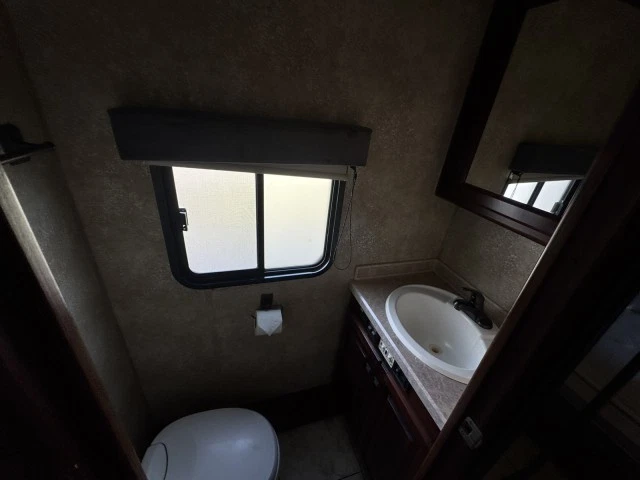
8. Check the Bathroom
A bathroom becomes more valuable when children are involved.
Parents understand this immediately.
Having a bathroom inside the camper can make nighttime trips much easier.
Depending on your family, you may want a toilet and shower combination or a larger bathroom.
Not every one of the affordable family campers you consider will have the same bathroom setup.
Walk inside.
Sit down if necessary.
Open the shower door.
Check whether the space actually works for your family.
Pictures can be misleading.
9. Look Beyond the Interior Appearance
A beautifully renovated camper can be tempting.
Fresh upholstery, modern flooring, attractive cabinets, and new decorations can make an older unit look fantastic.
But cosmetic improvements do not automatically mean mechanical reliability.
When comparing budget-friendly family campers, separate appearance from condition.
Inspect the systems.
Check appliances.
Look at tires.
Inspect seals.
Ask about maintenance.
Verify that the electrical and plumbing systems work properly.
A camper should not win your approval simply because it photographs well.
10. Test the Major Systems
Before buying family campers on a budget, test as many systems as possible.
Check the lights.
Test the refrigerator.
Run the air conditioning.
Test the furnace.
Turn on faucets.
Flush the toilet.
Check the water heater.
Inspect electrical outlets.
Look at the battery and charging system.
If something does not work, find out why.
A small issue may be easy to fix.
A larger system problem could change the value of the entire deal.
11. Pay Attention to the Floor Plan
Two campers with similar lengths can feel completely different inside.
One may have an excellent family layout.
Another may have wasted space.
When comparing affordable family campers, focus on how the floor plan works for your family.
Can everyone sit together?
Is there enough room to prepare meals?
Can children sleep without disturbing everyone else?
Is there enough privacy?
Can you move around when the camper is occupied?
These practical questions matter more than a flashy brochure.
12. Consider Your Children’s Ages
A camper that works perfectly for a family with toddlers may not work as well when those children become teenagers.
That is why it is smart to think about the next five years.
Some budget-friendly family campers offer flexible sleeping areas that can adapt as children grow.
If your children are young today, consider whether their sleeping spaces will still be comfortable later.
Buying with the future in mind can prevent another expensive upgrade.
13. Compare Ownership Costs
Purchase price is only one part of the equation.
You also need to think about insurance, storage, maintenance, campground costs, fuel, tires, repairs, and accessories.
Some affordable family campers may have a low initial price but higher maintenance needs.
Others may cost slightly more upfront but require fewer immediate repairs.
Calculate the bigger picture.
Make a Simple Ownership Estimate
Write down:
- Purchase price
- Taxes and registration
- Insurance
- Expected repairs
- Maintenance
- Storage
- Camping fees
- Fuel
- Accessories
This gives you a clearer picture of what your camper will actually cost.
14. Do Not Forget the Tires
Tires deserve special attention.
A camper can look excellent while sitting on aging tires.
Check the tire condition and date information.
Look for cracks, uneven wear, or damage.
If the tires need replacement, include that cost in your negotiation.
It is a small detail that can make a meaningful difference when comparing family campers on a budget.
15. Research the Seller
Where you buy matters.
Dealers can provide a different purchasing experience than private sellers.
Private sellers may offer attractive prices but require more due diligence.
Whichever route you choose, ask questions.
Why is the camper being sold?
How long has the seller owned it?
Where was it stored?
How often was it used?
Were there leaks?
Were repairs performed?
Can maintenance records be provided?
Good questions can reveal information that a listing does not show.
16. Do Not Let a Low Price Rush You
A low price can create pressure.
You might think someone else will buy the camper if you do not make an immediate decision.
Slow down.
Inspect first.
Verify the paperwork.
Check the VIN.
Confirm ownership.
Understand the condition.
Then make your decision.
The best affordable family campers are not necessarily the ones with the lowest advertised prices.
They are the ones that make financial sense after you consider the whole purchase.
17. Learn to Negotiate
Negotiation becomes easier when you have facts.
If the tires are old, mention it.
If an appliance does not work, mention it.
If seals need attention, document it.
If similar campers are selling for less, use that information.
Do not insult the seller.
Be reasonable.
A respectful conversation can produce a better result than aggressive bargaining.
When buying budget-friendly family campers, your goal is not simply to get the seller’s lowest possible price.
Your goal is to reach a fair price based on the camper’s actual condition.
18. Ask for Maintenance Records
Records are valuable.
They can show whether the camper received regular maintenance.
They may also reveal previous repairs.
A seller who has kept invoices, service records, inspection reports, and receipts can provide useful evidence about the camper’s history.
When comparing family campers on a budget, documentation can give you additional confidence.
Missing records do not automatically mean a camper is bad.
But they do mean you may need to investigate more carefully.
19. Think About Where You Will Camp
Your camping habits should influence your purchase.
If you mostly visit established campgrounds, you may not need a camper designed for extended off-grid travel.
If you want remote camping, you may care more about battery capacity, water storage, solar equipment, and other features.
The best affordable family campers are those that match the trips you actually plan to take.
Do not pay extra for features your family will never use.
20. Consider Your Family’s Comfort
Affordability matters.
So does comfort.
A family camper should make travel easier rather than create unnecessary stress.
Think about seating.
Sleeping.
Ventilation.
Temperature control.
Privacy.
Lighting.
Storage.
Kitchen access.
Bathroom convenience.
These details become extremely important after several days on the road.
A camper may seem adequate during a 20-minute viewing but feel very different after a week-long family trip.
21. Calculate the Cost of Accessories
Many first-time buyers forget about accessories.
You may need leveling equipment, hoses, electrical connections, cookware, bedding, outdoor chairs, storage containers, safety equipment, and other camping supplies.
These purchases can add up.
When budgeting for budget-friendly family campers, keep an accessory allowance separate from your camper purchase budget.
That way, you are not forced to stretch financially after closing the deal.
22. Take a Second Look Before Buying
If possible, inspect the camper twice.
The first visit is often emotional.
You see the space.
You imagine your family sitting around the table.
You picture the children sleeping in the bunks.
You start thinking about your next vacation.
The second inspection should be more objective.
Bring your checklist.
Test the systems.
Look underneath.
Inspect the roof.
Review the paperwork.
That second look can help you make a better decision among affordable family campers.
23. Focus on Value, Not Just Price
This may be the most important lesson.
A cheap camper is not automatically a good camper.
A slightly more expensive camper can sometimes be the better deal if it has been maintained properly and needs fewer immediate repairs.
The goal is to find family campers on a budget that provide strong value.
You want something your family can enjoy.
You want something practical.
You want something safe and manageable.
And you want ownership costs that fit your budget.
That is a much better definition of affordability.
How to Compare Affordable Family Campers Side by Side
When you have narrowed your choices down to several affordable family campers, create a simple comparison sheet.
List the asking price.
Then record the sleeping capacity.
Add the camper length.
Record the unloaded and loaded weight information.
Write down the number of beds.
Check bathroom facilities.
Note kitchen equipment.
Record storage capacity.
Add any known repairs.
Then estimate the additional money you will need after purchase.
This makes comparisons much easier.
Sometimes the camper with the lowest price will move down your list once everything is calculated.
Another camper may suddenly look like the better purchase.
That is exactly what you want.
You are making a decision based on evidence rather than excitement.
New or Used: Which Is Better for Families?
There is no universal answer.
New budget-friendly family campers can offer updated designs, modern features, warranties, and less wear.
Used campers can provide better purchase value and access to features that might otherwise exceed your budget.
For buyers who are comfortable inspecting used equipment, the secondhand market can be particularly interesting.
But condition should always come first.
A poorly maintained camper is not a bargain simply because it is inexpensive.
How to Make Family Camping More Affordable
Buying the camper is only the beginning.
You can also reduce travel costs by preparing meals instead of eating at restaurants.
Choose campgrounds carefully.
Travel during less busy periods.
Pack reusable supplies.
Plan routes efficiently.
Avoid buying unnecessary accessories.
Take care of maintenance before small problems become expensive repairs.
These habits can make owning family campers on a budget even more economical.
Plan Meals Before Leaving
Food is one of the easiest vacation expenses to underestimate.
A camper kitchen gives your family more control.
Prepare simple meals.
Pack snacks.
Bring drinks.
Cook breakfast before starting the day’s activities.
Even a few restaurant meals replaced with campground meals can make a noticeable difference over multiple trips.
Common Mistakes First-Time Family Camper Buyers Make
First-time buyers often make the same mistakes.
They focus too much on appearance.
They underestimate storage.
They ignore towing specifications.
They forget about maintenance.
They skip professional inspections.
They buy more camper than they actually need.
They also sometimes spend their entire budget on the purchase and have nothing left for repairs.
Avoiding these mistakes can make the search for affordable family campers much easier.
Buying Based on Emotion
It is easy to imagine the perfect vacation when you walk through a beautiful camper.
But buying should be based on practical facts.
Ask yourself whether your vehicle can tow it.
Ask whether your family can comfortably sleep inside.
Ask whether the maintenance costs make sense.
Ask whether the seller can document ownership and condition.
If the answers work, then you have something worth considering.
Questions to Ask Before Buying a Family Camper
Before purchasing budget-friendly family campers, ask:
How old is the camper?
Who owned it previously?
Has it ever had water damage?
Where was it stored?
Are the maintenance records available?
Do all appliances work?
Are the tires in good condition?
Does the air conditioning work?
Does the heating system work?
Are there any known leaks?
Is the title clear?
What repairs were recently completed?
Are there any outstanding loans or liens?
Has the camper been modified?
Why is it being sold?
The answers can help you determine whether the asking price makes sense.
What Makes a Camper Family-Friendly?
A family-friendly camper does not necessarily need luxury features.
It needs a useful layout.
It needs enough sleeping space.
It should have practical storage.
A functional kitchen helps.
A bathroom can make family travel easier.
Good ventilation and climate control improve comfort.
Durable surfaces can be helpful when children are involved.
These qualities are often more valuable than expensive decorative upgrades.
That is why some modest affordable family campers can be better family choices than larger luxury units.
Finding the Right Balance Between Size and Price
Larger campers usually offer more space.
But larger does not always mean better.
They can require bigger tow vehicles.
They may use more fuel.
They may be harder to maneuver.
They may cost more to maintain.
For some families, a compact camper with an intelligent floor plan is the better choice.
When shopping for family campers on a budget, think about how much space your family truly needs.
Not how much space looks impressive in a listing.
Final Buying Checklist
Before buying, review your checklist one more time.
Confirm the towing requirements.
Inspect for water damage.
Test the appliances.
Check the tires.
Review the electrical system.
Test plumbing.
Inspect the roof.
Check the flooring.
Open every storage compartment.
Review maintenance records.
Verify ownership documents.
Calculate the total purchase cost.
Consider insurance and storage.
Estimate upcoming repairs.
Then compare the camper with other budget-friendly family campers in the same price range.
If it still looks like a strong deal, you may have found the right option.
FAQs About Affordable Family Campers
What are the best affordable family campers?
The best affordable family campers depend on your family size, towing vehicle, travel habits, and budget. Look for practical layouts, reliable systems, adequate sleeping space, and reasonable ownership costs.
Are used family campers worth buying?
Yes. Used family campers on a budget can offer excellent value when they have been properly maintained. Always inspect for water damage and verify the camper’s systems before purchasing.
How many people can affordable family campers sleep?
Sleeping capacity varies widely. Some affordable family campers are designed for four people, while larger family layouts can accommodate six or more. Check the actual bed dimensions rather than relying only on the advertised capacity.
Are bunkhouse campers good for families?
Bunkhouse layouts can be excellent for families because children receive dedicated sleeping areas. Many budget-friendly family campers use bunk beds to maximize interior space without requiring an extremely large camper.
What should I check when buying an affordable camper?
Inspect the roof, walls, floors, seals, appliances, plumbing, electrical system, tires, and storage compartments. Water damage deserves particular attention when evaluating affordable family campers.
Should I buy a new or used camper?
Both can work. New family campers on a budget may provide newer features and warranty coverage, while used campers can offer stronger value. Condition and total ownership cost should guide your decision.
What is the biggest mistake when buying a family camper?
One of the biggest mistakes is focusing only on the purchase price. Some budget-friendly family campers may require substantial repairs, so always calculate the total cost before committing.
How can I make camper ownership cheaper?
Maintain the camper regularly, compare campground prices, cook meals inside, avoid unnecessary upgrades, and address small problems early. These habits can make affordable family campers more economical over time.
Do I need a large truck for a family camper?
Not necessarily. It depends on the camper’s weight and your vehicle’s towing and payload specifications. Some family campers on a budget are designed to be towed by smaller vehicles.
Are affordable campers suitable for long trips?
Some are. The right choice depends on layout, storage, bathroom facilities, water capacity, sleeping arrangements, and comfort. Several affordable family campers can work well for extended travel when matched correctly to the family.
Final Thoughts
Choosing a camper for your family should be exciting.
But it should also be practical.
The right purchase can turn ordinary weekends into memorable adventures.
You can wake up near a lake.
Visit a new town.
Spend evenings outside.
Cook breakfast together.
Give children experiences they will remember long after the trip ends.
The key is finding a camper that fits your real life.
Do not chase the cheapest listing.
Do not buy based only on appearance.
Do not ignore maintenance.
And do not forget that your family will actually have to live in the camper during those trips.
Take your time.
Compare several budget-friendly family campers.
Inspect carefully.
Ask questions.
Calculate the complete cost.
Think about your family’s needs today and several years from now.
When you approach the purchase that way, finding affordable family campers becomes less about hunting for a bargain and more about finding genuine value.
And that is ultimately what makes a family camper worth buying: not the lowest number on the listing, but the number of good memories it can help create without putting unnecessary pressure on your budget.
Related guides
- RVs with Kitchens: 35 Smart Ways to Choose a Comfortable Home on Wheels
- Best RVs for Families: 15 Real-World Lessons From Family Camping
- Buy an RV: The Complete Guide to Choosing the Right RV Without Regret
- Best RVs For Sale in 2026 for Every Budget
Browse more in RVs for Sale or see all buying guides.