Affordable Family RVs: 25 Smart Ways to Find the Perfect RV Without Overspending
Buying an RV for your family can feel like a big decision.
There is the price.
Then there is the size.
Then the sleeping space.
Then the question that every parent eventually asks: “Will this actually work for all of us?”
That is exactly why shopping for affordable family RVs requires more than scrolling through listings and choosing the one with the lowest price.
A good family RV should fit your lifestyle.
It should fit your vehicle if it is towable.
It should fit your budget.
Most importantly, it should fit your family.
The right affordable family RVs can make weekend trips easier, summer vacations more flexible, and long road trips much more enjoyable.
You get a place to sleep.
You have somewhere to prepare meals.
You can carry your belongings without stuffing everything into a suitcase.
And depending on the RV, you may even have a private bathroom, separate sleeping areas, and enough room for everyone to relax.
But there is a trick to finding the right deal.
You need to shop with your real family life in mind.
Start With the Way Your Family Actually Travels
Before searching through hundreds of budget-friendly family RVs, forget about the glossy pictures for a moment.
Think about your family.
How many people usually travel?
How old are the children?
Do you take short weekend trips or longer vacations?
Do you enjoy staying in campgrounds?
Would you rather spend time at national parks, beaches, lakes, or quiet rural locations?
These questions help narrow the search.
A family of four that travels mostly on weekends may need something completely different from a family of six that spends several weeks on the road.
There is no single RV that is perfect for everyone.
The best affordable family RVs are the ones that solve your particular travel problems.
Think About Your Typical Day
Imagine a normal day inside the RV.
Everyone wakes up.
Someone wants breakfast.
One child needs the bathroom.
Another wants to find their shoes.
Someone is trying to make coffee.
Where does everybody stand?
Can people move around?
Is there enough seating?
Does the floor plan still feel comfortable when everyone is awake?
That mental exercise can reveal more than a sales brochure.
1. Decide How Many People Need a Bed
Sleeping capacity is one of the first things families should consider when comparing family RVs on a budget.
Do not simply look at a listing that says “sleeps six.”
Find out how those six people actually sleep.
Some RVs count a dinette conversion as a bed.
Others include a sofa sleeper.
Some have bunk beds.
Others have a private bedroom.
Those details matter.
Bunk Beds Can Make Family Travel Easier
For families with children, bunk beds can be extremely useful.
They create a dedicated sleeping area without taking up the entire living room.
Many affordable family RVs use bunkhouse layouts because they give parents and children separate spaces.
Children can go to bed while adults still have somewhere to sit.
That small difference can make evenings much easier.
2. Do Not Buy More RV Than You Need
It is tempting to think bigger is always better.
It is not.
A huge RV may offer incredible space, but it can also cost more to purchase, fuel, maintain, insure, store, and operate.
Some affordable family RVs are surprisingly comfortable despite having a smaller footprint.
A smart floor plan can make a moderate-size RV feel much larger.
Instead of asking, “What is the biggest RV I can afford?”
Ask, “What is the smallest RV that comfortably meets our needs?”
That question can save you money.
3. Match the RV to Your Tow Vehicle
If you are considering a towable RV, this is critical.
Do not choose the RV first and worry about towing later.
Check your vehicle’s manufacturer specifications.
Understand towing capacity.
Check payload capacity.
Consider passengers.
Remember that camping equipment, food, water, clothing, bicycles, and other supplies add weight.
The right budget-friendly family RVs should work safely with your existing vehicle or with a vehicle you realistically plan to use.
Do Not Guess the Weight
An empty RV is not the same as a loaded RV.
Once your family packs for a vacation, the actual weight can increase considerably.
This is why buyers should look beyond the advertised dry weight.
Understanding the numbers before buying can prevent a very expensive mistake.
4. Set a Complete RV Budget
Your RV budget should include more than the purchase price.
Think about insurance.
Registration.
Maintenance.
Storage.
Fuel.
Camping fees.
Tires.
Batteries.
Repairs.
Accessories.
All of these expenses can influence how affordable an RV really is.
When comparing affordable family RVs, leave some money available for the first few months of ownership.
You do not want to spend your entire budget on the RV and then discover that you cannot afford the equipment needed to use it.
5. Look at Used RVs
Used RVs deserve serious attention if your goal is affordability.
A well-maintained used RV can provide plenty of comfort without the price of a brand-new unit.
Some older family RVs on a budget have excellent layouts that remain useful for years.
You may find bunk beds, full kitchens, bathrooms, separate bedrooms, and generous storage without paying for the newest model.
The important word is “maintained.”
Condition matters more than age alone.
6. Inspect for Water Damage
If you remember only one inspection tip, remember this one.
Look for water damage.
Water can create expensive problems inside an RV.
Inspect ceilings.
Check walls.
Look around windows.
Examine roof seams.
Look inside cabinets.
Check floors.
Pay attention to unusual odors.
Soft flooring or discolored surfaces deserve investigation.
When evaluating affordable family RVs, never let a beautiful interior distract you from structural concerns.
A Professional Inspection Can Be Worth It
If you are not comfortable inspecting an RV yourself, consider hiring an experienced RV inspector.
The inspection cost may feel unnecessary when you are trying to save money.
But discovering a major problem before buying is much cheaper than discovering it after the purchase.
7. Test Everything You Can
An RV is not just a vehicle or a box with beds.
It contains multiple systems.
Test the air conditioning.
Test the heating system.
Check the refrigerator.
Run the faucets.
Flush the toilet.
Test lights.
Check outlets.
Inspect the water heater.
If the RV has a generator, ask about its operating condition and maintenance.
When comparing affordable family RVs, a working system is worth more than a feature listed on paper.
8. Open Every Storage Compartment
Storage becomes extremely important when children are involved.
Parents know how quickly a small amount of luggage becomes a mountain of stuff.
Clothes.
Shoes.
Toys.
Snacks.
Games.
Camping chairs.
Outdoor equipment.
Cooking supplies.
The best budget-friendly family RVs make it easy to organize these items.
Open cabinets.
Check closets.
Look under beds.
Inspect outside storage compartments.
Then imagine everything your family normally packs.
If there is nowhere to put it, the RV may not be as practical as it first appears.
9. Look Closely at the Kitchen
You do not need a restaurant-sized kitchen.
But a useful kitchen can save money.
Being able to prepare breakfast inside the RV can eliminate an expensive restaurant meal.
You can make sandwiches for lunch.
You can store cold drinks.
You can prepare a quick dinner after a long day outdoors.
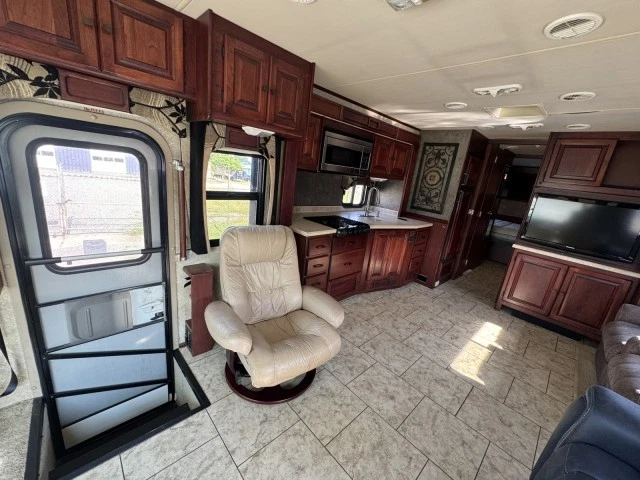
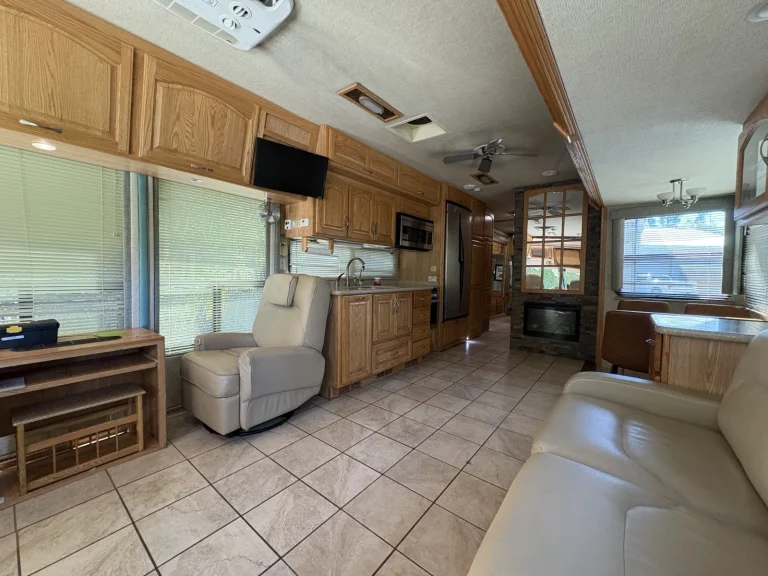
Many affordable family RVs have compact kitchens that work perfectly well for simple family meals.
Focus on usable counter space, storage, refrigerator capacity, and the overall layout.
10. Decide How Important a Bathroom Is
For some families, an onboard bathroom is non-negotiable.
For others, campground facilities are perfectly acceptable.
Young children can make an RV bathroom particularly useful.
Late-night bathroom trips become easier.
Bad weather becomes less inconvenient.
Long travel days become more manageable.
If a bathroom matters to your family, make it part of your search criteria for family RVs on a budget from the beginning.
11. Consider Privacy
Family vacations are wonderful.
But everyone still needs personal space.
Parents may want a private bedroom.
Teenagers may appreciate separate sleeping areas.
Younger children may need a quiet place to sleep.
Some affordable family RVs use curtains, sliding doors, bunk areas, or separate bedrooms to create privacy.
Think about what your family needs today.
Then think about what it may need a few years from now.
12. Check the Seating Area
The dining area is more important than many buyers realize.
This may become the place where your family eats breakfast, plays cards, watches movies, plans the next day’s adventure, or simply escapes the rain.
Sit in the seats.
Imagine four or five people sitting there.
Is there enough room?
Can everyone reach the table?
Does the seating feel comfortable?
A good family RV should give everyone somewhere to relax.
13. Think About Climate Control
Hot summer days can quickly change the atmosphere inside an RV.
So can cold nights.
Check the heating and air conditioning systems.
Ask whether they have been serviced.
Test them during the inspection if possible.
Comfort is one of the reasons people choose RV travel in the first place.
The best affordable family RVs should provide a comfortable environment when outdoor conditions are less than perfect.
14. Inspect the Tires
Tires are easy to overlook.
They should not be.
An RV can sit unused for long periods, which means tire age and condition deserve attention.
Look for cracking, unusual wear, and other signs of deterioration.
Check the tire information and maintenance history.
If replacements are needed, include them in your budget.
A low asking price can become less attractive once immediate tire replacement is added to the equation.
15. Ask Why the Owner Is Selling
This simple question can reveal useful information.
Why are you selling?
Maybe the owner is upgrading.
Maybe their children have grown up.
Maybe they no longer travel.
Maybe the RV simply does not fit their lifestyle anymore.
There is nothing wrong with any of those reasons.
But you should still listen carefully.
When shopping for budget-friendly family RVs, understanding the seller’s story can help you ask better follow-up questions.
16. Ask for Maintenance Records
Documentation adds confidence.
Look for service receipts.
Repair records.
Tire replacements.
Roof maintenance.
Appliance repairs.
Generator servicing.
If records are available, review them.
A camper with a clear history can be easier to evaluate than one with no information about its past.
This is particularly important when comparing several affordable family RVs.
17. Do Not Judge an RV Only by Its Age
Age tells you something.
It does not tell you everything.
An older RV that was stored properly and maintained consistently can be a better purchase than a newer RV that was neglected.
Look at condition.
Look at records.
Look at the systems.
Look at the structure.
Look at the tires.
Look at the roof.
Some family RVs on a budget can provide excellent value simply because previous owners took good care of them.
18. Consider Where You Will Store It
Before buying, think about storage.
Do you have enough room at home?
Will you need a storage facility?
Are there restrictions in your neighborhood?
Will you need to pay monthly storage fees?
Storage costs should be part of your overall budget.
A camper that seems inexpensive can become less affordable when storage is added year after year.
19. Think About Fuel Costs
Larger motorized RVs can consume more fuel than smaller vehicles.
Towable RVs also affect fuel economy.
If you travel frequently, fuel costs can become significant.
That does not mean you should automatically buy the smallest RV available.
It means you should understand the tradeoff.
Some affordable family RVs may have a higher purchase price but lower operating costs.
Others may cost less upfront but be more expensive to operate.
20. Compare Several RVs Before Choosing
Never fall in love with the first RV you see.
Visit several.
Compare floor plans.
Compare condition.
Compare storage.
Compare sleeping arrangements.
Compare maintenance history.
Compare prices.
Take notes.
Photographs can help you remember details.
After viewing five or six affordable family RVs, you may have a much clearer idea of what your family actually needs.
21. Learn to Spot a Real Bargain
A real bargain is not simply an RV with a low asking price.
A real bargain combines price and condition.
Imagine two RVs.
RV A costs less but needs new tires, roof work, appliance repairs, and interior repairs.
RV B costs more but has recently been serviced and has excellent maintenance records.
RV B may actually be the cheaper choice over the next few years.
That is why experienced buyers evaluate value instead of price alone.
22. Negotiate With Evidence
Negotiation becomes easier when you have facts.
If the tires are aging, mention it.
If an appliance does not work, mention it.
If you find damaged seals, document them.
If comparable RVs are selling for less, bring that information into the conversation.
Be respectful.
You do not need to criticize the RV.
You simply need to explain why your offer makes sense.
This approach can be particularly effective when purchasing budget-friendly family RVs from private sellers.
23. Think About the Next Five Years
Your family will change.
Children grow.
Interests change.
Travel habits change.
A floor plan that works today may not work five years from now.
If your children are small, think about how much sleeping space they will need later.
If you expect to take longer trips in the future, consider storage and living space.
Choosing affordable family RVs with some flexibility can help you avoid upgrading too quickly.
24. Budget for Camping Equipment
Buying the RV does not mean you are finished spending.
You may need hoses.
Electrical adapters.
Leveling equipment.
Kitchen supplies.
Bedding.
Outdoor furniture.
Storage containers.
Safety equipment.
Cleaning products.
Some families also add bicycles, grills, awnings, or other camping accessories.
Create a starter budget before buying.
That way, your first trip does not become an expensive shopping spree.
25. Think About the Memories, Not Just the Machine
At the end of the day, an RV is a tool.
The real value comes from what you do with it.
Maybe your family spends summer weekends beside a lake.
Maybe you visit different parks.
Maybe you take a road trip across several states.
Maybe you simply drive a few hours away and spend two nights somewhere peaceful.
The best family RVs on a budget give families opportunities to spend more time together.
That is something a hotel room cannot always provide.
New RV or Used RV: Which Makes More Sense?
This question comes up constantly.
New RVs can provide modern interiors, updated technology, warranty coverage, and fewer years of previous use.
Used RVs can provide attractive prices and more choices within a limited budget.
Neither option is automatically better.
For many buyers, the best strategy is to compare both.
A used RV in excellent condition may outperform a new RV in terms of value.
At the same time, a new RV may make sense if warranty coverage and modern features are priorities.
When searching for affordable family RVs, keep your priorities clear.
How to Make Family RV Trips More Affordable
The savings do not stop after you purchase the RV.
There are plenty of ways to reduce travel costs.
Cook meals inside.
Pack snacks.
Choose campgrounds carefully.
Travel during less expensive periods.
Plan your route.
Avoid unnecessary upgrades.
Maintain your RV.
Small savings can add up across multiple trips.
Use the RV Kitchen
Restaurant bills can become surprisingly expensive for families.
Even replacing breakfast with a simple meal prepared inside the RV can help.
Keep easy foods available.
Plan meals before leaving home.
Bring reusable bottles and containers.
This is one of the simplest ways to make your affordable family RVs even more economical.
What Features Actually Matter?
RV advertisements often highlight luxury.
Large televisions.
Fancy furniture.
Decorative lighting.
Premium finishes.
Those things can be nice.
But families should focus on practical features first.
Sleeping capacity.
Storage.
Kitchen functionality.
Bathroom access.
Climate control.
Comfortable seating.
Reliable systems.
A practical floor plan can be more valuable than an expensive entertainment package.
The most useful budget-friendly family RVs are often the ones that prioritize everyday function.
The Importance of a Good Floor Plan
Floor plan is one of the biggest differences between RVs.
Two units may have nearly identical exterior dimensions but feel completely different inside.
One might have excellent traffic flow.
Another might have people constantly walking into each other.
One might provide a comfortable dining area.
Another might sacrifice seating for storage.
Walk through every RV you consider.
Stand inside with your family.
Imagine a rainy day when everyone is indoors.
That is the real test.
How to Know When You Have Found the Right RV
You may have found the right RV when the numbers and the lifestyle both make sense.
It fits your budget.
Your vehicle can handle it.
Everyone has somewhere to sleep.
There is enough storage.
The bathroom works for your family.
The kitchen meets your needs.
The systems operate correctly.
The maintenance history is reasonable.
The inspection does not reveal major concerns.
And, importantly, you can imagine your family actually using it.
That is what you want from affordable family RVs.
A Simple Family RV Buying Checklist
Before signing anything, go through this list:
- Confirm the RV’s ownership documents.
- Check the VIN.
- Inspect the roof.
- Look for water damage.
- Check the floors.
- Test appliances.
- Test plumbing.
- Test heating and cooling.
- Inspect tires.
- Check batteries.
- Review maintenance records.
- Confirm towing requirements.
- Calculate insurance costs.
- Consider storage costs.
- Estimate immediate repairs.
- Budget for camping accessories.
- Compare similar RVs.
- Take a second look before purchasing.
A checklist keeps excitement from taking over the buying process.
It also makes it easier to compare different family RVs on a budget objectively.
FAQs About Affordable Family RVs
What are the best affordable family RVs?
The best affordable family RVs depend on family size, travel habits, towing requirements, sleeping needs, and budget. Bunkhouse layouts are often useful for families with children.
Are used RVs good for families?
Yes. Used affordable family RVs can offer excellent value when properly maintained. Buyers should carefully inspect the RV and verify its maintenance history before purchasing.
How many people can an affordable family RV sleep?
Sleeping capacity varies. Some budget-friendly family RVs sleep four people comfortably, while larger bunkhouse and multi-room layouts can accommodate more.
Are bunkhouse RVs good for children?
Bunkhouse RVs can be excellent for families because children have dedicated sleeping spaces. They can also allow parents to maintain a separate living area after the children go to bed.
What should I inspect before buying an RV?
Inspect the roof, walls, floors, seals, appliances, plumbing, electrical system, tires, and storage compartments. Water damage should receive particular attention when evaluating affordable family RVs.
Is a small RV better for a family?
Not necessarily. A smaller RV may be cheaper and easier to operate, but families need enough sleeping and living space. The best family RVs on a budget balance size, comfort, and cost.
Should I buy an RV with a bathroom?
If your family travels frequently, an onboard bathroom can provide significant convenience. However, your needs and camping style should determine whether the additional cost is worthwhile.
How can I save money when buying a family RV?
Compare multiple listings, consider well-maintained used RVs, inspect carefully, negotiate based on documented issues, and keep money aside for immediate maintenance.
How much storage does a family RV need?
Families generally need more storage than they initially expect. Clothes, food, toys, camping equipment, and outdoor gear can quickly fill an RV. Open every compartment before buying.
What is the biggest RV buying mistake families make?
One common mistake is focusing entirely on the purchase price. A low-priced RV may need expensive repairs. Always consider the total cost of ownership.
Final Thoughts
Finding the right RV for your family does not have to be overwhelming.
It starts with knowing what your family actually needs.
You do not need the biggest RV.
You do not need every luxury feature.
And you do not necessarily need a brand-new model.
What you need is a comfortable, practical RV that works with your budget and your travel plans.
That is where affordable family RVs can make a real difference.
Take your time.
Walk through different layouts.
Ask questions.
Inspect carefully.
Check the numbers.
Think about your tow vehicle.
Think about your children.
Think about the trips you actually want to take.
Most importantly, do not let a beautiful interior make the decision for you.
Look at the complete picture.
The right affordable family RVs should feel like a good financial decision and a good family decision at the same time.
Because the real goal is not simply owning an RV.
The goal is having somewhere to wake up together after a night under the stars.
It is breakfast before a day at the lake.
It is rainy evenings playing cards around the table.
It is roadside stops that turn into unexpected adventures.
It is watching your children get excited because they know another trip is coming.
Those experiences are why families buy RVs in the first place.
Choose carefully, buy within your means, and find an RV that gives your family room to enjoy the journey.
Related guides
- Campers With Bathrooms: 37 Smart Ways to Find the Right RV for Comfortable Travel
- Affordable RVs Under $20000: 27 Smart Ways to Buy Without Regret
- Buy RV Online: A Smarter Way to Find, Compare, and Purchase Your Next RV
- Used RVs For Sale: What to Check Before You Buy
Browse more in RVs for Sale or see all buying guides.