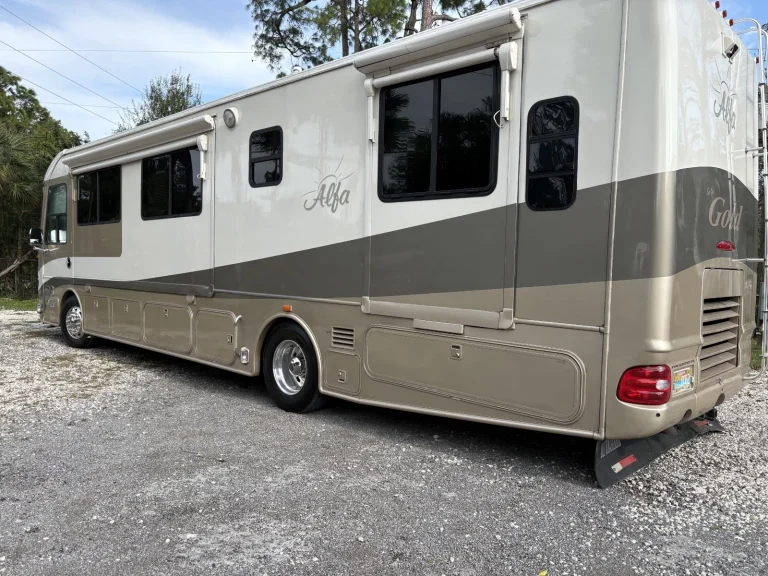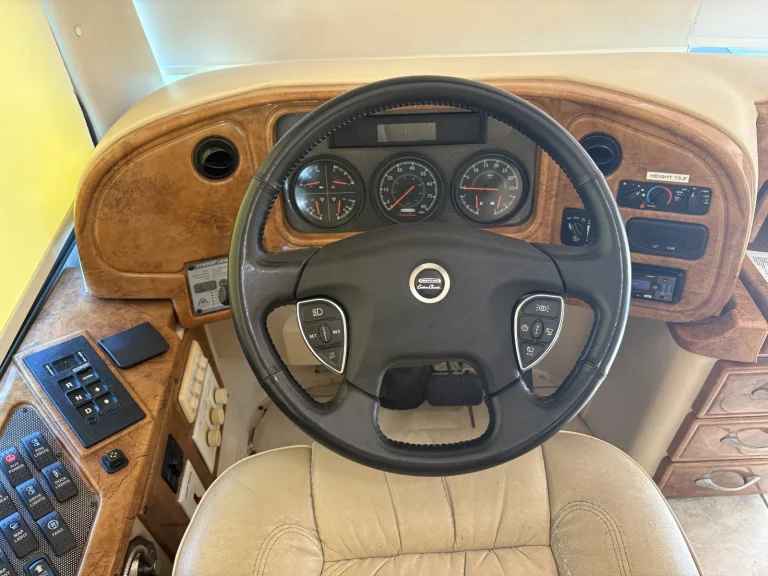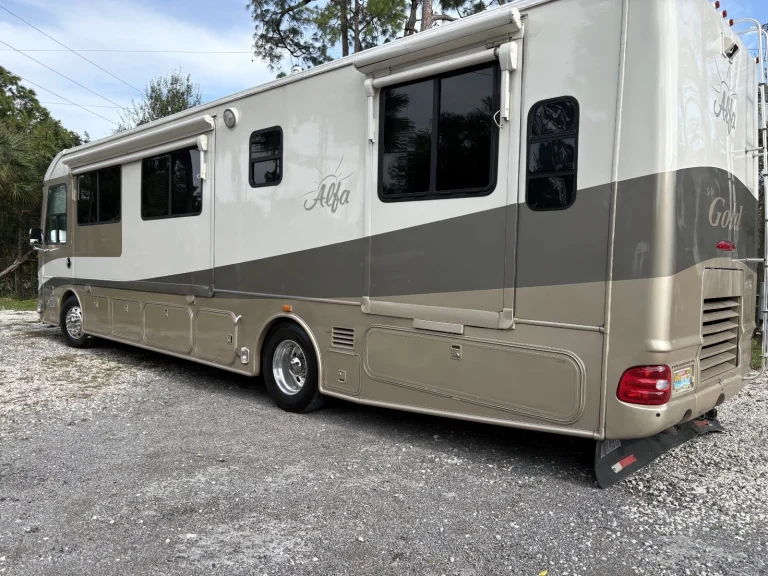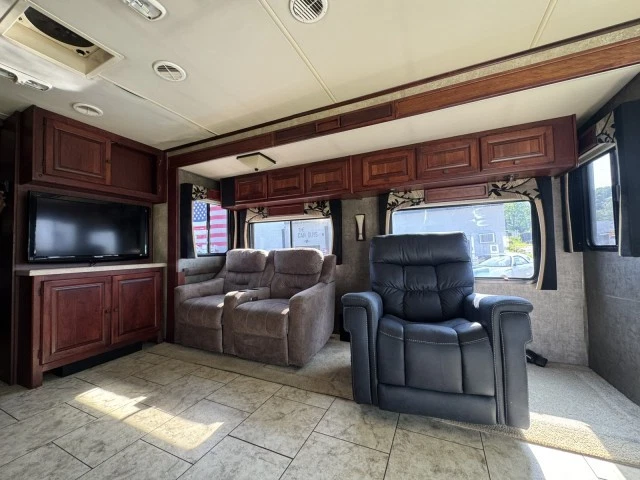
Off Grid RVs for Sale: 11 Things Smart Buyers Check Before They Pay
There is a certain moment that makes RV travel addictive.
You drive past the last gas station.
The cell signal starts disappearing.
The road gets quieter.
Then you find a place where there are no campground rows, no noisy neighbors, and no electrical hookups waiting for you.
You park.
You step outside.
And suddenly, you realize you brought your home with you.
That feeling is one of the biggest reasons people search for off grid RVs for sale.
Going off grid is not simply about owning an RV.
It is about having the freedom to decide where you want to spend the night.
But there is a catch.
Not every RV that looks adventurous is actually prepared for extended off-grid travel.
A large solar panel on the roof does not automatically make an RV self-sufficient.
A big freshwater tank does not solve every water problem.
And a rugged-looking exterior does not necessarily mean the vehicle is ready for rough roads.
If you are shopping for off grid RVs for sale, you need to look deeper than the photos.
This guide will help you do exactly that.
What Does “Off Grid” Really Mean?
The term off grid gets used a lot in the RV world.
Sometimes it means spending one night away from a campground.
Sometimes it means a week in the wilderness.
For some travelers, it means months of independent travel.
Those are very different requirements.
A genuine off-grid setup is designed to operate without relying on campground electricity, water connections, or sewer hookups.
Instead, it depends on systems such as solar power, batteries, freshwater storage, propane or other fuel sources, waste storage, and efficient appliances.
That is why buyers need to define their own needs before looking through off grid RVs.
Ask yourself one simple question:
How long do I actually want to stay away from hookups?
Your answer will influence almost every other decision.
Why More Travelers Are Choosing Off-Grid RVs
Traditional campgrounds still have their place.
They are convenient.
They usually provide electricity, water, bathrooms, dump stations, and other useful services.
But they can also be busy.
During holidays and peak travel seasons, finding a peaceful campsite can be difficult.
Off-grid travel offers a different experience.
You can search for quieter locations.
You can stay closer to nature.
You can avoid crowded campground schedules.
You can wake up without hearing a generator running ten feet away.
For many RV owners, that freedom is worth investing in a better independent power and water system.
It is also why demand for off grid RVs for sale continues to attract travelers who want more flexibility from their vehicles.
1. Look at the Electrical System First
When you inspect off grid RVs on the market, do not start with the sofa.
Start with the electrical system.
Your electrical system determines what you can realistically use when you are away from hookups.
Solar panels generate energy.
Batteries store it.
An inverter converts stored energy into usable AC power for compatible appliances.
A charge controller manages the charging process.
All of these components need to work together.
A camper with a huge solar array but a tiny battery bank may not perform as expected.
Likewise, a large battery bank does not magically create electricity.
It simply stores electricity produced or supplied by another source.
That distinction is important.
Ask About Solar Capacity
Find out exactly how much solar capacity is installed.
Do not settle for a vague answer such as “it has plenty of solar.”
Ask for the actual specifications.
Also ask how the panels are wired and what charge controller is being used.
If possible, inspect the system while it is operating.
Check the Batteries
Battery age matters.
Battery type matters.
Battery condition matters.
Ask whether the system uses lithium or lead-acid batteries.
Find out the usable capacity.
Also ask whether the batteries have been replaced or upgraded.
When comparing off grid RVs for sale, battery capacity can be just as important as the number of solar panels.
2. Think About Your Daily Power Habits
Here is where many first-time buyers make a mistake.
They calculate how much electricity the RV can produce.
They forget to calculate how much electricity they consume.
Imagine starting your morning with a coffee maker.
Then you charge two phones.
Run a laptop.
Use lights.
Run the refrigerator.
Watch television at night.
Perhaps you use a fan or other appliances.
Those small demands add up.
If you want air conditioning away from hookups, the power requirements can become substantially greater.
Before choosing among off grid RVs, write down the appliances you expect to use.
Then estimate how often you will use them.
That gives you a much clearer idea of what kind of electrical system you need.
3. Water Is Your Other Big Limitation
Power is important.
Water can be even more important.
You can reduce electricity consumption.
You cannot simply decide you do not need water.
Drinking.
Cooking.
Washing dishes.
Showering.
Cleaning.
Toilet use.
Everything consumes resources.
That makes freshwater capacity a major consideration when looking at off grid RVs for sale.
A larger freshwater tank can extend your independence.
But more water also means more weight.
Water weighs roughly 8.3 pounds per gallon.
So adding 50 gallons means carrying more than 400 pounds of water before considering the tank itself.
That is why tank capacity should be evaluated alongside payload capacity.
Consider Your Water Habits
A person traveling alone may use considerably less water than a family of five.
Someone taking quick showers will have different needs from someone who enjoys long showers.
Some travelers wash dishes immediately.
Others minimize water usage.
There is no universal answer.
Choose a system based on your actual habits.
4. Inspect the Waste System
Waste management is not glamorous.
It is still essential.
When comparing off grid RVs on the market, understand exactly how the RV handles black water, gray water, and other waste.
Different RVs use different approaches.
Traditional holding tanks are common.
Some smaller units use cassette toilets.
Other setups may use composting toilets.
Each option has different maintenance requirements.
Do not assume one system is automatically better.
Think about where you will camp.
Think about how often you will have access to dump stations.
Think about how many people will use the RV.
Then choose accordingly.
5. Insulation Can Make or Break Comfort
You can have an impressive solar system and a large battery bank.
If your RV is poorly insulated, extreme weather can still make the trip uncomfortable.
When examining off grid RVs for sale, look carefully at insulation and ventilation.
If you expect cold-weather travel, investigate the heating system and plumbing protection.
If you plan to camp in hot climates, ventilation becomes critical.
Roof vents and efficient fans can make a surprisingly large difference.
Window quality matters too.
So does the condition of door seals.
A well-insulated RV can require less energy to keep comfortable.
That matters when every watt-hour counts.
6. Don’t Ignore the Refrigerator
Your refrigerator is one of the appliances you may depend on every day.
When looking at off grid RVs, determine what type of refrigerator is installed.
Some refrigerators are designed to operate efficiently from electrical systems.
Others may use propane or multiple energy sources.
Understand the system before you buy.
Ask how much electricity it consumes.
Ask whether it has been serviced.
Check that it cools properly.
A refrigerator that works perfectly during a quick inspection but struggles in hot weather can become a serious inconvenience.
7. Choose the Right Size
Bigger is not always better.
A large RV gives you more living space.
It can provide bigger beds, larger kitchens, more storage, and additional bathroom space.
But larger RVs also tend to require more resources.
They can consume more fuel.
They can be harder to maneuver.
Some remote roads simply are not designed for large vehicles.
That is why size matters when reviewing off grid RVs for sale.
Think about the places you want to visit.
If your dream destinations involve narrow forest roads, compact trails, or small dispersed campsites, a giant motorhome may not be the best fit.
On the other hand, if you are traveling with a large family, sacrificing living space may create its own problems.
Balance capability with practicality.
8. Pay Attention to Ground Clearance and Tires
If your version of off-grid camping involves dirt roads, inspect the mechanical side carefully.
Ground clearance matters.
Tires matter.
Suspension matters.
Approach and departure angles can matter too.
A vehicle that handles highways beautifully may not be designed for rough terrain.
That does not mean you need an extreme expedition vehicle.
It means you should match the vehicle to the roads you intend to use.
When reviewing off grid RVs on the market, inspect the tires for age and condition.
Look underneath the vehicle.
Check for damage.
Look at suspension components.
If the RV has been used extensively off road, ask where it has traveled and whether any repairs were required afterward.
9. Storage Is a Bigger Deal Than You Think
Walk into an empty RV and it may look enormous.
Then imagine packing it for a two-week trip.
Food.
Clothing.
Tools.
Water equipment.
Camping chairs.
Outdoor gear.
Spare parts.
Cooking equipment.
Personal belongings.
Suddenly, those cabinets do not look quite so large.
Storage deserves serious attention when comparing off grid RVs for sale.
Open every cabinet.
Check exterior compartments.
Look underneath beds.
Inspect overhead storage.
Think about where your actual equipment will go.
Do not just ask whether the RV has “lots of storage.”
Imagine yourself living inside it.
Where would you put everything?
10. Weight Matters More Than Most Buyers Expect
It is easy to forget how quickly an RV’s weight increases.
Start with the RV.
Then add water.
Fuel.
Batteries.
Food.
Clothing.
Tools.
Outdoor equipment.
Passengers.
And all the little items you never think about until they are inside the vehicle.
When comparing off grid RVs for sale, pay attention to gross vehicle weight ratings and payload information.
For towable RVs, also consider the towing vehicle’s capabilities.
Never assume that because a truck can technically tow an advertised maximum weight, it will automatically be comfortable with a fully loaded trailer.
Real-world loads are different.
A properly matched setup makes traveling much easier.
11. Inspect for Water Damage
Here is a simple rule for buying a used RV:
Water deserves your attention.
A small leak can become a very expensive problem.
When inspecting off grid RVs, look at the ceiling.
Check wall corners.
Inspect around windows.
Look inside cabinets.
Check the floor.
Pay attention to stains, soft spots, bubbling, unusual smells, and signs of previous repairs.
Do not rush the inspection.
If the seller allows it, spend time checking the roof and exterior seals.
If you are serious about purchasing the RV, consider paying for a professional inspection.
A relatively small inspection fee can potentially save you from a major repair bill.
New vs. Used Off Grid RVs
There is no automatic winner between new and used.
Both have advantages.
A new RV may offer newer technology, updated layouts, fresh components, and manufacturer support.
But buying new does not eliminate the need for inspection.
Production defects happen.
A used RV can offer something equally valuable:
upgrades that someone else already paid for.
A previous owner may have installed solar panels, upgraded batteries, improved suspension, added storage, or replaced inefficient appliances.
That can represent significant value.
However, you need to investigate the quality of those modifications.
A professional installation is very different from a collection of questionable DIY changes.
When comparing off grid RVs for sale, look at the entire package rather than simply choosing based on age.
How Much Should You Budget?
Your budget should include more than the purchase price.
This is particularly important when shopping for off grid RVs on the market.
Set aside money for registration.
Insurance.
Maintenance.
Tires.
Repairs.
Accessories.
Emergency equipment.
And potentially upgrades.
For example, you might find an affordable RV that needs a better battery system.
Or you may discover that the tires are near the end of their useful life.
A camper that looks cheap can become expensive after several upgrades.
At the same time, an RV with quality equipment already installed may offer better overall value even if its asking price is higher.
Look at total cost.
Not just the sticker price.
What Features Are Worth Paying For?
Different buyers have different priorities.
Still, certain features are especially useful for independent travel.
When evaluating off grid RVs for sale, consider:
- Solar panels
- Quality battery storage
- Battery monitoring
- Efficient appliances
- Reliable inverter
- Freshwater capacity
- Practical waste management
- Good insulation
- Roof ventilation
- Efficient heating
- Adequate storage
- Durable tires
- Appropriate suspension
- Comfortable sleeping space
- Exterior storage
- Useful kitchen space
You do not need every feature.
You need the features that solve your problems.
That is a much better way to shop.
Questions to Ask the Seller
Do not arrive at an RV inspection without questions.
Write them down.
Ask how long the seller has owned the RV.
Ask where it was stored.
Ask where it was used.
Ask whether it has ever had a roof leak.
Ask when the batteries were replaced.
Ask how the solar system was installed.
Ask whether all appliances work.
Ask whether the tires have been replaced.
Ask whether the plumbing has ever leaked.
Ask whether there are outstanding mechanical issues.
And ask the simplest question of all:
Why are you selling it?
The answer may tell you something useful.
You should also ask for maintenance records when available.
A seller who has kept good records has already given you valuable information about the RV’s history.
Where Can You Find Off Grid RVs?
There are several places to search.
You can look at RV dealerships.
Private listings.
Online marketplaces.
Specialized RV sellers.
Camper builders.
RV auctions.
Enthusiast communities.
The key is not simply finding lots of listings.
It is finding legitimate listings that provide enough information for you to make a smart decision.
When searching off grid RVs, pay attention to the details.
A listing that provides specifications, photographs, maintenance information, and clear ownership details is generally more useful than one consisting of five photos and a sentence saying “runs great.”
Do your homework.
How to Compare Two Similar RVs
Imagine you find two off grid RVs for sale at similar prices.
One looks newer.
The other has better batteries.
Which should you choose?
Do not make the decision based on appearance.
Create a comparison.
Look at:
Power: Which has the better electrical system?
Water: Which gives you more practical capacity?
Condition: Which has been maintained better?
Weight: Which fits your vehicle and travel plans?
Storage: Which handles your equipment?
Comfort: Which works for your daily routine?
Maintenance: Which has the stronger service history?
Upgrades: Which already includes equipment you would otherwise need to purchase?
Then consider the cost of bringing each RV up to your preferred standard.
That often reveals the better deal.
Common Buying Mistakes
Buying Based on Photos
Photos can hide plenty.
Always inspect the actual vehicle.
Focusing Only on Solar
Solar is important, but it is only one part of the power system.
Ignoring Water Capacity
You may run out of water before you run out of electricity.
Forgetting Payload
Your RV becomes heavier once you actually start traveling.
Skipping the Inspection
A professional inspection can uncover expensive problems.
Buying More RV Than You Need
Bigger does not automatically mean better.
Buying Too Little RV
The opposite mistake is also possible.
If four people need to live inside the RV for weeks, a tiny layout may quickly become frustrating.
Is an Off Grid RV Worth Buying?
For the right traveler, an off-grid RV can be an incredible investment in freedom.
You are not limited to campgrounds.
You can plan trips around landscapes instead of hookups.
You can wake up near a lake.
Spend a night in the mountains.
Explore the desert.
Or simply find a quiet patch of land and enjoy having nowhere else to be.
That is the real attraction behind off grid RVs on the market.
It is not about owning the fanciest RV.
It is about creating more choices.
Final Checklist Before You Buy
Before purchasing one of the off grid RVs for sale you have been considering, take one final look at the essentials.
Power
Check solar capacity.
Check batteries.
Test the inverter.
Understand your expected energy consumption.
Water
Check freshwater capacity.
Test the water pump.
Inspect plumbing.
Check for leaks.
Understand wastewater storage.
Structure
Inspect the roof.
Check seals.
Look for water damage.
Inspect floors and walls.
Mechanical
Check tires.
Inspect suspension.
Look underneath the vehicle.
Verify towing or payload requirements.
Interior
Test appliances.
Check heating.
Check ventilation.
Open all cabinets.
Inspect storage.
Documentation
Verify ownership.
Review maintenance records.
Confirm included equipment.
Ask about previous repairs.
Do not skip these steps simply because you are excited about the purchase.
The goal is not to find the fastest deal.
The goal is to find the right RV.
FAQs About Off Grid RVs
What are off grid RVs?
Off-grid RVs are recreational vehicles equipped to operate for periods without campground hookups. They commonly rely on solar power, batteries, freshwater tanks, fuel, and independent waste systems.
How long can an off grid RV stay away from hookups?
It depends on the RV’s battery capacity, solar production, water storage, fuel supply, weather, and the number of people using it. Efficient travelers can often extend their stay significantly by managing resources carefully.
Do I need solar panels?
Not necessarily, but solar can be extremely useful for travelers who want to spend extended periods away from electrical hookups.
Are used off grid RVs a good investment?
They can be. A used RV may already contain valuable upgrades, but buyers should carefully inspect the mechanical, electrical, structural, and plumbing systems.
What is the most important off-grid feature?
There is no single answer. Your priorities may include electrical capacity, water storage, insulation, mechanical reliability, or storage depending on how you travel.
Can I convert a normal RV for off-grid use?
Yes. Many RVs can be upgraded with solar, batteries, improved inverters, water-management equipment, and other components. However, the cost and complexity depend on the original RV.
Are smaller RVs better for off-grid camping?
Not always, but smaller RVs can be easier to maneuver and may require fewer resources. Larger RVs provide more comfort and storage but can be more difficult to take into remote areas.
What should I inspect when buying a used RV?
Start with water damage, roof condition, tires, batteries, plumbing, appliances, suspension, and maintenance history.
Can I run air conditioning off grid?
It depends heavily on the electrical system. Air conditioning can consume substantial electricity, so buyers should carefully evaluate battery capacity, solar production, inverter capacity, and expected runtime.
Should I buy an RV with lithium batteries?
Lithium batteries can offer advantages for many off-grid applications, but the right battery system depends on your budget, power requirements, existing equipment, and intended use.
Your Next RV Adventure Starts With the Right Choice
The best off grid RVs are not necessarily the newest ones.
They are not necessarily the biggest ones.
And they are certainly not always the most expensive ones.
The right RV is the one that fits your travel style.
If you want quiet weekends away from crowded campgrounds, your needs may be relatively simple.
If you want to spend weeks exploring remote country, you will probably need a more capable electrical and water system.
If you travel with a family, comfort and storage may move to the top of the list.
If you travel alone, maneuverability and simplicity may matter more.
That is why the smartest approach is to start with your lifestyle.
Then choose your equipment.
Then choose your RV.
Take your time when comparing off grid RVs for sale.
Read the specifications.
Ask questions.
Inspect the vehicle.
Calculate the real ownership cost.
And never let a seller’s urgency become your urgency.
There will always be another RV.
The goal is to find the one that makes you excited about the journey—not the one that leaves you worried about what might break.
Because once you have the right setup, something changes.
The campground becomes optional.
The schedule becomes flexible.
And the road suddenly feels much bigger.
That is what makes off grid RVs for sale so appealing to modern travelers.
You are not simply buying a recreational vehicle.
You are buying the ability to go farther, stay longer, and choose your own view in the morning.
Related guides
- RVs for Sale Near Me: A Local Buyer’s Guide to Finding the Right RV
- Used RV for Sale: How to Find the Right RV at the Right Price
- Best RVs For Sale for Full-Time Living
- Campers Ready for Camping: 27 Smart Ways to Find the Right RV for Your Next Adventure
Browse more in RVs for Sale or see all buying guides.