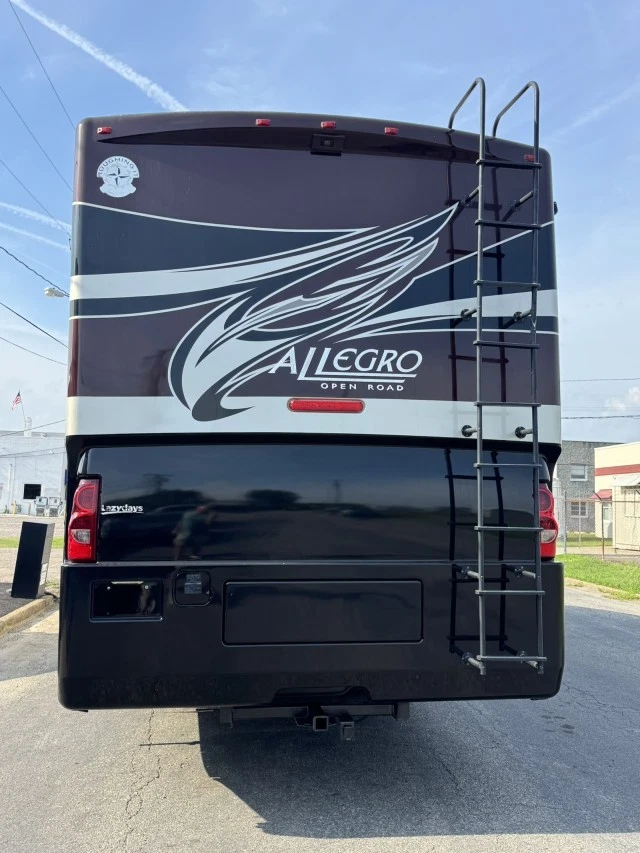
Second Hand RVs: A Smart Buyer’s Guide to Finding the Right RV at the Right Price
Buying an RV is one of those purchases that can feel exciting and intimidating at the same time.
You start imagining road trips, quiet mornings at the campground, family vacations, and spontaneous weekends away.
Then you look at the price of a new RV.
Suddenly, that dream can feel a lot more expensive.
That is where second hand RVs become interesting.
A pre-owned RV can give you many of the things people love about RV travel without requiring you to pay the price of a brand-new model.
But there is a catch.
Not every used RV is a bargain.
Some have been carefully maintained by owners who treated them like a second home.
Others may have spent years sitting outside with little maintenance.
The difference is not always obvious from a few photographs.
That is why buying second hand RVs requires a little patience.
You need to know what you are looking at, what questions to ask, and where expensive problems tend to hide.
The good news?
You do not need to be an RV mechanic to become a smarter buyer.
You simply need a solid checklist and the willingness to look beyond the shiny exterior.
Why Are second hand RVs So Popular?
The biggest reason is simple: value.
New RVs can lose value relatively quickly after purchase.
Buying pre-owned can sometimes allow you to avoid some of that initial depreciation.
You may also get more RV for your money.
A budget that buys a small new model might get you a larger, better-equipped used model.
That is one reason buyers searching for pre-owned RVs often find options with features that would otherwise be outside their budget.
There is another advantage that does not get enough attention.
Used RVs have a history.
You can potentially see how the RV has been used and maintained.
If the owner kept service records, you may even get a useful paper trail showing repairs and maintenance.
That information can make a major difference.
Start With Your Camping Lifestyle
Before looking at used RVs, forget about the advertisements for a moment.
Think about how you actually plan to travel.
Are you a weekend camper?
Do you want to spend several months traveling?
Will you travel with children?
Will you bring pets?
Do you prefer established campgrounds?
Do you want to camp away from hookups?
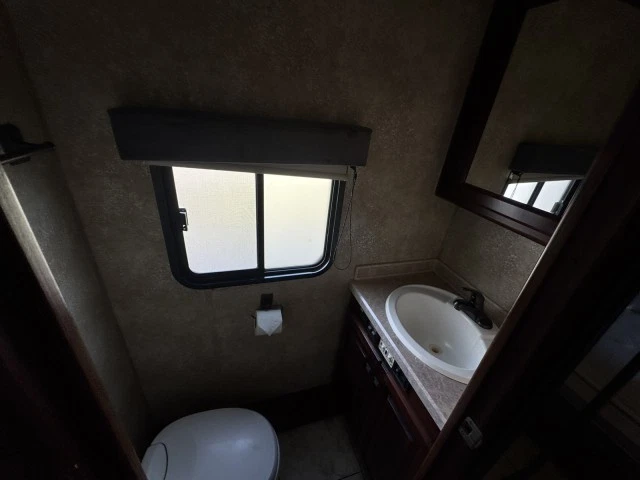
Do you need a bathroom?
How much sleeping space do you need?
These questions sound basic, but they can prevent an expensive mistake.
A couple who mostly takes two-night trips may have completely different requirements from a family planning extended vacations.
When shopping for second hand RVs, your lifestyle should determine the RV—not the other way around.
Travel Trailers
Travel trailers are popular because they come in many different sizes and layouts.
They can be towed by a suitable vehicle and left at a campsite while the tow vehicle is used separately.
When looking at pre-owned RVs, travel trailers can offer plenty of choice.
But towing capacity must always be considered.
Never choose a trailer based only on whether your vehicle can physically pull it.
Check the relevant weight ratings and make sure the complete combination is appropriate.
Motorhomes
Motorhomes combine transportation and living space.
They can be convenient for people who want everything in one vehicle.
Different classes offer very different experiences.
A compact motorhome may be easier to drive and park.
A larger motorhome can offer considerably more living space.
When comparing used RVs, consider where you will drive, how often you will travel, and how much space you genuinely need.
Fifth Wheels
Fifth wheels are known for their spacious interiors and distinctive hitch arrangement.
They can provide impressive living space.
However, they require an appropriate tow vehicle and setup.
When considering second hand RVs, do not forget to calculate the cost of the complete towing system.
Set a Realistic Budget
A common mistake is deciding, “I have $20,000, so I can spend $20,000 on the RV.”
That is risky.
You should leave room for ownership expenses.
Your initial budget may need to cover:
- Inspection
- Registration
- Insurance
- Tires
- Batteries
- Maintenance
- Repairs
- Camping equipment
- Storage
- Towing equipment
The exact costs vary, but the principle is universal.
When shopping for pre-owned RVs, keep some money in reserve.
That reserve can turn an unexpected repair from a crisis into a minor inconvenience.
The First Thing to Inspect: Water
If there is one area you should take seriously when viewing second hand RVs, it is water intrusion.
Water can cause damage that is difficult to see.
A small leak can eventually affect walls, ceilings, floors, cabinets, insulation, and other materials.
Look carefully around:
- Roof seams
- Windows
- Doors
- Vents
- Skylights
- Air-conditioning units
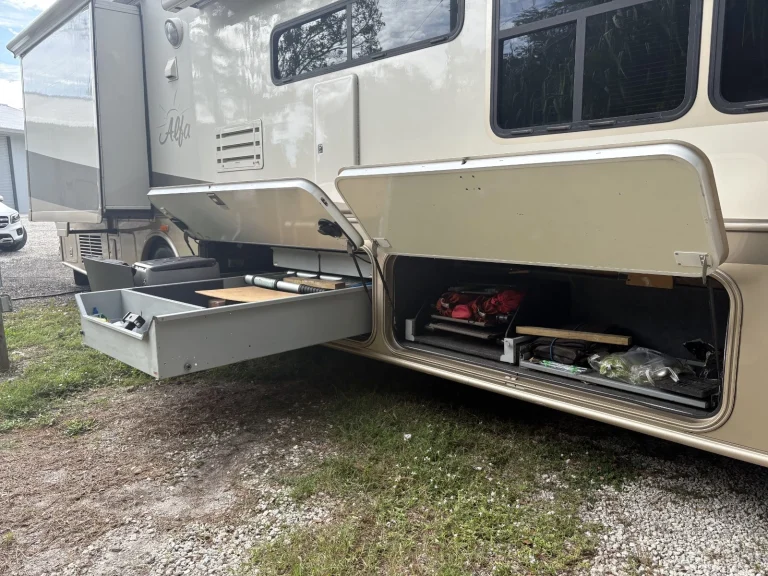
- Exterior storage compartments
- Bathroom areas
Look for staining.
Look for bubbling.
Look for discoloration.
Pay attention to unusual smells.
Do not automatically assume that a small stain means the entire RV is ruined.
But do investigate it.
Inspect the Roof Carefully
The roof takes a beating from weather.
Sun exposure, rain, temperature changes, and general aging can affect roofing materials and sealants.
When examining used RVs, inspect the roof if it can be done safely.
Look for damaged sealant.
Check around penetrations.
Look for cracks and deteriorated areas.
Ask when the roof was last inspected or resealed.
A neglected roof does not necessarily mean you must walk away.
It does mean you should understand what maintenance may be required.
Walk Every Inch of the Floor
This is one of the easiest inspections you can perform yourself.
Walk through the RV slowly.
Do not just look.
Feel the floor beneath your feet.
Pay attention to soft spots.
Check around bathrooms.
Check near kitchen areas.
Walk beside exterior doors.
Look beneath windows.
A soft or spongy area deserves attention.
When evaluating pre-owned RVs, floor condition can tell you a lot about the RV’s history.
Look Beyond the Furniture
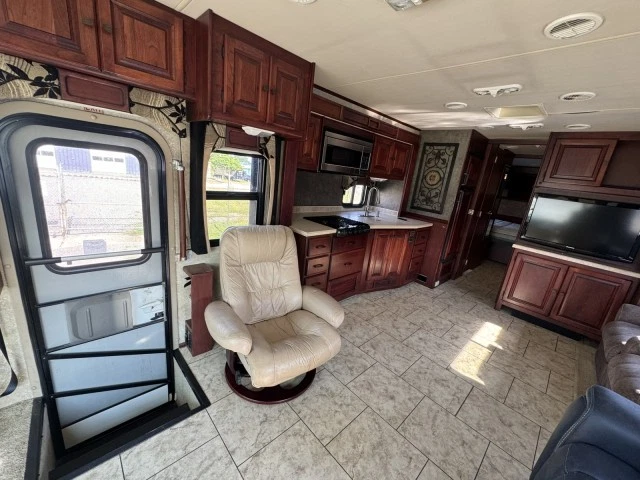
A beautifully renovated interior can be appealing.
But furniture can sometimes distract buyers from the important stuff.
Open cabinets.
Look behind doors.
Check under sinks.
Inspect storage compartments.
Look inside closets.
Examine corners.
You are trying to understand the condition of the RV rather than simply admiring its decoration.
When comparing second hand RVs, the hidden areas can sometimes provide more useful information than the showroom-looking living room.
Check for Strange Smells
Your nose can be surprisingly useful.
A strong musty smell may indicate moisture.
A chemical smell could deserve investigation.
An unusual fuel or exhaust smell should never simply be ignored.
The smell itself does not prove a problem.
But it can tell you where to investigate further.
When viewing used RVs, take your time and notice things that photographs cannot communicate.
Test the Plumbing
Turn on faucets.
Check water flow.
Inspect beneath sinks.
Test the shower.
Check the toilet.
Run the water heater where appropriate.
Look for leaks.
Ask about previous plumbing repairs.
Plumbing issues can be annoying because they may not become obvious until the RV is being used.
When inspecting second hand RVs, test the systems instead of assuming everything works.
Test the Electrical System
Turn on lights.
Test accessible outlets.
Check switches.
Test appliances where practical.
Look at the battery system.
Ask about previous electrical repairs.
If you encounter something that appears unsafe, stop and get qualified assistance.
You do not need to experiment with electrical systems simply to complete an inspection.
When shopping for pre-owned RVs, safety comes first.
Check the Appliances
An RV may look fantastic while having appliances that no longer function properly.
Test the refrigerator.
Check the stove.
Test the oven if fitted.
Run the air conditioning.
Check the heating system.
Ask about maintenance.
Appliances can be expensive to repair or replace, so they should factor into your decision.
When comparing used RVs, a working appliance package can add considerable practical value.
Pay Attention to the Tires
Tires deserve more attention than many first-time buyers give them.
Check tread.
Look for cracks.
Look for uneven wear.
Ask when the tires were installed.
Remember that tire age matters, not simply how much tread remains.
An RV that has barely traveled may still have aging tires.
When considering second hand RVs, include possible tire replacement in your budget.
Check the Battery
Ask how old the batteries are.
Find out how the RV was stored.
Ask whether the batteries were maintained during periods of inactivity.
A weak battery does not necessarily make an RV a bad purchase.
But it is an expense.
When evaluating pre-owned RVs, small replacement costs can add up.
Ask About Storage
How was the RV stored?
Outside?
Under a cover?
Inside?
For how long?
Was it regularly used?
Storage conditions can provide clues about potential wear.
An RV that has spent years exposed to weather may have different maintenance needs from one that was stored under cover.
When shopping for used RVs, storage history is worth discussing.
Ask Why the RV Is Being Sold
There are many perfectly reasonable answers.
The owner might be upgrading.
Their children may have grown up.
They may no longer have time to travel.
They may simply want something smaller.
Do not treat the seller’s answer as proof that the RV is good or bad.
Instead, compare what they tell you with what you discover.
When buying second hand RVs, consistency matters.
Ask for Maintenance Records
Records are valuable.
Receipts can show when repairs happened.
Service documents may reveal regular maintenance.
A history of roof work can be particularly useful.
Documentation does not guarantee a perfect RV.
But it gives you more information.
When comparing pre-owned RVs, a well-documented RV can be easier to evaluate.
Do Not Be Afraid of Older RVs
Age alone does not tell you whether an RV is worth buying.
A well-maintained older RV can be surprisingly appealing.
It may have fewer unnecessary electronic features.
Replacement parts may be easier to understand.
The layout might suit you perfectly.
The important question is not simply:
“How old is it?”
Instead ask:
“How has it been maintained?”
When searching for second hand RVs, condition should carry significant weight.
Cosmetic Problems Can Be Negotiating Opportunities
Maybe the carpet looks tired.
Maybe the curtains are ugly.
Maybe the upholstery is dated.
Maybe the cabinets need refinishing.
These things may not be serious.
In fact, they can sometimes create opportunities for buyers.
Cosmetic issues may allow you to negotiate while giving you a chance to personalize the RV.
When looking at used RVs, separate appearance from structural condition.
Structural Problems Are Different
Structural damage deserves much more caution.
Signs of significant water intrusion, soft flooring, damaged walls, or other serious deterioration can lead to expensive repairs.
Do not assume every problem can be fixed cheaply.
If you discover something substantial, get professional advice.
When evaluating pre-owned RVs, knowing when to stop and ask for help is part of being a smart buyer.
Compare Similar RVs
Never judge an asking price in isolation.
Find comparable models.
Compare:
- Age
- Condition
- Mileage where applicable
- Layout
- Features
- Maintenance history
- Recent repairs
- Location
The goal is to understand the market rather than simply deciding whether you personally like the price.
When researching second hand RVs, comparison shopping gives you leverage.
Learn to Negotiate Without Making It Personal
Negotiation does not have to be aggressive.
Start with facts.
If the tires are old, mention it.
If the roof needs maintenance, mention it.
If an appliance does not work, factor it into your offer.
If similar RVs are listed at lower prices, use those comparisons.
When negotiating for used RVs, reasonable evidence is more persuasive than simply saying, “That’s too expensive.”
Know When a Cheap RV Is Too Cheap
A dramatically low price can be tempting.
But ask yourself why.
There may be a genuine reason.
Perhaps the owner wants a quick sale.
Perhaps the RV has been sitting unused.
Perhaps the interior needs updating.
Or perhaps there are serious problems.
When considering second hand RVs, investigate unusually low prices rather than celebrating them immediately.
Be Careful With Pressure
If someone tells you that you have only minutes to make a decision, slow down.
A significant purchase deserves reasonable due diligence.
You should have an opportunity to inspect the RV and review the relevant paperwork.
If the seller refuses reasonable inspection or documentation, that is a warning sign.
When shopping for pre-owned RVs, never let excitement force you into a purchase you have not properly evaluated.
Verify the Paperwork
Before completing a purchase, make sure the ownership documentation is appropriate and consistent with the RV.
Check identifying information.
Check applicable lien information.
Make sure the transfer process is legitimate.
Requirements vary depending on location.
When buying used RVs, paperwork should never be treated as an afterthought.
Consider a Professional Inspection
If you are buying your first RV, a professional inspection can be money well spent.
An experienced RV technician may identify issues you would miss.
This can be particularly helpful when considering older second hand RVs.
You are not paying for an inspection because you expect the RV to be terrible.
You are paying because you want better information before committing your money.
Second Hand RVs for First-Time Buyers
If this is your first RV purchase, resist the temptation to buy the biggest model you can afford.
Start with your actual needs.
Think about driving.
Think about parking.
Think about maintenance.
Think about storage.
Think about your travel habits.
When choosing pre-owned RVs, simplicity can sometimes be more valuable than size.
A smaller RV that you actually enjoy using may be better than a huge one that becomes difficult to drive or maintain.
Second Hand RVs for Families
Families often need more sleeping space.
But sleeping capacity is only one consideration.
Think about storage.
Think about kitchen space.
Think about bathroom access.
Think about how everyone will spend time inside during bad weather.
When comparing used RVs, walk through the interior with your family in mind.
Imagine everyone being inside on a rainy afternoon.
If the layout already feels cramped, it probably will not feel better on a real trip.
Second Hand RVs for Couples
Couples may have more flexibility.
A compact layout can be perfectly comfortable.
You might prefer a larger kitchen.
Someone else might prioritize a comfortable bedroom.
Another buyer might care more about outdoor living space.
When shopping for second hand RVs, decide which features genuinely improve your trips.
Second Hand RVs for Long Trips
If you plan to spend weeks or months traveling, small details become big details.
Storage matters.
Sleeping comfort matters.
Kitchen usability matters.
Bathroom design matters.
Climate control matters.
Reliable electrical and water systems matter.
When evaluating pre-owned RVs, think beyond the first weekend.
Imagine living in the RV for an extended period.
What Makes a Good Used RV Deal?
A good deal is not necessarily the cheapest RV.
A genuinely attractive purchase might have:
- A reasonable price
- Solid flooring
- A well-maintained roof
- No major water intrusion
- Functional appliances
- Usable tires
- Good documentation
- A suitable layout
- A trustworthy maintenance history
When these factors come together, second hand RVs can provide excellent value.
Questions to Ask the Seller
Before buying, ask:
How long have you owned it?
This provides useful context.
Why are you selling?
The answer may reveal the seller’s situation.
Has it ever leaked?
Ask directly.
When was the roof last serviced?
This is particularly important.
How old are the tires?
Do not assume low mileage means young tires.
What repairs have been completed?
Ask for documentation where available.
Where was it stored?
Storage history can be useful.
Do all appliances work?
Then test them.
When considering used RVs, asking good questions can save you from unpleasant surprises.
A Simple Inspection Checklist
Bring a notebook.
Write down what you find.
Check the:
Exterior
- Roof
- Seals
- Windows
- Doors
- Lights
- Storage compartments
- Siding
- Tires
Interior
- Floors
- Walls
- Ceiling
- Cabinets
- Furniture
- Windows
- Odors
Systems
- Water
- Electricity
- Heating
- Cooling
- Refrigerator
- Cooking equipment
- Batteries
Documents
- Ownership
- Service records
- Repair receipts
- Relevant registration information
A written checklist makes shopping for pre-owned RVs far more organized.
How to Avoid Buyer’s Remorse
The best way to avoid regret is to slow down.
Do not fall in love with the first RV.
Look at several.
Compare prices.
Inspect carefully.
Ask questions.
Calculate repair costs.
Think overnight if possible.
If you still like the RV after the excitement wears off, you are in a better position to make a decision.
When buying second hand RVs, patience can be worth more than a clever negotiating trick.
Think About Future Repairs
Every RV will eventually need maintenance.
That does not mean something is wrong.
Roof seals age.
Tires age.
Batteries wear out.
Appliances eventually require service.
Furniture gets used.
The goal is not to find an RV that will never need anything.
That RV probably does not exist.
When shopping for used RVs, look for an RV whose likely maintenance needs fit your budget and abilities.
Why Condition Matters More Than Age
Consider two RVs.
One is older but has been maintained carefully.
The other is newer but has been neglected.
Which one would you rather own?
Most experienced buyers would inspect both before deciding.
That is the point.
Age is a number.
Condition tells a much bigger story.
When comparing second hand RVs, maintenance history and physical condition deserve serious attention.
Make Your Final Decision With Numbers
Before signing anything, calculate your likely first-year cost.
Start with the purchase price.
Add expected repairs.
Add tires if necessary.
Add registration.
Add insurance.
Add essential equipment.
Add storage if applicable.
Now compare the total with other pre-owned RVs.
This can reveal whether the “cheap” RV is genuinely affordable.
Frequently Asked Questions
Are second hand RVs worth buying?
Yes. A carefully inspected pre-owned RV can offer excellent value and may provide more features for your budget than a new model.
What is the biggest problem to look for?
Water intrusion deserves particular attention because hidden moisture can lead to extensive damage.
Should I buy an older RV?
Age alone should not determine your decision. Maintenance history, condition, systems, and price are more useful factors.
How much should I budget for repairs?
There is no universal amount because every RV is different. Keep a separate reserve rather than spending your entire purchase budget.
Should I inspect the roof?
Absolutely. The roof and its seals are important areas to examine when considering used RVs.
Are private-party RVs better than dealer RVs?
Neither is automatically better. Compare the RV, documentation, price, inspection options, and transaction terms.
Can I negotiate the asking price?
Often, yes. Condition, needed repairs, comparable listings, and maintenance history can provide reasonable negotiation points.
Should I get an RV inspection?
For a significant purchase, especially your first RV, a professional inspection can provide valuable peace of mind.
What paperwork should I check?
Verify ownership and relevant registration or lien information, following the requirements applicable where you live.
What should I test during an inspection?
Test accessible plumbing, electrical systems, appliances, heating, cooling, and other major systems where practical and safe.
Final Thoughts
Buying an RV should be exciting.
It should not feel like gambling.
That is why taking your time when searching for second hand RVs is so important.
The goal is not to find the cheapest RV on the market.
The goal is to find the RV that gives you the most value for your budget.
Those are two very different things.
A cheap RV with major water damage may become one of the most expensive purchases you make.
A reasonably priced RV with good maintenance records and a solid structure could become the vehicle that takes you on years of memorable trips.
Look beyond appearances.
Check the roof.
Walk the floors.
Inspect the walls.
Test the appliances.
Run the plumbing.
Check the electrical system.
Look at the tires.
Ask about storage.
Ask about maintenance.
Review the documents.
And if you are unsure, bring in someone who knows RVs.
The best pre-owned RVs are not necessarily the newest.
They are the ones that have been looked after.
They are the ones that fit the buyer.
They are the ones whose price makes sense after considering condition and future costs.
Most importantly, they are the ones you can afford to own—not merely the ones you can afford to purchase.
So take your time.
Compare several options.
Do not be afraid to walk away.
Another RV will come along.
When the right one appears, you will be ready to recognize it.
And when you finally find second hand RVs that check the right boxes, the reward is more than getting a good price.
You are buying the opportunity to travel differently.
You are buying weekends away.
You are buying flexibility.
You are buying a place to sleep after a long day on the road.
You are buying the possibility of waking up somewhere completely different from where you went to bed.
That is what makes the search worthwhile.
The smartest buyers understand that an RV is not simply a vehicle or a trailer.
It is part of an experience.
Choose carefully, maintain it properly, and that experience can last for years.
Related guides
- Reliable Used RVs for Sale: 29 Smart Steps to Find Your Next Road-Trip RV
- RVs for Full Time Living: 19 Real-World Secrets to Choosing Your Ideal Home on Wheels
- Recreational Vehicles for Sale: How to Find the Right RV Without Regretting Your Purchase
- Cheap Used RVs: How to Find an Affordable RV Without Buying Someone Else’s Problems
Browse more in RVs for Sale or see all buying guides.