Campers for Weekend Camping: 13 Smart Ways to Choose the Right One
Friday afternoon.
The laptop closes.
The workweek is finally over.
You throw a few clothes into a bag, load some food into the cooler, grab your keys, and head out of town.
Two hours later, the scenery changes.
The buildings disappear.
The road gets quieter.
And suddenly, you are standing beside a lake, in a forest, near a mountain trail, or at a peaceful campsite with nowhere you need to be until Sunday.
That is the beauty of campers for weekend camping.
You do not need a month-long vacation to enjoy the outdoors.
You need a reliable camper, a free weekend, and somewhere worth exploring.
But choosing the right camper for short trips is not as straightforward as it might seem.
Some campers are designed for long-term travel.
Others are built around simplicity.
Some offer enormous kitchens and bathrooms.
Others are compact enough to park almost anywhere.
The trick is finding something that fits the way you actually spend your weekends.
This guide breaks down what matters most, what you can safely ignore, and how to choose a camper that makes quick getaways easier rather than more complicated.
Why Weekend Camping Is Different
Weekend camping has its own rhythm.
You usually leave after work on Friday.
You arrive after dark or close to it.
Saturday is your main adventure day.
Sunday comes around much faster than expected.
That means convenience matters.
You probably do not want to spend half of your two-day trip setting up complicated equipment.
You want something that is easy to tow, easy to park, quick to prepare, and comfortable enough to make the trip worthwhile.
That is why campers for weekend camping should be judged differently from RVs intended for full-time living.
You may not need a massive kitchen.
You may not need three separate sleeping areas.
You may not need a giant bathroom.
What you do need is a layout that makes short trips enjoyable.
1. Start With the Weekend You Actually Want
Before looking at weekend campers, forget the advertisements for a moment.
Think about your own weekends.
What do you normally do outdoors?
Do you hike?
Fish?
Visit beaches?
Explore national parks?
Attend outdoor events?
Travel with friends?
Take the family camping?
Or simply park somewhere beautiful and relax?
Your answer should influence the camper you choose.
A fishing enthusiast might prioritize exterior storage.
A family may need beds and a practical dining area.
A couple may prefer a compact camper with a comfortable sleeping space.
Someone who travels alone might value simplicity above almost everything else.
There is no universally perfect camper.
There is only the camper that makes sense for you.
2. Decide How Many People Will Sleep Inside
This sounds obvious.
It is still one of the easiest things to get wrong.
A camper might advertise sleeping capacity for four people.
That does not necessarily mean four adults will be comfortable.
There is a difference between “technically sleeps four” and “comfortably accommodates four.”
When comparing campers for weekend camping, look at the actual sleeping arrangements.
Is the second bed easy to convert?
Does the dining table need to be dismantled every night?
Is there enough room to move around?
Are there curtains or privacy partitions?
Where does everyone’s luggage go?
These details become important quickly.
3. Smaller Can Be Better
There is a strange temptation when shopping for an RV.
You walk through a small camper and think:
“Maybe I should get something bigger.”
Then you walk through an enormous model and think:
“Why not?”
But bigger is not automatically better.
For short trips, a smaller camper can have some serious advantages.
It may be easier to tow.
It may use less fuel.
It can fit into more campsites.
It may be easier to store at home.
And you can spend less time worrying about maneuvering and more time enjoying the weekend.
That makes compact campers for weekend camping especially attractive to couples, solo travelers, and small families.
4. Don’t Forget the Tow Vehicle
A camper is only half of the towing equation.
The other half is your vehicle.
Before buying campers for weekend camping, find out exactly how much your vehicle can safely tow.
Do not look only at the advertised maximum towing figure.
You also need to consider passengers, cargo, hitch weight, fuel, equipment, and the loaded weight of the camper.
A camper that looks manageable at a dealership can feel very different when loaded with food, water, clothing, camping equipment, and outdoor gear.
When in doubt, stay comfortably within the manufacturer’s limits.
A relaxed towing experience is far more enjoyable than spending every mile worrying about weight.
5. Think About Setup Time
This is one of the biggest differences between a good weekend camper and a frustrating one.
Imagine arriving at your campsite on Friday evening.
It is getting dark.
Everyone is hungry.
You want to sit outside, cook dinner, and relax.
Now imagine spending an hour figuring out complicated setup procedures.
Not exactly the dream.
When reviewing campers for weekend trips, think about how quickly you can get settled.
Simple systems often win.
Easy-to-use stabilizers.
Accessible storage.
Straightforward beds.
Quick-connect utilities.
Convenient lighting.
A practical kitchen.
Small conveniences can save a surprising amount of time.
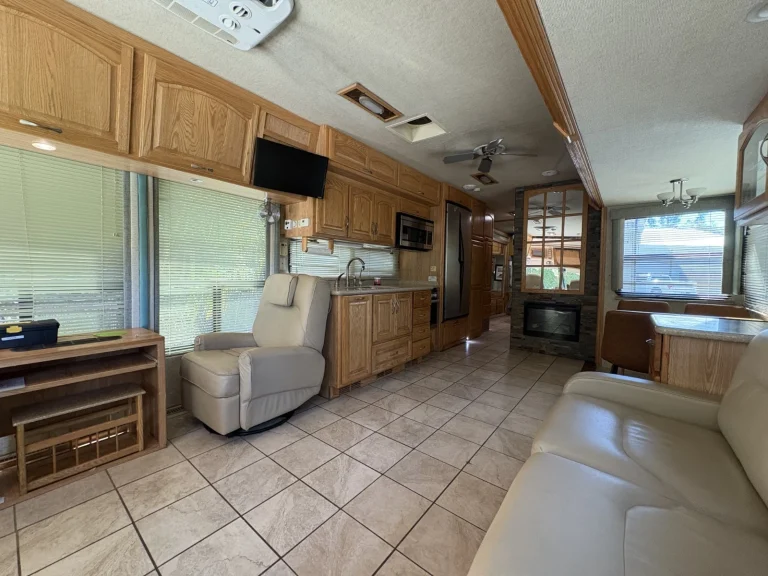
6. Look for a Useful Kitchen
You do not necessarily need a restaurant-sized kitchen.
For a weekend trip, you may only need enough space for breakfast, sandwiches, coffee, snacks, and dinner.
But the kitchen should still be practical.
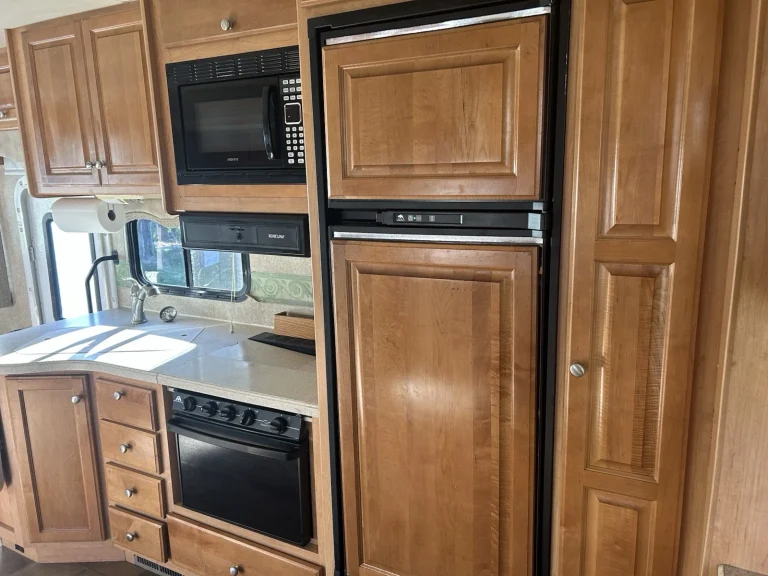
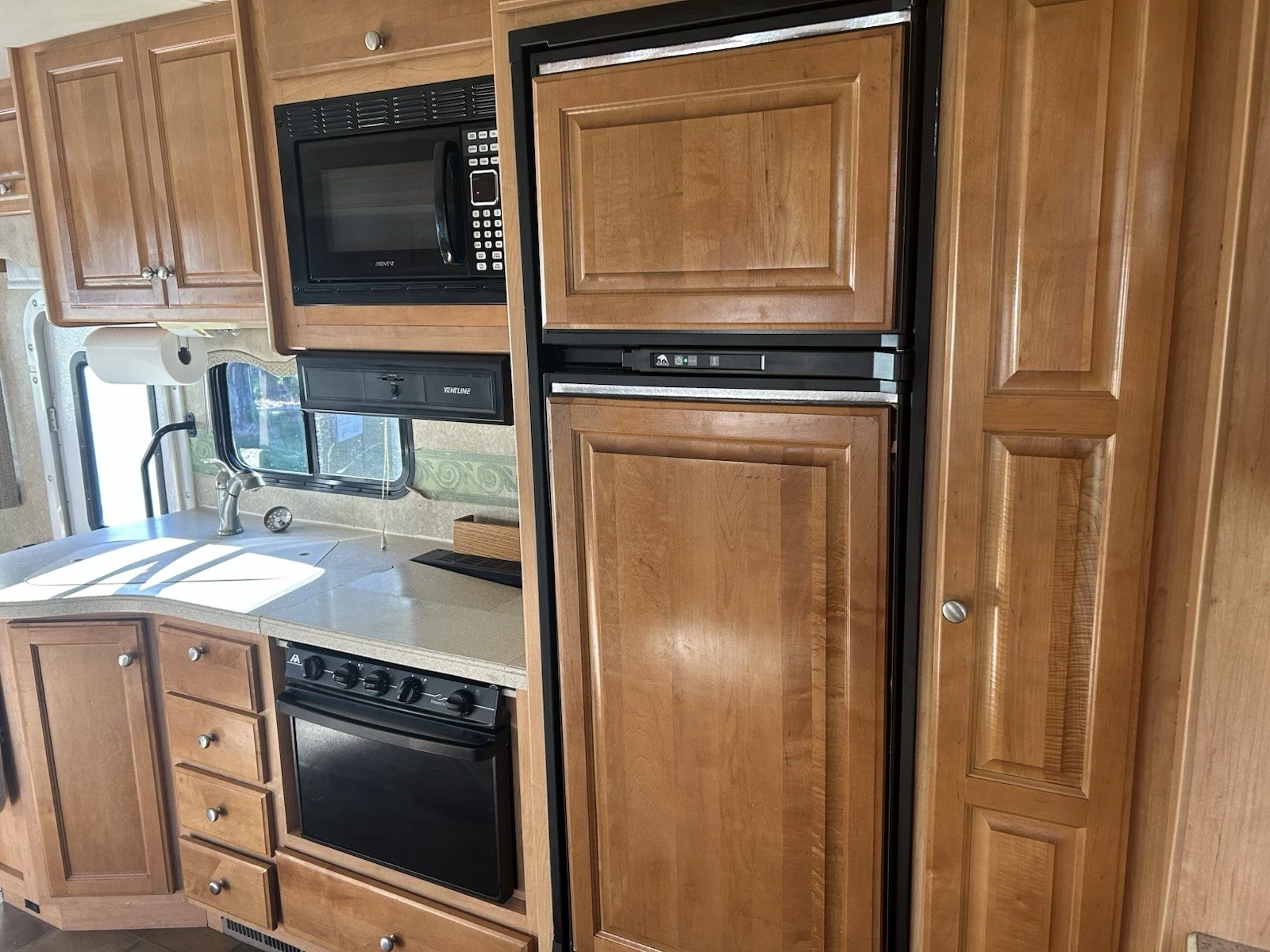
Look at counter space.
Check storage.
See whether the refrigerator is large enough for your normal food.
Inspect the cooking setup.
Think about where dishes will go.
The best campers for weekend camping make everyday tasks simple.
You should not need to reorganize the entire camper just to prepare breakfast.
7. Storage Is Surprisingly Important
You might think two days away requires very little equipment.
Then start packing.
Clothes.
Shoes.
Food.
Cooking supplies.
Blankets.
Camping chairs.
Fishing equipment.
Hiking gear.
Games for the kids.
Tools.
Emergency supplies.
Suddenly, the camper looks much smaller.
When comparing campers for weekend camping, open the cabinets.
Check under the bed.
Inspect outside compartments.
Look for useful storage rather than simply counting the number of cupboards.
A smart storage layout can make a compact camper feel significantly more spacious.
8. Pay Attention to the Bed
You can survive a weekend with a tiny kitchen.
You can probably survive with limited storage.
A bad bed is another story.
After spending Saturday hiking, cycling, fishing, or exploring, you want somewhere comfortable to sleep.
When looking at campers for weekend camping, actually inspect the mattress and sleeping area.
Lie down if the seller allows it.
Check the length.
Check headroom.
See whether two people can comfortably sleep without constantly bumping into each other.
If the camper uses a convertible dinette as the main bed, test how difficult it is to convert.
These details matter much more than they seem during a quick showroom visit.
9. Bathroom or No Bathroom?
This is one of those decisions that depends entirely on personal preference.
Some buyers will not consider weekend campers without a bathroom.
Others would happily use campground facilities and save the space.
A bathroom takes up valuable interior room.
But having one available at night can be incredibly convenient.
Think about where you normally camp.
If you stay at developed campgrounds with clean facilities nearby, you may not need a dedicated bathroom.
If you prefer remote locations, the equation changes.
You may value a toilet and shower much more.
There is no wrong answer.
10. Consider Off-Grid Capability
Not every weekend camping trip requires hookups.
You might occasionally find yourself at a site without electricity or water.
That is where self-contained features can become useful.
Depending on your travel style, campers for weekend camping may benefit from solar panels, battery storage, freshwater tanks, efficient lighting, and other independent systems.
You do not necessarily need an elaborate off-grid setup.
Even a modest battery and solar system can provide useful flexibility.
The important thing is knowing what you will actually use.
If every weekend involves a powered campground, spending heavily on advanced off-grid equipment may not make sense.
If you love quiet, remote locations, it could be worth prioritizing.
11. Think About Weather
The weather does not care about your weekend plans.
You can leave home under blue skies and arrive at the campsite to find rain.
That is why weather protection matters when choosing campers for weekend camping.
Look for good roof seals.
Check windows and doors.
Inspect ventilation.
Consider insulation if you camp during colder months.
Think about how easy it is to stay comfortable inside when the weather turns bad.
A camper should give you somewhere pleasant to retreat when a sudden storm arrives.
A rainy Saturday does not have to ruin the trip.
Sometimes it simply becomes an excuse to make coffee, play cards, read a book, and listen to the rain.
12. Check the Tires and Mechanical Condition
If you are buying used campers for weekend camping, do not let a clean interior distract you from the mechanical side.
Inspect the tires.
Check their age and condition.
Look at the wheels.
Inspect brakes if applicable.
Check the hitch.
Look underneath for signs of damage, corrosion, or poorly repaired components.
If it is a motorized RV, inspect the engine, transmission, suspension, fluids, and service history.
A camper can look beautiful inside while hiding problems underneath.
A professional inspection is worth considering, particularly when purchasing an expensive used unit.
13. Inspect for Water Damage
There is another inspection priority that deserves special attention.
Water.
Look around windows.
Check ceiling corners.
Inspect cabinets.
Feel the floor.
Look for stains, bubbling, soft spots, discoloration, or unusual smells.
Pay close attention to the roof.
Water intrusion can cause expensive structural damage.
When evaluating campers for weekend trips, do not rush this part of the inspection.
If you see something suspicious, ask about it.
If the explanation does not make sense, get a professional opinion before buying.
Travel Trailers vs. Motorhomes
Both can be excellent choices.
A travel trailer allows you to leave the camper at the campsite and use your tow vehicle for local exploring.
That can be extremely convenient.
You can drive into town for groceries without bringing your entire living space.
A motorhome combines the driving and living areas.
That can be convenient during longer road trips.
However, motorhomes may have higher maintenance costs because they combine a vehicle with a living structure.
When comparing campers for weekend camping, consider how you prefer to travel.
If you already own a suitable tow vehicle, a trailer may be attractive.
If you want an all-in-one vehicle, a motorhome may make more sense.
Pop-Up Campers Are Worth Considering
Pop-up campers often appeal to buyers who want something compact without giving up the feeling of a dedicated camping setup.
They can be easier to tow and store.
Some also offer surprisingly comfortable interiors once fully set up.
They may be especially suitable for occasional weekend trips.
However, setup and weather protection vary considerably between models.
Inspect the canvas or folding sections carefully on used units.
Look for tears, mildew, damaged zippers, and signs of water intrusion.
Teardrop Campers for Quick Escapes
Teardrop campers have become popular for a simple reason.
They are small.
They are generally easy to tow.
And they can provide a comfortable sleeping space without requiring a huge vehicle.
For couples or solo travelers, they can be an appealing option among campers for weekend camping.
The main compromise is interior space.
You are buying simplicity rather than a miniature apartment.
For someone who spends most of the day outdoors, that may be exactly the point.
How Much Should You Spend?
There is no magic price for campers for weekend camping.
You can find basic used campers at relatively modest prices.
You can also spend a considerable amount on a new, feature-rich model.
Instead of choosing your budget based purely on the purchase price, think about your total cost.
Include:
- Registration
- Insurance
- Maintenance
- Tires
- Repairs
- Hitch equipment
- Camping accessories
- Solar upgrades
- Bedding
- Cooking equipment
- Storage solutions
A camper that costs less initially may need several upgrades.
A slightly more expensive camper might already have everything you need.
Look at the complete picture.
New or Used?
Both options can make sense.
A new camper gives you access to current designs, modern equipment, and potentially manufacturer support.
But buying new also means taking the biggest depreciation hit.
Used campers can offer excellent value.
Someone else may have already paid for upgrades.
You may find a camper with solar, better batteries, upgraded tires, additional storage, and other useful equipment already installed.
The trade-off is condition.
You need to inspect it carefully.
Ask about maintenance.
Request records when possible.
Find out whether modifications were professionally installed.
If you do your homework, used weekend campers can be an excellent way to get more equipment for your money.
What Should You Bring on a Weekend Trip?
You do not need to pack your entire house.
Start with the basics.
Clothing.
Food.
Water.
Cooking supplies.
Bedding.
Personal hygiene items.
Flashlights.
First-aid supplies.
Basic tools.
Phone chargers.
Outdoor equipment.
Weather-appropriate clothing.
A few comfort items can also make a difference.
A folding chair.
A small table.
Outdoor lights.
A blanket for sitting outside.
And, of course, coffee.
The best part about weekend camping is learning what you actually use.
After several trips, your packing list becomes much simpler.
How to Make a Small Camper Feel Bigger
You do not need a larger camper to create more usable space.
Organization helps.
Use storage containers.
Keep frequently used items accessible.
Avoid carrying equipment you never use.
Use exterior storage whenever possible.
Keep the floor clear.
Choose multipurpose gear.
A folding table can serve several purposes.
Compact cookware can save cabinet space.
Lightweight bedding can reduce storage requirements.
The goal is not to own more things.
It is to make better use of the space you already have.
Common Mistakes First-Time Buyers Make
Buying Too Big
A giant camper may look impressive.
But if you only take short trips, you may regret the extra fuel, maintenance, storage, and maneuvering requirements.
Buying Too Small
The opposite can happen too.
If you regularly travel with a family, an extremely compact camper may become uncomfortable.
Ignoring Storage
A beautiful camper with nowhere to put your equipment becomes frustrating quickly.
Forgetting Setup Time
Weekend trips are short.
A camper that takes forever to prepare can eat into your limited free time.
Skipping the Inspection
Never assume a clean interior means the camper is mechanically sound.
Choosing Features You Won’t Use
Do not pay for equipment simply because it sounds impressive.
Choose based on your lifestyle.
How to Find the Right Camper
Start with a short list.
How many people will travel?
How often will you camp?
What vehicle will tow or drive it?
Where will you camp?
Do you need a bathroom?
Do you need a kitchen?
Do you need solar?
How much storage do you need?
What is your realistic budget?
Once you answer those questions, your search becomes much easier.
You will start eliminating campers that do not fit your needs instead of trying to convince yourself that every attractive listing is worth considering.
A Simple Weekend Camper Buying Checklist
Before purchasing campers for weekend camping, check:
Size
Does everyone have enough sleeping space?
Weight
Can your vehicle safely handle the loaded camper?
Storage
Is there enough room for your equipment?
Kitchen
Can you prepare the meals you normally eat?
Bathroom
Do you actually need one?
Power
Will the electrical system support your typical weekend use?
Water
Is the freshwater capacity sufficient?
Weather
Is the camper comfortable in the conditions you expect?
Condition
Are there signs of leaks, structural damage, or mechanical problems?
Cost
Have you included maintenance and upgrades in your budget?
These questions can turn a confusing buying process into a much simpler one.
Making Your First Weekend Easier
Your first camping trip does not need to be an epic adventure.
In fact, keeping it simple is often smarter.
Choose a campground relatively close to home.
Pack familiar food.
Test all the camper’s systems before leaving.
Arrive during daylight if possible.
Keep the first trip short.
You will quickly discover what works and what does not.
Maybe you packed too much.
Maybe you forgot a power cable.
Maybe the kitchen setup needs reorganizing.
Maybe you realize you need better outdoor chairs.
That is completely normal.
Every trip teaches you something.
After a few weekends, the process becomes second nature.
FAQs About Campers for Weekend Camping
What type of camper is best for weekend camping?
There is no single best type. Compact travel trailers, pop-up campers, teardrop trailers, small motorhomes, and other RVs can all work well. The best choice depends on your group size, tow vehicle, budget, and camping style.
Are small campers good for weekend trips?
Yes. Small campers are often especially convenient for short trips because they can be easier to tow, park, store, and set up.
Do I need a bathroom in a weekend camper?
Not necessarily. If you primarily use developed campgrounds, campground facilities may be sufficient. Remote campers may prefer having a private toilet.
How much should I spend on a weekend camper?
That depends on your needs and whether you buy new or used. Always budget for insurance, maintenance, equipment, and potential repairs in addition to the purchase price.
Is a travel trailer better than a motorhome?
It depends on how you travel. A travel trailer allows you to disconnect and use your tow vehicle independently. A motorhome combines transportation and living space.
Should I buy a used camper?
A well-maintained used camper can provide excellent value. Just make sure you inspect the roof, structure, plumbing, electrical system, tires, appliances, and maintenance history.
Do I need solar for weekend camping?
Not always. If you primarily stay at campsites with electrical hookups, solar may not be essential. If you enjoy primitive or dispersed camping, it can provide useful independence.
How many people can comfortably sleep in a camper?
The manufacturer’s sleeping capacity is only a starting point. Consider the actual bed dimensions, storage, interior floor space, and how long you will be staying.
What should I inspect before buying?
Look closely at the roof, seals, floors, walls, tires, plumbing, electrical system, appliances, hitch, and any signs of water damage.
Can I use a camper for only a few weekends each year?
Absolutely. In fact, occasional use is one of the reasons many people choose compact campers. Just remember that even an infrequently used camper needs proper maintenance and storage.
Final Thoughts
You do not need to become a full-time traveler to enjoy RV camping.
Sometimes, the best trips last only two nights.
A Friday evening departure.
A Saturday morning coffee outside.
A long hike.
A campfire.
A quiet dinner.
Then home on Sunday with enough time to prepare for Monday.
That is exactly where campers for weekend camping shine.
They give you a practical way to escape without turning every trip into a major logistical project.
The key is choosing a camper that fits your real life.
Do not buy the biggest model simply because it looks impressive.
Do not buy the cheapest one simply because the price is attractive.
And do not fill your camper with features you will never use.
Think about where you go.
Think about who comes with you.
Think about how much equipment you carry.
Think about your tow vehicle.
Think about how much time you want to spend setting up.
Then compare your options carefully.
The best campers for weekend camping are the ones that make leaving home easier.
When Friday arrives, you should be able to pack your essentials, hook up, and go.
Because the real luxury is not having a massive RV parked in your driveway.
It is knowing that when the weekend finally arrives, you have a comfortable place waiting for you somewhere beyond the city.
The road is open.
The campsite is waiting.
And Monday can worry about itself.
Related guides
- Compact Campers for Sale: The Smart Buyer’s Guide to Finding a Small Camper That Fits Real Life
- Truck Campers for Sale: The Experienced Traveler’s Guide to Choosing the Right One
- Buy Campers Online: A Smarter Way to Find the Right Camper at the Right Price
- Low Cost Campers: A Practical Guide to Finding a Great Camper Without Overspending
Browse more in Campers for Sale or see all buying guides.